Showing posts with label MNO. Show all posts

Monday, March 31, 2014

[Guest Post]: Optimizing cell architecture for better enterprise service delivery

By Shaun McFall*, Senior VP and Chief Marketing and Strategy Officer, Aviat Networks 

From its early analog origins in the 80s, some of the earliest adopters of mobile telephony were business users. Enterprises were quick to identify the opportunity that “portable telephones” offered. The shackles that rotary dials and fixed landlines placed on business were no more. The enterprise could now conduct business and make deals anytime anywhere. That’s why one of the most iconic images of the 80s remains Wall Street’s Gordon Gekko (Michael Douglas) with a Motorola DynaTAC-brick-phone.

Over the years, as technology evolved and mobile phones became cheaper, mobile users diversified. A recent report from the International Telecommunications Union estimated that there could be more than six billion mobile phones globally. However, as subscriber figures have grown, the revenues for mobile operators have flattened and in some cases decreased. 
 
One reason for this has been the growing popularity among consumers for Over The Top (OTT) services such as WhatsApp and Skype. OTT services allow subscribers to circumvent the mobile operator and use alternative messaging, voice and video calling services. OTT is eroding voice and text revenues – so much so that Ovum estimates that WhatsApp has cost mobile operators around $35bn in lost text messaging revenues. 
 
While consumers have embraced OTT services and have been willing to put up with its unreliable connectivity, patchy sound quality and video delays - the majority of enterprises have shied away from using OTT communications services for their day-to-day business needs. That’s because businesses need robust, effective and reliable communications. Therefore, the enterprise market remains the most promising and lucrative for mobile network operators. In fact, US and Western European markets alone could be worth more than $100bn. And herein lies the challenge facing mobile network operators. 
 
While the enterprise market is the most profitable segment, it is the most elusive for mobile network operators. Most operators are acutely aware of the need to win enterprises over, but how to address it without resorting to discounting is not always clear. 
 
Mobile operators are inherently well positioned to deliver enterprise services. A multi-service IP network combined with high-capacity wireless connectivity solutions in 3G/4G or microwave, and mobility services which can be bundled with other capabilities, puts MNOs in a unique position. By looking beyond margin-eroding discounts and looking at how they could instead provide additional value, the enterprise market could be far easier to win over. But how can a mobile operator deliver these fixed communications services to enterprises most effectively?
 
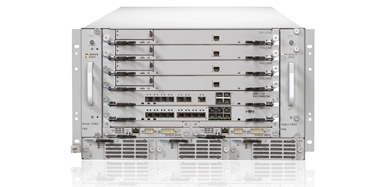
This is where a new class of communications product comes to the fore: the microwave router. Situated at the cell site, the microwave router incorporates microwave connectivity and a built-in IP/MPLS router, thereby delivering a complete enterprise access and VPN solution straight from the existing mobile backhaul infrastructure – all in a single device. Not only does the microwave router deal with the growing problem of network densification by combining the functionality of up to five separate devices, it also opens up the enterprise opportunity to mobile operators. This is because, with its access to Layer 3 at the edge of the network, new access services like VPNs become easy to launch and maintain. By putting more intelligence into the cell site, operators can deliver a whole range of enterprise-focused services. That means more access services as well as better support of high-bandwidth enterprise applications.
 
A recent study from analyst firm Heavy Reading surveyed a number of international mobile network operators to gauge their appetite for microwave routers. It found that 76% of operators they surveyed declared that they are ‘likely’ or ‘very likely’ to deploy a microwave router within three years. That is that a remarkably positive consensus for such a recent innovation. Mobile operators are aware that enterprises offer the most lucrative opportunity for short and long-term revenue streams, but have consistently found it challenging. And now, a small, smart microwave router could be a big part of the answer.


_________

*As senior vice president and chief marketing and strategy officer, Mr. McFall provides overall direction for programs to position the company in its focus markets. Mr. McFall has been with the company since the formation of its UK subsidiary in 1989. His initial assignment was in new business development, first in the UK and later the European market. In 1994 he relocated to the company's headquarters in San Jose, California, assuming responsibility for worldwide product marketing. He has accumulated over 20 years of experience in the wireless telecommunications industry, holding prior positions with two UK based companies: Ferranti International Signal plc. and GEC Telecommunications Ltd. Mr. McFall holds a bachelor of science degree in Electrical and Electronic Engineering from the University of Strathclyde in Glasgow, UK.

Saturday, February 1, 2014

[Juniper Research] MNOs will Convert OTT into $20B Opportunity


A new report by Anthony CoxJuniper Research finds that "Mobile network operators will generate revenues of close to $20 billion by 2018 through strategies involving internet based voice or 'carrier OTT' .. These Internet voice revenues will be derived from new service propositions and bundles delivered through partnerships with stand-alone OTT (Over The Top) service providers .. while OTT service providers have been successful in creating impressive user bases of mVoIP customers, many future revenue generating strategies are likely to involve traditional carriers that have a billing relationship with the end-user and guaranteed QoS (Quality of Service)".

The report also "observes that stand-alone mobile VoIP players are becoming increasingly sophisticated in their service offerings and are developing more ways to monetise services. Meanwhile, VoLTE (Voice over LTE) will see widespread adoption among MNOs for the increased network efficiency it affords the operator, even though direct revenues will be low".

See "Mobile Operators to Generate $20bn from Internet Voice as 'Carrier OTT' Matures, Juniper Research Finds" - here.

Friday, October 5, 2012

[YG]: How to Keep Advanced Subscribers? (Hint - Speed and Service)

 
A new research by the Yankee Group shows why Speed/QoE-based tiered services could benefit MNOs, mainly by reducing churn.

The report, by Analyst Sheryl Kingstone (pictured), concludes that "Different customers have different needs and priorities, but some customers represent higher value than others. By tailoring pricing and packaging to the top users who value service and customization the most, MNOs will see long-term reductions in churn and upswings in profits .. When it comes to 4G, speed, personalization and care far outweigh price in the minds of at least one valuable customer segment: advanced users, or those who use advanced services such as Web browsing or online games daily".

"Advanced users want faster service. This group is 23 percent more likely than average users to say browsing speed needs improvement. Forty percent of advanced users are potentially at risk of churn, versus 29 percent of average users. Additionally, advanced users are more likely than average users to churn because of poor customer service (25 percent versus 15 percent)" 

See "Unlocking the Value of Advanced Users" - here.

Tuesday, August 14, 2012

2 Major US MNOs to Use Radware for Traffic Steering


Radware announced ".. agreements with two leading mobile operators in North America for purchases of its Alteon® 10000 [see "Radware's Alteon 10000 - Mobile Service Edge Switch for Security and Optimization" - here] application delivery controllers (ADC). The contracts, which will be implemented in stages as the carriers' infrastructure build-out progresses, have an initial combined value in the multimillion-dollar range"

See also "TM Wins: US Tier1 Uses Radware to Manage DNS Traffic ($2M Deal)" - here.

".. the Alteon 10000 provides the carriers with the ability to intelligently steer traffic to multiple value added services based on user, application, location and other Layer-7 attributes, thus supporting dynamic and complex mobile data policies. This results in a reduction in the number of traversals inside the mobile core network without changing the network infrastructure, and optimizing the mobile services for better quality of experience".

See "Radware's Alteon 10000 Delivers Highly-Performing, Resilient and Scalable Mobile Data Services to Two Major North American Mobile Carriers" - here.

UK MNOs: We did Well During the Olympic Games; US Streamers Like Athletics

 
Chris Donkin reports to mobile news that "Network operators claim to have coped well after experiencing rises of up to 80 per cent in voice and data services at Olympic venues during the first week of the London 2012 Games. Everything Everywhere, Three, O2, and Vodafone all reported a good service during the events as a result of multimillion-pound upgrade investments to cope with demand".
 
"Everything Everywhere said it had experienced a 70 to 80 per cent rise at venues and tourist hotspots, as well as a 10 per cent increase across the rest of the UK as customers accessed 3G services .. Vodafone also reported a sharp increase in data use across the UK, with a 20 per cent rise in the number of its customers accessing Facebook during the opening ceremony and 300,000 following events live on Twitter"
See "Games prompt 80 per cent surge in mobile voice and data usage" - here.
 
Sandvine published "graphic we prepared that attempts to sum up the impact Olympic streaming had in the US. In it you can see the variance in Olympic streaming traffic throughout the games, and the accompanying event that drove traffic to its peak each day".

See "Olympic Update: What Events Owned the Podium?" - here.


Sunday, August 12, 2012

NSN: Opportunity for MNOs w/Security VAS

 
A Nokia-Siemens Networks' blog post by Asheesh Gulati looks at the "business opportunity for operators who can provide a secure environment for their customers".
  
".. Operators can generate new business and significantly increase customer retention by offering security on top of existing contracts. When people know that their mobile environment is secure, they are more comfortable trying and using new applications and services. Enterprise customers are particularly concerned about malware on smartphones and risks involving the loss of data or intellectual property, especially with devices used for both personal and business purposes. They are willing to pay extra for protection against these threats"
  
"In fact, Nokia Siemens Networks demonstrated the benefits to a European mobile operator who was able to sell additional security functions to 50,000 corporate customers for an additional 5-10 Euro/subscriber/month. This is expected to yield annual revenues of 2.5-5M Euros. So, it is clearly a money making proposition for the operator".

"Device-based protection provides functions like lock and wipe, back-up and restore, which are essential when phones are stolen. Security attacks such as remotely controlled cybercrime are detected and mitigated by network-based protection"

See also "Telefonica Deploys Juniper for Mobile Security" - here
  
See "Providing Smart Security to subscribers – What’s in it for the operator?" - here.

Thursday, August 9, 2012

OTT and MNOs: $182B Lost or $30B Opportunity?


Both, actually.

A new research by MobileSquared, sponsored by mobile interaction service provider, tyntec, finds that "‘Over The Top’ mobile internet communications services such as Skype and WhatsApp are set to cost the global mobile industry as much as $182 billion in lost voice and messaging revenue over the next four years .. Yet the research also identifies a potential $30 billion revenue opportunity for operators who work effectively in the OTT market".

See also "[ABI Research]: OTT Messaging Cannibalizes SMS Revenue" - here and "[Infonetics]: Despite All - SMS Revenues will Grow!"- here.

".. The research forecasts that the OTT market will be worth as much as $166.5 billion by 2016, with as many as 18% of subscribers using OTT services by 2016, up from just 2% at the moment .. The research quantifies the potential opportunities for operators in the OTT market, which is set to reach 1.32 billion users by 2016. There are a range of strategies that could help operators benefit from the growth of OTT. As well as charging users additional fees for using OTT, operators can create their own apps or deploy RCSe/Joyn-based initiatives to recreate the functionality of OTT within their own networks. However, the key opportunity for operators is to partner with OTT providers to integrate mobile numbers into their services".


See "Report: OTT Messaging Services to Create $30B Revenue Opportunity for Mobile Operators" - here

Friday, May 11, 2012

SON Announcements: InfoVista Launches VistaSON

  
InfoVista, launched a "self-optimizing radio access network (RAN) solution, VistaSON, that enables mobile operators to dynamically optimize the capacity and quality of their networks .. VistaSON helps them [MNOs] safely transition from manual and suggestive network optimization with required human decision-making to a full, closed-loop, dynamic and automated practice based on pre-defined network conditions and approvals".

A hint to the related market size maybe deducted from a previous post - "AT&T Deploys Intucell SON Solution (Est. $55M Over 4 Years)" - here.
  
".. The solution includes a set of out-of-the-box 2G, 3G and 4G/LTE use cases that are designed to rapidly enable the automation needed for the optimization and maintenance of the network lifecycle. These include Automatic Outage Detection & Compensation, where antennas’ settings are adjusted to provide coverage when cell outages occur; Coverage & Capacity Optimization, which monitors performance metrics and identifies weak coverage and capacity spots that can be optimized to improve QoE; Dynamic Load Balancing, which helps detect network load imbalances and congestion patterns to facilitate load distribution; and Green Networks Power Savings, where under-utilized network cells are placed into a ‘sleep mode’ during periods of very low traffic".

 
See "InfoVista’s Innovative Self-Optimizing Network Solution to Automate Radio Optimization, Maximize RAN Performance and Reduce OPEX" - here.