Showing posts with label Australia. Show all posts

Monday, October 26, 2015

NBN [Australia] to Use DPI for Restricting Data Usage During Peak Periods

 
NBN Co Satellite Ground Stations
Few weeks ago NBN Australia published an RFI for DPI (see "Carrier Grade (3 9's) DPI RFI by nbn Australia" - here). Recent information shows some of the intended use.

Allie Coyne reports to itnews that "NBN plans to set caps for users on its long-term satellite service, proposing a maximum usage limit of 150GB per month following capacity issues on its interim satellite service.

As first revealed by NBN watcher Ken Tsang, NBN is planning to implement limits that mean LTSS users would be able to download no more than 150GB each month [pdf]. The 150GB tier would be the highest of three tiers. The two lower tiers come in at 75GB and 100GB.

NBN also plans to restrict customer data usage during peak periods, providing them either 15GB, 20GB or 25GB of download for the period, dependent on tier. Quotas would similarly apply for uploads. Customers who exceed the data cap will face having their speeds shaped down to as little as 256kbps for download and upload.

In late September NBN revealed it would start using network monitoring tools to stop individuals sucking up high amounts of bandwidth on the LTSS. It said it would implement deep packet inspection technology to "enhance its capacity planning, offer new services and improve congestion management
".

See "Data limits proposed for satellite NBN users" - here.

Wednesday, September 30, 2015

Carrier Grade (3 9's) DPI RFI by nbn Australia


nbn ("new broadband network") Australia requests  "information from suitably qualified and experienced entities to be part of its Deep Packet Inspection (DPI) initiative.

The scope of the initiative is to implement a solution that will enable nbn to enhance its capacity planning, offer new services and improve congestion management. The solution will perform the following:
  • Collection of statistics for a wide range of applications and protocols. 
  • Collection of statistics related to active flows, data consumption and data trending.
  • Enforcement of a wide range of policies based on the collected information
  • Automatic triggering of policies based on a wide range of criteria and thresholds. 
nbn requires that the supplier will be Carrier Grade - "refers to a system, or a hardware or software component that is extremely reliable, well tested and proven in its capabilities. Carrier grade systems are tested and engineered to meet or exceed "three nines" high availability standards, and provide very fast fault recovery through redundancy"


See "RFI: DPI Solution" - here.

Monday, July 6, 2015

iiNet [Australia]: Popularity Of Zero-rated Netflix Costs us too Much


Few months ago the title was "iiNet [Australia] Offers Zero Rated Netflix" [here]. Was that a good idea?

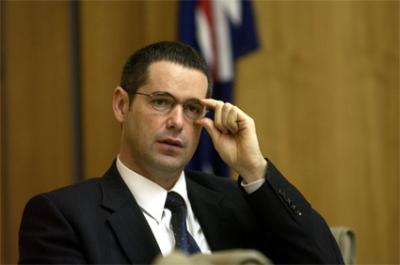
David Ramli reports to The Sydney Morning Herald that "iiNet chief executive David Buckingham [pictured] says the massive popularity of internet services like Netflix means current broadband plans will not be sustainable under the national broadband network unless the company building it drastically slashes prices .. Internet service providers like Singtel-Optus and iiNet are not charging customers for the data used by Netflix as both a marketing tool and a way to prevent bill shock for users.

But the service consumes a huge amount of data because it offers constant streaming of high-definition videos to several devices simultaneously – an issue some claim would make it unaffordable under the NBN's current pricing arrangements.


..The main complaint for telcos is a fee charged by NBN called the connectivity virtual circuit charge (CVC), which costs $17.50 per 1 megabit per second. iiNet chief technology officer Mark Dioguardi in April warned that users could be forced to pay a "Netflix tax" of $26 a month extra for moderate HD streaming, and $60 a month for the ability to watch occasional 4K streams". 
 
See "Netflix popularity requires NBN price rethink, says iiNet boss David Buckingham" - here.

Monday, January 6, 2014

Australian Police Piloting DPI


Back in November, the Australian Federal Police (AFP) issued a tender for DPI (here) - " for an appliance that can accept a stream of TCP/IP traffic or potentially previously captured packets in PCAP format .. at a minimum, it must be able to analyse flows of information at 10Gbps, regardless of whether it is using IPv4 or IPv6. Further requirements that the AFP needs are the ability to identify services and applications at the application layer". 

Kelly Ng [pictured] reports to Asia Pacific futuregov that "Australian Federal Police plans to pilot the use of Deep Packet Inspection (DPI) - a type of computer network packet filtering technology - starting next month. If successful, full implementation will take place in April. The force will use it as an internal system tool and it will not be connected to any external telecommunications or IT networks".

See "AUSTRALIAN FEDERAL POLICE TO TRIAL DATA FILTERING TECHNOLOGY" - here.


Friday, November 15, 2013

Australian Police Seeks DPI Appliances @10Gbps


The Australian Federal Police (AFP) ".. intends to expand upon its network forensics expertise to include new deep packet inspection capacity that will be able to capture and retain metadata. The agency is currently seeking tenders for an appliance that can accept a stream of TCP/IP traffic or potentially previously captured packets in PCAP format. The request for tender does not specify where the input to the appliance will come from, but states that at a minimum, it must be able to analyse flows of information at 10Gbps, regardless of whether it is using IPv4 or IPv6. Further requirements that the AFP needs are the ability to identify services and applications at the application layer.

Proposals are additionally expected to be able to filter out packets based on keywords, protocols, applications, IP addresses and ports. They should also identify malware, antivirus activity, communication and mobile applications, detect various types of encryption when used and de-capsulate tunnelling protocols. An example of the latter could include the Layer 2 Tunneling Protocol commonly used in virtual private network (VPN) connections, assuming the AFP is able to bypass the secure channel typically established to protect such data.

See "AFP seeks deep packet inspection capability to capture metadata" - here.

Wednesday, July 18, 2012

Australia - Bill Shock Prevention Self-Regulation is Coming

   
The Australian regulator, ACMA, announced that it ".. agreed to register the new Telecommunications Consumer Protection Code, giving long-suffering telco customers materially greater protection on the big telco issues such as bill shock, confusing mobile plans and poor complaints-handling .. The 2011 Reconnecting the Customer report addressed all of the various customer lifecycle touch points: better advertising practices, more effective information for consumers, tools to avoid bill shock, streamlined complaints-handling, a customer care reporting framework and changes to the Telecommunications Industry Ombudsman (TIO) scheme".

See also "24 Operator Groups (4B Subscribers) to Adopt Bill Shock Prevention Measures This Year" (here).

According to ACMA's Reconnecting the Customer report: 

"Bill shock can also be costly for industry. One estimate suggested that wireless broadband-related bill shock had cost one provider, Telstra, as much as $90 million in the 2010 financial year, through waiving fees or writing-off debts owed by consumers who cannot pay their bills".

"As required by the self-regulatory policy underpinning the Telecommunications Act, the ACMA proposes to invite the industry to develop a code that requires service providers to offer measures that allow customers to monitor the accumulation of charges during a billing period. For plans not subject to a hard cap or shaping, this should include: 
  • an equivalent platform-based notification (SMS for phone, email for internet) that alerts consumers at either consumer-nominated or provider-specified (for example, 80 per cent) expenditure/usage points 
  • a consumer-nominated expenditure/usage point that cannot be exceeded without a consumer’s express consent and includes notification at a particular expenditure/usage point 
  • Details about the expenditure/usage point reached, the consequences of any limitations and unavoidable exclusions".
See "A better deal for Australian telco customers" - here.

Tuesday, July 5, 2011

DPI Deployments (77) CyberOne [Australia] Uses ContentKeeper to Block Illegal Web Sites

 
ZDNet reports that "CyberOne is believed to be the first in Australia to implement voluntary internet filtering against Interpol's "worst-of-the-worst" blacklist of child exploitation material. Filtering was turned on this morning for the ISP's  cable network. CyberOne's DSL and wireless customers are not yet filtered .. Implementing the Interpol blacklist .. Interpol blacklist operates at the domain level. If the police find any extreme child exploitation material hosted, the entire domain is added to the blacklist. ISP customers attempting to access a blacklisted domain are redirected to an Interpol-supplied block page hosted on ContentKeeper's servers."

See "Interpol blacklist goes live in Canberra" - here.

CyberOne founder Maciej Mikrut said "it took about 10 minutes to install the filtering using the ContentKeeper Web (CK-Web) appliance from ContentKeeper Technologies, Australia's largest provider of content-filtering technologies.


See also "Australia: Telstra, Optus and Primus Agree to Voluntarily Block Illegal Web Traffic" - here.

Sunday, May 8, 2011

DPI Opportunity: Gilat Wins $120M Contract From Optus for Australia's NBN


The Australian Government announced on 7 April 2009 it would establish a new company to build and operate a new high-speed National Broadband Network (NBN). The NBN will become the single largest infrastructure investment made by an Australian Government, accompanied by historic reforms to Australia's telecommunications sector (see "New National Broadband Network" - here)

In order to cover the whole continent, some of the broadband infrastructure will be based on satellite connectivity. NBN announced that "Optus and Ipstar as interim satellite service providers in regional Australia as part of the National Broadband Network (NBN) rollout. The contracts with Optus and IPStar are worth $200 million and $100 million, respectively" (see "NBN Co signs Optus and IPStar for $300m interim satellite service deal" - here).
 
Gilat VSAT
Gilat Satellite Networks announced that " ..it has been selected by Optus Networks Pty Limited to provide a SkyEdge II Very Small Aperture Terminal (VSAT) network, installation, operation and maintenance for the Australian Government's National Broadband Network Company's (NBN Co) Interim Satellite Service ... The agreement with Optus provides for an initial network of 11 SkyEdge II hubs and 20,000 SkyEdge II VSATs expected to be deployed within up to three years. The agreement stipulates a possible expansion of the network to include hubs and up to 48,000 VSATs ..The agreement represents a potential value of up to $120 million, subject to final design and implementation of the fully expanded network".

See "Gilat to Provide Turnkey VSAT Network and Operations to Optus for NBN Co’s Interim Satellite Service in Australia" - here. Gilat revenues for 2010 were $233M.

Satellite communication was always a clear candidate for DPI based traffic management. Due to the nature of the service physics and the cost and availability of bandwidth, smart, application aware, fairness policies are required for proper QoE. See for example Allot's solution (here) - Optus is an Allot customer (here).

See below the current "Optus Broadband Satellite Offer" (here).

Wednesday, March 16, 2011

iiNet: New Proposal for "Policing Copyright Infringement"

   
The public discussion over copyright infringements is not as intensive as it used to be (maybe because a larger percentage of the content is now viewed or downloaded legally), but from time to time we still see new ideas and initiatives. 

iiNet, Australia's second largest DSL ISP, published a paper suggesting that the policing of copyright infringements  will be done by a third party. Steve Dalby (picture), Chief Regulatory Officer, suggests a new model which is based on the "addition of an independent body, into the mix": 

  1. A content owner will carry out their own detective work and identify an offending computer making unauthorised copies of their content available for sharing via (typically) bit-torrent software. This will provide them with an ‘IP Address’ that can be traced by the issuing ISP to a specific internet service.
  2. The independent body will determine whether the evidence meets a test of ‘cogent and unequivocal evidence’.
  3. IP addresses can be provided to an independent body who is able to identify the issuing ISP and ask that ISP for contact details for the service account holder. The ISP provides those matching contact details to the independent body.
  4. Using those contact details the independent body can issue notices to the account holder informing them that they had been detected making unauthorised copies available, provide educative information, advise the consequences that may follow continued behaviour and ask the account holder to ensure that the behaviour stops.
  5. The independent body keeps records of the notices and may modify the notice for a repeat infringer, or seek further sanctions. Some of those sanctions may include fines, court charges or changes to the internet service.
  6. Consumers who believe the allegations are incorrect will be able to appeal the notice to the independent body. These appeals and/or complaints would be dealt with by the independent body.
  7. Consumers who believe an insecure wireless access (or other technical issue) may be involved, will be referred, by the independent body, to their ISP for technical assistance.
See the complete document below, or here - and iiNet's press release - here.

Related posts:
  • The French Internet Police: 100,000 Warring Emails have been Sent - here 
  • Virgin Media - Throttles P2P but will not Inspect Content - here.


Friday, August 13, 2010

Telstra Prevents Bill Shock by Cutting Off Subscribers

   
"TELSTRA'S 1.6 million iPhone and BlackBerry customers will have their internet access switched off if they overspend, because the telco has had enough of customers refusing to pay" so reported by couriermai.com.au.

See "Telstra to cut off mobile phone users who go over their internet limits" - here

"It stops the charge but it also stops the service," Telstra's chief financial officer John Stanhope said yesterday .. While Telstra "didn't want to intrude" into users' lives, it had been forced to act because it was losing tens of millions of dollars when customers failed to cough up .. Telstra was partly to blame because it wasn't doing a good enough job of explaining plans and costs to its new smartphone customers .. app cap would benefit many customers by protecting them from big bills."

During Telstra's 2010 full year results conference, CEO David Thodey said (transcript - here):

"One area of disappointment in our cost base has been our bad debts expense. Bad debts increased 44 percent to $364 million. Admittedly, much of the increase was self inflicted with what we call bad volumes. Bad volumes include misalignment between a customer’s choice of plan and the plan they are initially billed for. The difficult economic conditions this year also contributed to larger write offs. So we had two elements, confusion by customers of plans and charges on their bills, et cetera, but we also did experience some bad debts due to the economic conditions. Pleasingly, we now have a detailed remediation plan in place to make sure we have lower bad debts moving forward. "

See other ways to cope with Bill Shock:
  • FCC Follows Europe With Bill Shock Prevention - Vendor Offering Review - here
  • EU Helps Preventing Mobile Bill Shock - here


Friday, August 6, 2010

Web Filtering Study from Sprouts

    
A recent document published by Sprouts covers the Web Filtering technology and implementation.

See "A Concise Study of Web Filtering" - here.

The document covers:
  • Web filtering techniques: Rating, black list, keyword  matching and Dynamic Filtering
     
  • Deployment options: national , ISP, organization, individual or 3rd party level
     
  • The national deployments in Australia, Canada, UK and China.
Web filtering is a perfect add-on to DPI systems, and may be used as a Value-added Service by ISPs (as well as regulation conformance).


Related posts:
  • DPI Deployment (15) : TalkTalk Uses Huawei to Detect Malware (or Parental Control ?)  - here
  • Chile: First Country to Legislate Net Neutrality  - here
  • Israeli Police Instructs ISPs to Block Gambling Web Sties - here
  • Australia: Telstra, Optus and Primus Agree to Voluntarily Block Illegal Web Traffic - here
  • DPI Deployments (9): Orange France Selects Openet and Cisco for Parental Control and Tethering Prevention - here
  • Kosher Mobile Internet - Cellcom Israel Offers Web Filtering - here

Monday, July 12, 2010

Australia: Telstra, Optus and Primus Agree to Voluntarily Block Illegal Web Traffic

     
The Australian government is trying, for some time now, to set regulations that will require ISPs to block access to web site showing illegal content ("Blacklist").

Illegal content is a flexible definition - while it is usually associated with child pornography (such as the list updated by the IWF - Internet Watch Foundation) it may include other content as well, certainly when the list comes from the government (see "Google, Yahoo, Microsoft fire back at Australian Web censorship plan" - here).

Last Friday, the Australian Communication minister, Stephen Conroy, announced that the government is going to make some modifications to its original plan which will delay the execution by a year. See "Outcome of consultations on Transparency and Accountability for ISP Filtering of RC content" - here.

3 major ISPs (Australia has over 200) - Telstra (45% broadband market share), Optus and Primus announced that they will voluntary block child abuse sites, probably hoping that what they will do will become the regulation itself, with no additional requirements.

There are a number of ways to implement a URL Blacklist service. It may be done based on filtering of IP addresses, with possible false-positive mistakes, or by DPI solutions that will examine the URL in each HTTP request. It’s a trade-off between cost and service quality. In both cases, continues update of the blackist is required.
Telstra's Group Managing Director, Public Policy and Communications, David Quilty said in a press release - ("Telstra supportive of interim internet child protection measures" - here): ".. it is important for people to understand that there is no magic solution which will make the internet 100 per cent safe. As a result, we will continue to work closely with the Australian Federal Police, ACMA and other authorities to combat the abuse and exploitation of children.”