Showing posts with label bandwidth management. Show all posts

Thursday, December 24, 2015

YouTube vs. T-Mobile: Do Customers Prefer Price over Quality?


John D. McKinnon and Thomas Gryta report to the Wall Street Journal that "YouTube said T-Mobile US Inc. is interfering with its video traffic, raising a new issue as federal regulators examine the wireless carrier’s streaming-video strategy.

T-Mobile recently began offering a program 
[Bingeon] that delivers video at lower quality in exchange for waiving related data fees. YouTube and its allies say T-Mobile also is lowering the quality of video that isn’t part of the program, including YouTube clips.

YouTube, which is owned by Alphabet Inc., said T-Mobile is effectively throttling, or degrading, its traffic. “Reducing data charges can be good for users, but it doesn’t justify throttling all video services, especially without explicit user consent,” a YouTube spokesman said.


T-Mobile declined to address YouTube’s complaints. In a statement, the No. 3 U.S. carrier by subscribers said its customers “love having free streaming video that never hits their data bucket” and like “both the quality of their video experience and the complete control they have.”

According to T-Mobile the video quality in the Binge On service plan "looks great. Binge On™ optimizes video quality for smartphone screens. It provides a great DVD-quality experience (typically 480p or better) which can also minimize buffering and maximize quality while using a fraction of the data. But it is your choice. If you want a higher resolution data experience, you can always choose to turn off Binge On™; however, you will no longer have the ability to stream for free from your favorite streaming services or have video optimized for your smartphone screen resulting in higher usage of your high speed data .. 

..All of our included video streaming services will be optimized when using the app or streaming through browsers

..if you are streaming video from one of our Binge On providers while tethering from a smartphone, tablet, or mobile internet device to a laptop, desktop, tablet, or handset you will enjoy all the great benefits of Binge On

See "YouTube Says T-Mobile Is Throttling Its Video Traffic" - here.

Saturday, April 25, 2015

Citrix Virtual WAN Reduces WAN Costs by 80%


Citrix announced the "CloudBridge™ Virtual WAN Edition, which reduces the cost of delivering applications, documents and IT services to branch offices by up to 80 percent, while ensuring nearly 100 percent application availability. The new CloudBridge Virtual WAN solution provides businesses with the flexibility to employ multiple cost-effective WAN technologies, offering the ability to scale WAN bandwidth at dramatically lower cost than traditional approaches".


"The solution also ensures the best possible user experience by securely sending mission-critical, delay-sensitive data over the highest performing path. The new CloudBridge Virtual WAN solution extends the CloudBridge platform and its integration with the company’s HDX and application acceleration technologies, to offer the most cost effective and highest performance solutions for securely delivering mobile workspaces with the applications, documents and IT services people need to work better in remote and branch offices". 


".. the new CloudBridge Virtual WAN solution allows enterprises to create a virtualized WAN by bonding multiple network services such as MPLS, broadband, mobile and satellite internet together to maximize WAN capacity and reliability. CloudBridge Virtual WAN constantly assesses the performance of paths within the virtualized WAN to instantaneously and automatically adapt to changing network conditions. This ensures constant connectivity of mission-critical applications without human intervention or complex routing table reconfigurations: 


See "Citrix Powers “Always-On” Branch Workspaces" - here.

Wednesday, December 4, 2013

[Infonetics Survey]: Openet Tops the Policy Management Market


Shira Levine, directing analyst for service enablement and subscriber intelligence, Infonetics Research provided some additional information from Infontics' 2013 Policy Management Strategies and Vendor Leadership: Global Service Provider Survey:
  • Bandwidth management continues to be a primary driver behind policy management spending, but this year’s survey confirms once again that policy is expanding beyond its traditional realm, assuming a key role in operators’ strategies around innovative services and pricing
      
  • This shift is driving new requirements for policy solution capabilities, with flexibility and scalability becoming increasingly important and causing some major shifts in the vendor landscape as operators swap out systems that aren’t meeting their needs
     
  • When asked to identify the top business drivers behind their policy management investments, survey respondents put bandwidth management functions at the top of the list; service creation and revenue generation also received high ratings
       
  • Usage-based services, advanced subscriber control, and bandwidth on demand led the list of use cases again, while voice over IP and M2M gained momentum compared to Infonetics’ 2012 policy survey
      
  • Flexibility constraints are the #1 reason operators are replacing their existing policy management systems  
  • Marketing teams continue to hold key roles in the policy management decision-making process at many operators
     
  • For the 2nd year in a row, respondents named Openet as a top policy management vendor, followed by Oracle/Tekelec, and Huawei

See "Operators using policy management to innovate services and pricing will shift vendor landscape" - here.

Thursday, October 10, 2013

Xirrus Announced new Dual Radio Wi-Fi AP Module with DPI


Xirrus announced the "XR-630 802.11ac access point (AP) featuring ACExpress™ – a Xirrus innovation that intelligently separates high-speed from lower-speed mobile devices to maximize system performance. The XR-630 provides a cloud-managed, low-cost expansion of the Xirrus 802.11ac portfolio that also includes Xirrus' line of modular, upgradeable line of XR Arrays. The XR-630 is the first access point of its kind to feature two radios capable of supporting the new 802.11ac standard, allowing organizations to provide performance well beyond that of 802.11n and enabling mobile users to experience application performance comparable to that of a wired network.

XR-630 is available in December; Pricing - $1100 for XR-630 AP supporting dual 3x3 802.11ac radios.
  

All Xirrus 802.11ac products, including the XR-630, feature Xirrus Application Control, allowing IT administrators to identify and manage more than 1,200 application types using Layer 7 Deep Packet Inspection (DPI) (see "Xirrus Wireless Access Uses Vineyard's DPI for Application Visibility" - here; Vineyard is now part of Procera Networks - see "Technology Partner Case Study | Xirrus" - here) . 

Application Control utilizes a distributed approach to controlling applications, placing the classification and policy enforcement engines directly at the edge of the network where bandwidth and security threats can be controlled before the traffic enters and impacts the core network. The unique Xirrus architecture used on the XR-630 and all Xirrus products employs high performance, integrated controllers to deliver the compute performance required to execute full DPI directly at the network edge".
See "Xirrus Announces Industry-First Dual-802.11ac Radio Access Point" - here.

Tuesday, September 24, 2013

Ipanema Helps Enterprises Manage Cloud Applications Performance


Ipanema Technologies announced its new "Cloud Application Management (CAM) solution. The CAM solution helps companies manage applications flowing across networks to and from the cloud. With CAM, enterprises can easily understand and control their business application usage and performance from public cloud, private cloud and hybrid cloud, protecting vital network resources from being consumed by recreational apps such as YouTube and Facebook"

".. Ipanema’s CAM solution is complimented by its Dynamic Hybrid Network solution, which allows enterprises to combine both traditional MPLS networks with Internet networks. The Dynamic Hybrid Network solution simultaneously and automatically monitors, controls, accelerates and selects the most appropriate path for an application traffic flow, across two or more networks".

See "Ipanema Technologies launches new solution to easily manage cloud-based application performance" - here.

Tuesday, August 20, 2013

Marvell New Processor "enables highly differentiated service-delivery solutions"


Marvell announced the ".. Marvell® Prestera® DX4200 series of packet processors that enable highly differentiated service-delivery solutions in the access and aggregation layers for a new generation of converged fixed and mobile networks. Services such as mobile video, applications and gaming are imposing complex bandwidth management challenges for private and public wireless services, and exploding mobile data usage is forcing significant investments and upgrades in the mobile backhaul environment .. The Prestera DX 4200 will sample to lead customers in September 2013. Interested parties can contact their local Marvell representative for further details of the comprehensive system development kit (SDK) and related device collateral of the DX family of products". 


See "Marvell Introduces New Prestera DX Products for Next-Generation Service Delivery Applications" - here.

Thursday, July 25, 2013

ZCorum Launches Bandwidth Usage Management Product; Based on Active Broadband Technology


ZCorum announced the ".. launch of Bandwidth Commander, a next generation bandwidth usage management product ..  Bandwidth Commander monitors subscriber bandwidth usage on an hour by hour basis, enabling better control of peak time usage across the provider’s subscriber base versus establishing monthly usage caps. Net-neutral bandwidth management policies can be applied dynamically based on key parameters such as the time of day, the plan the customer is subscribed to and even the amount of congestion on the network at the time".

See "ZCorum Launches a New Bandwidth Management Tool that Helps Monetize High Bandwidth Use" - here.

In parallel, Active Broadband Networks announced that it has "..partnered with ZCorum to power the company’s new Bandwidth Commander managed service offering. ZCorum is using Active Broadband’s Dynamic Broadband Service Manager (DBSM) to actively monitor subscriber bandwidth consumption and apply bandwidth management policies on the fly.

Bandwidth Commander allows ZCorum’s customers to implement bandwidth policies and service pricing based on connection speed, usage and time of day. By moderating bandwidth consumption during periods of peak demand, broadband providers can effectively defer capital expenditures, increase revenue by migrating heavy users to higher-paying service tiers, and improve overall subscriber experience. Bandwidth Commander is a hosted solution that leverages the existing DOCSIS network infrastructure – no additional network hardware is required"
.

See "Active Broadband Networks Powers ZCorum’s Bandwidth Commander Service" - here.

Sunday, March 17, 2013

US Army Needs Satellite Bandwidth Management Services W/Exinda DPI

 
The US Army is seeking sources to "Provide satellite bandwidth to multiple locations in Southwest Asia for a three month period (26 March 2013 - 25 June 2013) with global mobility capability on existing and provisioned Global Networks. Networks shall be operational with iDirect Version 2.0.1.0 or later and fully compatible with existing SNAP VSAT Terminals".

[including]: ".. Network Packet Shaping services shall provide QoS at the application level and ensure that all users of the service at an individual site are allocated equal portions of total available network bandwidth. The Contractor shall incorporates an Exinda (Unified Performance Management (UPM) solution) appliance at each teleport to perform deep packet inspection to ensure certain types of traffic is rate limited and prioritized in a way that provides the highest levels of QoS to the network".

See "D--Satellite Bandwidth Management Services Three Month Bridge" - here.

Thursday, March 7, 2013

[Survey]: How do US Universities Manage Bandwidth?


A recent survey by ACUTA, the Association for Information Communications Technology Professionals in Higher Education, shows that universities are still facing bandwidth management problems, same as 10 years ago when music downloads saturated their internet links, specially for those who were offering broadband services for students living on campus.

The second annual State of ResNet Report surveyed 251 universities or colleges, of which 24% were large institutes with more than 15,000 students.

The main conclusions:
  • 61% of respondents expect the cost of providing ResNet to increase over the next two years. Half of those respondents expect an increase of 5% or more.
     
  • Despite rising costs, 44% of schools reported no change in the portion of their operating budget devoted to ResNet over the last two years.
      
  • 10% reported a decrease in ResNet funding over the same period, while 31% reported an increase.
     
  • The top three factors attributed to increased spending are the cost of increasing bandwidth (72%), the cost of network hardware/software (63%) and the costs of providing new services to residents (50%).
Regarding bandwidth management:
  • Despite considerable demand, most schools enforce minimal restrictions on bandwidth access in student residence halls.
     
  • 68% of schools do not cap individual bandwidth usage for student residents.
     
  • Of the institutions that cap usage, 16% provide students with the option to pay for additional bandwidth.
However, "A majority of colleges and universities manage bandwidth usage through various means, most commonly through shaping and limiting bandwidth by protocol"


Related post "Does the Education Market need Bandwidth Management?" - here.

See "2013 Second Annual ACUTA State of ResNet Report" - here.

Saturday, February 16, 2013

tw Telecom: Case Studies for Bandwidth on-Demand


tw telecom offers enterprise customers some innovating traffic management services, under their Intelligent Network offering (see "tw telecom: 3 Steps Towards Application Aware Networking" - here).

The 2nd step in the above post, Dynamic capacity, was presented during tw's recent earning call, by Larissa Herda (pictured), Chairman, CEO and President, with several case studies:
  • Our first customer example is a financial services company in Charlotte that established new services including our dynamic capacity capabilities between two data centers to support data storage and a proprietary finance application. The customer started with 50 Meg of fix service, but quickly discovered their application needed a peak bandwidth of 150 Meg. As a result, the customer doubled their fixed bandwidth to 100 Meg and then relied on dynamic capacity to cover their maximum bandwidth needs, which is a great example of how the customer benefitted from our innovation while we sold more strategic services.
     
  • Our second customer example is a media company in Indianapolis. This customer purchased dynamic capacity capabilities between their primary and secondary data centers. The customer loved how quickly the increased bandwidth helped them resolve troubleshooting performance issues with their applications. The customer told us that dynamic capacity saved them hours of troubleshooting since they could immediately see it was not a bandwidth or network issue, which is a terrific customer experience.
     
  • The third customer is an insurance company in Florida. This customer moved their data center from their premises to a third party data center. And they were unsure of how much bandwidth they would need to manage data backup. The customer quickly enjoyed being able to increase their bandwidth for its' periodic increased bandwidth needs for storage replication and large file transfers that they needed while moving their applications from the corporate office to the data centers.


See "tw telecom's CEO Discusses Q4 2012 Results - Earnings Call Transcript" , by Seeking Alpha, here.

Wednesday, January 9, 2013

How to Build DPI Products? (Part XXI - Dynamic Bandwidth Management in IEEE 802.11)


Paper by Cheikh Sarr, Sofiane Khalfallah and Isabelle Gu´erin-Lassous (pictured).

Abstract

In this paper, we propose a new protocol named DRBT (Dynamic Regulation of Best Effort Traffic) which supports QoS throughput guarantees and provides a distributed regulation mechanism for Best Effort traffic in multihop wireless networks.
 

By adapting dynamically the rate of Best Effort traffic at the link layer, DRBT increases the acceptance ratio of QoS flows and provides a good use of the remaining resources through the network. Our protocol also provides an accurate method to evaluate the available bandwidth in IEEE 802.11-based ad hoc networks which is able to differentiate QoS applications from Best Effort traffic. Through extensive simulations, we compare the performance of our proposal scheme with some others protocols like QPART for instance.

See "Dynamic Bandwidth Management in IEEE 802.11-Based Multihop Wireless Networks" - here

Monday, December 31, 2012

[Survey] "16% not Using any Policy Management Solution"


It seems that the policy management market still has a lot to cover, or is still looking for appealing use-cases. According to a recent survey, only 23% of respondents said they are using policy management for the "new-age" use-cases, and the majority is mainly using it for traffic management. 

The survey, conducted by Heavy Reading (commissioned by BroadHop - now Cisco), covered the "current policy use, policy challenges and the benefits SDN (Software Defined Networking) is expected to bring to policy management" among "170 telecom industry experts and executives".

Results:

  •  Policy use cases:
    • 62% still using policy primarily for bandwidth management or data caps, tiered services, and throttling
    • 23% said they were using policy for new service delivery, including data plan creation, user self-care and promotions.
    • 16% not using any policy management solution
       
  • Policy Deployment Satisfaction 


  • Policy control deployments challenge: 
    • 37% interoperability with other IT and network equipment
    • 24% making a business case based on service differentiation
    • 20% scaling up to high transaction loads. 
    • 8.6% Adding new policy use cases was flagged by  of respondents and 
    • 10% regulatory issues such as net neutrality and privacy
       
  • Benefit of running policy management in a software-defined network (SDN) environment: 
    • 33% of respondents felt it was too early to tell 
    • 28% said that SDN would make it easier to launch new policy-supported services. 
    • The rest were split evenly between the opinions that SDN would make it easier to handle peak loads, that it would reduce the cost of policy deployments, and that it would enable policy to be bought and sold as a service in the cloud
       
See "BroadHop Survey: Policy Challenges for 2013 include Scalability, Interoperability and Making a Case for Service Differentiation" - here.

Tuesday, November 20, 2012

[Volubill]: Poll on On-Demand Mobile Services

  
A recent poll conducted by Volubill finds that ".. approximately 80 percent of mobile industry professionals consider on-demand mobile services as an ‘important’ or ‘very important’ advancement in sophisticated mobile policy. Driving this industry trend are advancements in policy control, real-time charging and efficient bandwidth management abilities"

See "Volubill Survey Results Indicate On-Demand Services as the Next Wave in Mobile Policy Control" - here.

Tuesday, September 18, 2012

DPI Deployments [176]: Vimpelcom [Russia] Deployed Procera to Manage P2P Traffic

   
While this is a 2011 project, one can still appropriate the willingness of the customer to be quoted by name after implementing a bandwidth management solution, used to "optimize" P2P file sharing traffic.

Procera Networks announced that VimpelCom "..  has deployed Procera’s PacketLogic platforms in nearly 43 cities throughout Russia. Last year, VimpelCom purchased Procera’s Intelligent Policy Enforcement (IPE) solutions to provide network visibility, analytics, optimization and bandwidth management. Most of the corresponding revenue was recognized by Procera last year"

Vimpelcom - Russia

"..[Vimpelcom] implemented a number of Procera’s IPE platforms and PacketLogic Intelligence Center (PIC) solutions including several PL10000 series platforms, PL 8000s, and PICs plus bypass switches for additional network resilience and availability".

"VimpelCom, in conjunction with technology system integrator Jet Infosystems, performed operational and laboratory testing using Procera’s PacketLogic Intelligence Center (PIC) solutions to gain “live” traffic analytics for their extensive network, and found that over 50% of broadband resources were being consumed by peer-to-peer file sharing. The two companies used the results of this research to design a solution that specifically meets VimpelCom’s unique requirements".
   
Related posts - "VimpelCom [Russia] Deployed Symantec's Web Filtering" - here and "Vimpelcom [Russia] Selected Vantrix for Video Services" - here

See "Procera Announces the Network-wide Deployment of PacketLogicTM Intelligent Policy Enforcement Solutions by VimpelCom in Russia and CIS Countries" - here.

Monday, July 9, 2012

ALU: Why will Enterprises Pay Premium for a Carrier Cloud Service?


A presentation delivered by Andreas Lemke (pictured), Director Cloud Solution Marketing, Alcatel-Lucent, at the Network Automation Conference held in Paris, recently about the carrier cloud, which "is a new class of cloud that brings together the data center and the carrier network for a differentiated, much higher value end-to-end offer. However, to realize the potential, the operation of the carrier cloud needs to be industrialized and automated. This way, the set up times of a networked cloud service can be reduced from weeks to minutes".

Slide 4 "Why should a service provider care? Enterprises will pay premium for carrier cloud" shows why enterprises will pay premium for a carrier cloud service, as oppose to the well-known public clouds. 

The main reasons are latency and bandwidth guarantees


See "Critical orchestration and automation tasks in the carrier cloud" - here


Wednesday, November 9, 2011

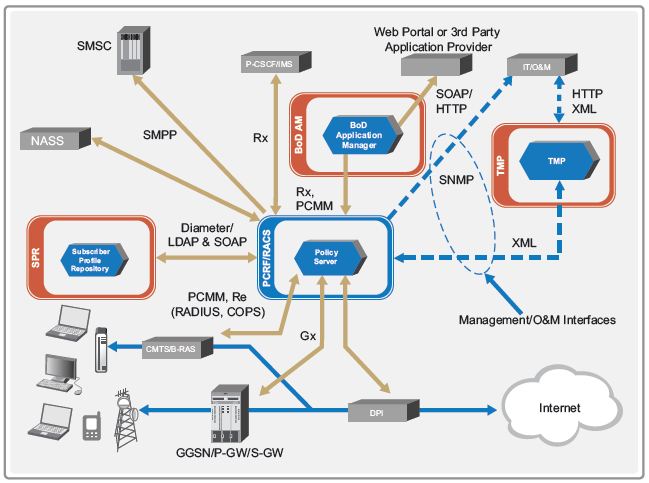
Tekelec's PCRF Used with Verizon's "Turbo Button" API

   
Following the recent story by Mark Hachman at PC Magazine - "Verizon API To Give Apps 'Turbo' Bandwidth Boost" (here) I was wondering if Verizon's PCRF system (a Tekelec product - here) takes part in this Bandwidth on Demand (BoD) system.

To get some clarifications, I contacted Joanne Steinberg (pictured), Strategic Marketing Director at Tekelec. Joanne confirmed that "Verizon is using Tekelec’s Policy Server (PCRF) as well as their own innovative, in-house network optimization API development to deliver service innovations such as the turbo button. As stated in the PC Magazine article, the turbo button can provide "guaranteed quality of service" and the network optimization API will "likely expose attributes like jitter, latency, bandwidth, and priority to app developers."

According to the PC Magazine story - "Verizon will publish an API that could allow consumers to "turbocharge" the network bandwidth their smartphone apps use for a small fee ..Verizon anticipates that a customer running an app on a smartphone will have the option to dynamically snatch more bandwidth for that app, if network congestion slows it down ..  Even with it LTE technology driving its fastest mobile network in the U.S., Verizon still sees a day when congestion can impact high-bandwidth apps".

Joanne sees the following values with API/Policy management system:
  • This is a great example of how policy can be used to help service providers deliver more personalized services, add value to over-the-top and in-house applications, and generate more revenues from mobile data
     
  • Service providers can also personalize services by providing subscriber data such as location information to applications if the subscriber opts in, guarantee quality of service, and allow subscribers to prioritize their preferred applications. They can also provide analytics to over-the-top application providers such as information on how different policies impact application usage.
See also - "Verizon Wireless Continues To Open Its Network To Developers With Launch Of Location, Messaging And Network APIs" - here.

Tekelec Policy Server Interfaces (Source: Tekelec)


Wednesday, September 21, 2011

QoS Announcements: NSN Adds Intelligent Broadband Management

         
Nokia Siemens Networks announced it has "launched Liquid Net, a new way to deliver broadband. Liquid Net allows an operator to set up its network to self-adapt to meet capacity and coverage requirements based on demand .. Liquid Net encompasses radio access, the core network and transport ; Liquid Core enables the core network (circuit-switched, packet-switched and IP Multimedia Subsystem functions) to deliver services and content, and dynamically provide the capacity needed to ensure the best customer experience at the lowest cost. This is achieved through core virtualization and intelligent broadband management".

"Based on Nokia Siemens Networks Policy Control Server (PCS), Nokia Siemens Networks Browsing Gateway (NBG), Flexi NG as well as integrated Content Delivery Network (CDN) capability, Intelligent Broadband Management offers integrated policy controlled end-to-end QoS, content adaptation and optimization, and distributed content delivery capability. It brings fully automated, self-adapting broadband optimization with best customer experience, providing the best insight engine with GGSN integrated DPI, Trendica, Traffica and radio congestion awareness" (more - here)

See "Nokia Siemens Networks taps into future of broadband with Liquid Net" - here and "Let it flow, let it flow, let it flow" - here.


Wednesday, April 13, 2011

FCC is Asking: "What are the Important Quality Factors in Broadband Services"?

 
The FCC seeks for public commentson the ".. kinds of “need for speed” information that will be most useful to consumers in choosing their Internet service"

The marketplace for broadband service is a confusing one for consumers,” says CGB Bureau Chief Joel Gurin (picture). “Most people don’t understand megabits-per-second in the way they understand miles-per-gallon .. an FCC Survey last year found that 80 percent of people with broadband don’t even know what speed they’re getting from their service. .. This Public Notice will provide a way for internet service providers, the tech community, and the public to help develop clear guidelines that will help everyone understand how to get the service they need.”

See the press release "FCC Bureau Seeks Comment on "Need for Speed" Information for Consumers of Broadband Services" - here and the public notice - here.

"Some applications, like e-mail, are generally not sensitive to network performance. Other applications, such as videoconferencing and gaming, may be affected significantly by a broadband service’s speed, latency, and jitter .. We note that the Open Internet Order [here] requires broadband providers to disclose information regarding network management practices, performance, and commercial terms of broadband services This Public Notice seeks input on the particular types of “need for speed” information that are most useful to consumers"
Well, if people can't understand "bps", how would they resolve of the mystrey behind "Jitter" ?

And indeed one of the questions asked by the FCC is "What is the best way to present information regarding broadband performance needs in a concise, cost-effective manner that facilitates informed consumer choice?" for which the following example is attached to the document (yet still about bps only.. ).


Monday, March 7, 2011

Alepo Adds a Mobile App for Dynamic Bandwidth Speed Selection to its PCRF

    
Alepo has ".. unveiled the first mobile app to enable dynamic bandwidth selection by end users. Aimed at mobile operators as a value-added service, the app capitalizes on the growing demand for faster and more personalized bandwidth speeds on mobile devices while enhancing the customer experience .. Alepo's Bandwidth Selection App directly communicates in with the operator's PCRF in real-time. It is available for both Android and iPhone".

In view of the recent intentions of major providers to deploy speed based tiered services (see - AT&T, Verizon) - such management tools makes sense, and allows a more dynamic service management. Customers may change the speed based on their specific data needs and spending budget - boost it when necessary and get back to lower speed and costs at other times.

See "Alepo Introduces Mobile App for Dynamic Bandwidth Speed Selection" - here - however, I can’t locate the new app in the Apple App Store.
John Kim (picture), Alepo VP of Business Development, said: "Alepo's Bandwidth Selection App assures subscribers of more personalized services by enabling them to tailor their policy to each situation .. By monetizing the solution, mobile service providers not only increase ARPU, but are able to better balance network resources while satisfying all subscribers"

Thursday, February 17, 2011

Cache Deployments (53): True Internet [Thailand] Uses Bluecoat to Reduce Costs and Improve QoE for Web and Video

         
True Internet, Thailand’s largest ISP with approximately 1.5M subscribers (of which nearly 800,000 in Bangkok Metropolitan Area) must be a paradise for equipment vendors, as it frequently agrees to deploy similar systems from multiple vendors, cooperates very well with the vendors and allows them to mention that in press releases.

3 months ago Oversi announced a cache deployment at True (see "Does True Internet [Thailand] Use Oversi Just to Improve Internet Video QoE?" - here) and now Bluecoat announces that "True Internet .. has deployed Blue Coat® CacheFlow® 5000 [here and chart below] appliances to reduce costly international bandwidth consumption, as well as to improve end-user Web experience especially for the delivery of rich Web 2.0 and video content"
  
See "True Internet Deploys CacheFlow Appliances to Reduce Bandwidth Costs and Improve User Experience for Rich Web 2.0 & Video Content" - here.

True is also using PeerApp - see "True -- Thailand's Largest Internet Service Provider Cuts Bandwidth Costs with New Peer-to-Peer Technology from PeerApp" - here.

This time it is clearly said that caching is used to reduce the usage of costly international bandwidth, and not only in order to improve subscribers’ QoE. Bluecoat explains that "Particularly in high-growth, developing regions such as Latin America, Middle East, Eastern Europe and Southeast Asia, international bandwidth costs can be prohibitive for service providers. In many instances, regional service providers may be paying hundreds or thousands of dollars per megabit per second (Mbps) per month for international IP transit bandwidth."

Dr. Viriya Upatising, CTO of True Internet said “..We face considerable demand for bandwidth, especially as each customer consumes a growing amount of rich media content from such sources as Facebook, MySpace, YouTube, DailyMotion, RapidShare and other sites With international bandwidth still being quite expensive, the CacheFlow appliances have provided a significant remedy for us by helping us manage the operational challenge of adding more users and addressing greater traffic volumes. From our extensive testing of the solution, we have seen how the CacheFlow product consistently delivers high bandwidth savings, while improving the quality of our Internet service to our customers”. Dr. Viriya was also quoted on Oversi's release.