Showing posts with label TWC. Show all posts

Friday, April 24, 2015

CDN Deployments [352]: Wind [Italy] Selected ALU's Velocix (Joins Telus, Oi and TWC)


Alcatel-Lucent announced it is to "..provide Italy’s Wind Telecomunicazioni with content delivery network technology to support the launch of new video and TV services for its fixed and mobile subscribers. The provision of Alcatel-Lucent’s Velocix Content Delivery Network platform will enable Wind’s customers to manage video traffic on its network, providing an optimized experience for customers regardless of the device they use to access content". 


".. Alcatel-Lucent will deliver its Velocix 7810 Digital Media Delivery Platform, the market leading on-net Content Delivery Network system, used by some of the largest operators in the world, including TelusOi and Time Warner Cable, among others"

Related post - "Who is Using ALU's Velocix Solution?" - here.

Wind had 21.6M subscribers at the end of 2014. 


See "Alcatel-Lucent content delivery network technology selected by Wind to support its launch of premium video and TV services in Italy" - here.

Tuesday, December 2, 2014

M-LAB Blames Transit Carriers for ISPs Service Performance Degradation


A new report by M-Lab concludes that "we observed sustained performance degradation experienced by customers of Access ISPs AT&T, Comcast, Centurylink, Time Warner Cable, and Verizon when their traffic passed over interconnections with Transit ISPs Cogent Communications, Level 3 Communications, and XO Communications.

In a large number of cases we observed similar patterns of performance degradation whenever and wherever specific pairs of Access/Transit ISPs interconnected. From this we conclude that ISP interconnection has a substantial impact on consumer internet performance -- sometimes a severely negative impact -- and that business relationships between ISPs, and not major technical problems, are at the root of the problems we observed.


Observed performance degradation was nearly always diurnal, such that performance for access ISP customers was significantly worse during peak use hours, defined by the Federal Communications Commission (FCC) as the hours between 7pm and 11pm local time. This allows us to conclude that congestion and under-provisioning were causal factors in the observed degradation symptoms. 

It is important to note that while we can infer that performance degradation is interconnection-related, we do not have the contractual details and histories of individual interconnection agreements. As such, we cannot conclude whether parties apart from the two we identify are also involved (e.g. in the case that an Access ISP shares an interconnection point with another, etc.). We leave this non-technical question open for further study by others and focus here on the impact of what we can observe on consumer performance through measurement
".


See "ISP Interconnection and its Impact on Consumer Internet Performance" - here.

Friday, December 13, 2013

TWC: Online Viewing Drives Broadband Demand Growth (+40% Y/Y)


Optimizing service plans becomes a challenge - the service tiers (speed, data caps) should answer the demand for bandwidth and QoE, while maximizing revenues and minimizing churn. Here is a short example that considers all the ingredients:  

Stacey Higginbotham reports to GigaOm that "Thanks to a UBS note from Monday we now have some good data on broadband usage at Time Warner Cable

The investment bank issued a note saying that TWC’s CEO-designate Rob Marcus [pictured] said online viewing is up (although not a replacement for pay TV), and is increasing the demand for broadband. That demand is up 40 percent year over year with an average consumption of 50 GB per month and a median of 20 GB per month. That’s driving the introduction of faster tiers, although TWC will keep usage caps at the low end to appeal to more price-sensitive".

See "Time Warner Cable broadband usage is up 40 percent this year" - here.

Saturday, November 16, 2013

Gigaom Bandwidth Caps Watch (8 out of 15 ISPs on the Black List)


Stacey Higginbotham ("Over 60% of US Broadband Subscribers have Data Caps" - here)  [pictured] explains that "We’re not fans of ISPs capping broadband here at Gigaom, so we’re keeping a close eye on how those caps evolve and who they affect. Check out our updated list on who’s capping your broadband .. In most cases, the companies implementing caps maintain that 99 or 98 percent of their users don’t go over them and have median usages that range between 12 and 18 GB per month. So here are the top broadband providers in the U.S. and their caps. Last year we included a column for exceptions to the cap, but this year there aren’t any, so we took that column out". 

ISPs with no caps: TWC, Verizon, Cablevision, Frontier, Windstream, Fairpoint and Cincinnati Bell. 4 ISPs have overage costs - Comcast (see "Comcast Response to Recent Claims: Higher Base Cap w/Tiered Plans or Overage Fees" - here), AT&T, Suddenlink and MediaCom.

See the full table - "Want to know if your ISP is capping data? Check our updated chart" - here.

Wednesday, November 13, 2013

Netflix CDN Customers have More Fun

   
Showing Prime Time data. Source: Netflix
Netflix (31.6% of US fixed traffic - here) has improved its "ISP Performance" reports [see "Netflix - New Site Shows ISP Performance for US, UK, Scandinavia and more" - here], by isolating the prime time statistics - "so you know which Internet service providers (ISPs) deliver the best Netflix experience when it matters most".

Joris Evers, director of corporate communications at Netflix, shows in a blog post the effect of the Netflix' CDN on ISP performance, during prime time:

"Prime time is the equivalent of rush hour on the Internet. This can lead to congestion on the network, just like physical traffic can on roads. When watching Netflix, network congestion can manifest itself as buffering, lower video quality or longer start-up times. 

This graphic shows how important the effect of network congestion during prime time can be on the viewing experience. ISP speeds are consistently much better for customers served by ISPs that directly connect their network to Netflix using our Open Connect content delivery network.
[see "Majority of Netflix Traffic Uses its Free CDN" - here and "Netflix CDN Appliance Design: 100TB;10Gbps -- in 4U Chassis" - here]. This performance difference is even more evident during prime time".

Apparently, Cablevision is using the CDN and TWC doesn’t, and indeed its prime time service shows significant worse performance, while Cablevision maintains a more constant service. Nevertheless, TWC is still better than other ISPs, according to the above chart.


See "New: Netflix Prime Time ISP Performance Metrics'" - here.

Wednesday, June 19, 2013

Time Warner Cable: Slow Internet is Normal - We don’t Throttle Traffic

 
Jeff Simmermon (pictured), Director Digital Communications, Time Warner Cable explains in a blog post why the Internet is sometimes slow. There are many reasons - but not the speculation "A small subset of our customers" that "seem to think we are intentionally degrading their service"

We don’t throttle traffic

".. We’ve invested billions of dollars to ensure that our networks deliver the best possible experience regardless of the source or nature of the traffic. However, the traffic only moves as fast as the weakest link. And when traffic travels across multiple networks, each with its own relationships, slowdowns and other problems can and do occur".

See "Explained: Why Internet Traffic Slows At Times" - here.

Wednesday, February 27, 2013

US "6 Strikes" Anti-Piracy Enforcement Begins!


Pay, Don't share !
After some delays (originally planed for July 2012 - see "US Anti-Piracy Delayed; ISPs will not Terminate Accounts" - here) Jill Lesser, Executive Director, Center for Copyright Information announced that Feb 25 marked ".. the beginning of the implementation phase of the Copyright Alert System (CAS). Implementation marks the culmination of many months of work on this groundbreaking and collaborative effort to curb online piracy and promote the lawful use of digital music, movies and TV shows".

The CAS marks a new way to reach consumers who may be engaging in peer-to-peer (P2P) piracy and I am excited that our new website features information on the CAS, the Independent Review Processcopyright, P2P networks, and numerous consumer oriented legal sources for music, movies and television shows". 

According to the press Comcast is the first ISP implementing the system followed by AT&T, Cablevision, Time Warner, and Verizon later (here - see the 2011 MOU below).

See "Copyright Alert System Set to Begin" - here.


Monday, December 3, 2012

TWC Uses WeFi to Optimize Wi-Fi Connectivity


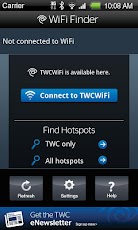
Todd Spangler reports to MultiChannel that "Time Warner Cable wants to keep broadband customers from cutting the cord -- by making it easier for them to connect to high-speed Wi-Fi outside the home .. the cable operator is using a technology from Israeli startup WeFi that automatically identifies the best possible Wi-Fi signal available in a given area and then connects a user’s mobile device. That will let TWC’s broadband subscribers seamlessly tap into more than 60,000 Wi-Fi hotspots across the U.S., including those operated by its four MSO brethren .. in addition, the WeFi system promises to let TWC identify the highest-traffic areas to help determine where to place additional hotspots".


WeFi CEO Zur Feldman (pictured) told MultiChannel that "The WeFi technology is embedded in TWC’s WiFi Finder app for Android [see below]. The Apple iOS version with the hotspot location functionality is in development and will be available within a few weeks .. WeFi’s hotspot-location system is used by 7 million users worldwide. Its database catalogs 145 million hotspots globally, with about 50 million of those in the U.S. The startup has another American “Tier 1” operator customer .. but he declined to identify it". 


See "MSO Uses Technology from Startup WeFi to Connect Users to CableWiFi Networks" - here.

Sunday, November 18, 2012

[TorrentFreak]: How will AT&T, Verizon and TWC Handle Piracy?


Ernesto, Founder and Editor-in-Chief, TorrentFreak reports how US ISPs will handle copyright infringements, following the voluntary MOU to stop piracy (see "US Anti-Piracy Delayed; ISPs will not Terminate Accounts" - here):
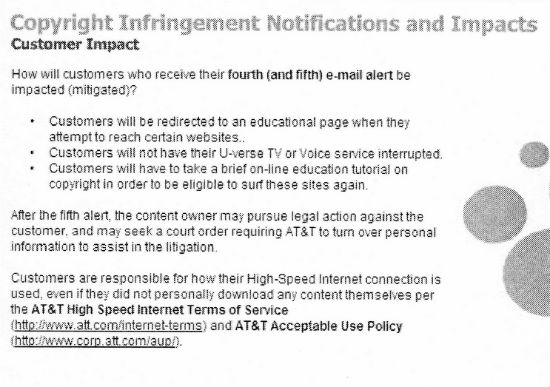
  • AT&T - "From leaked AT&T training documents we learned that the company will block users’ access to popular websites until they complete a copyright education course. However, none of the participating Internet providers have publicly commented on the measures they plan to take, until now
    Source - TorrentFreak- here


  • Verizon - Link Hoewing (pictured), VP Internet and Technology Issues, Verizon, said his company will employ a three stage process. The first two alerts will result in a simple notification email informing the users that their connection has been flagged for copyright infringements. After the second warning comes the acknowledgment phase in which a popup is delivered users. Once received subscribers are required to read and confirm, a process designed to ensure that they are aware of the unauthorized sharing that’s taking place via their account.If the infringements continue punishments become a reality on the fifth and the sixth alerts. Hoewing said that these repeated infringers will have their Internet connections throttled resulting in significantly slower download speeds. The throttling is temporary and will be lifted after two or three days.
     
  • TWC Fernando Laguarda (pictured), VP External Affairs, Time Warner Cable said "his company will take a slightly different approach. The notification and acknowledgment phases are fairly similar, but instead of reducing connection speeds they will restrict users’ Internet browsing by directing them to a landing page".


See "Verizon Will Reduce Speeds of Repeated BitTorrent Pirates" - here.

Friday, March 23, 2012

US ISPs Agreed to Combat Major Cyber Security Threats


While US ISPs get ready to fight piracy by watching for illegal content downloads (here) they have also agreed to ".. better secure their communications networks and protect consumers and business".
  
An FCC press release announced that ".. an industry advisory group for the Federal Communications Commission (FCC), the Communications, Security, Reliability, and Interoperability Council (CSRIC), unanimously adopted recommendations for voluntary action by Internet service providers (ISPs) to combat three major cyber security threats, including botnets, attacks on the Domain Name System (DNS), and Internet route hijacking .. Chairman Genachowski applauds voluntary commitments by nation’s largest Internet Service Providers, including AT&T, CenturyLink, Comcast, Cox, Sprint, Time Warner Cable, T-Mobile and Verizon".
  • Under the Anti-Bot Code, ISPs agree to educate consumers about the botnet threat, take steps to detect botnet activity on their networks, make consumers aware of botnet infections on their computers, offer assistance to consumers whose computers are infected and collaborate with other service providers that have also adopted the Anti-Bot Code
      
  • DNSSEC is a set of secure protocol extensions that prevent such fraudulent activity
      
  • CSRIC recommended an industry framework to prevent Internet route hijacking, which is the erroneous routing of Internet traffic through potentially untrustworthy networks 
Some examples from other countries: Sri-Lanka, Nigeria, Egypt, India, Korea, Argentina. AT&T also announced several security initiatives (here here and here).    

See "FCC advisory committee adopts recommendations to minimize three major cyber threats, including an anti-bot code of conduct, ip route hijacking industry framework and secure DNS best practices" - here and more details (here).

Friday, March 16, 2012

US ISPs to Start Anti-Piracy Actions on July 12


Last July the Center for Copyright Information published a "fact sheet" explaining the system that will be used by ISPs so "Parents and other ISP subscribers will benefit from a new state of the art system of alerts -- similar to fraud alerts consumers receive about their credit card accounts -- that let them know when their Internet accounts have been identified as being misused for content theft" (here).

Greg Sandoval reports to CNET that Cary Sherman, (pictured) CEO of the Recording Industry Association of America (RIAA), said on Wednesday during a panel discussion at AAP Annual Meeting that "Most of the participating ISPs (Comcast, Cablevision, Verizon, Time Warner Cable and other bandwidth providers) are on track to begin implementing the program by July 12"


".. Each ISP has to develop their infrastructure for automating the system for establishing the database so they can keep track of repeat infringers, so they know that this is the first notice or the third notice. Every ISP has to do it differently depending on the architecture of its particular network. Some are nearing completion and others are a little further from completion".
  
See "RIAA chief: ISPs to start policing copyright by July 12' - here.

Friday, January 20, 2012

Major ISPs will Participate in 2012 IPv6 Day

 
The Internet Society announced that "Major Internet service providers (ISPs), home networking equipment manufacturers, and web companies around the world are coming together to permanently enable IPv6 for their products and services by 6 June 2012 [here] ..Organized by the Internet Society, and building on the successful one-day World IPv6 Day event held on 8 June 2011, World IPv6 Launch represents a major milestone in the global deployment of IPv6. As the successor to the current Internet Protocol, IPv4, IPv6 is critical to the Internet’s continued growth as a platform for innovation and economic development"

"ISPs participating in World IPv6 Launch will enable IPv6 for enough users so that at least 1% of their wireline residential subscribers who visit participating websites will do so using IPv6 by 6 June 2012. These ISPs have committed that IPv6 will be available automatically as the normal course of business for a significant portion of their subscribers. Committed ISPs are: AT&T, Comcast, Free Telecom, Internode, KDDI, Time Warner Cable and  XS4ALL"

See "The CTOs of Arbor and Sandvine Analyze "World IPv6 Dayhere.

See "World IPv6 Launch Solidifies Global Support for New Internet Protocol" - here.

Sunday, November 13, 2011

TM Deployments [101]: Smart [Philippines] Deployed GreenPacket for 3G/Wi-Fi Convergence and Targeted Advertisement

 
GreenPacket (see "GreenPacket Enhances Offloading with Policy Control" - here) announced that it has "secured a major win with Philippines’ largest wireless service provider, Smart Communications Inc .. Greenpacket’s award winning Intouch Connection Management Platform (ICMP) will enable Smart to be the first Philippines operator to offer converged connectivity across its 3G and WiFi access networks .. The ICMP solution enables seamless connectivity across 3G and WiFi access networks, thus providing a strategy for alleviate network congestion by offloading data to less expensive and less congested WiFi access networks. Additionally, the ICMP is customized to support Smart’s new targeted advertisement push services".

Smart Communications, a subsidiary of PLDT, is the Philippines' leading wireless services provider with 47.8 million subscribers on its GSM network as of end-June 2011 (see revenues chart for PLDT wireless services).

".. The company recently clinched a similar deal with Time Warner Cable .. The solution is also being deployed by Hong Kong’s leading telco, PCCW a 3G and 4G communications and technology provider .. [Kelvin Lee, Senior General Manager of Greenpacket] expects to close more deals for the ICMP suite of solutions with operators keen on finding avenues to optimize access networks, manage connectivity across devices and also generate more revenue"


See "Smart Communications Philippines Chooses Greenpacket’s Intouch Connectivity Management and Data Offload Solutions" - here.

Saturday, July 9, 2011

US ISPs Anti-Copyright Infringement Alert System

 
The Center for Copyright Information published yesterday a "fact sheet" explaining the system that will be used by ISPs so "Parents and other ISP subscribers will benefit from a new state of the art system of alerts -- similar to fraud alerts consumers receive about their credit card accounts -- that let them know when their Internet accounts have been identified as being misused for content theft".

See the press release "Music, Movie, TV and Broadband Leaders Team to Curb Online Content theft Announce Common Framework for “Copyright Alerts” - here 

Among the companies and associations collaborating (MOU - here) on establishing the Center are AT&T, Cablevision, Comcast, Time Warner Cable and Verizon (see previous post - here).

"Copyright Alerts will provide a thoughtful and effective system to educate Internet subscribers about copyright, advise them about the consequences of inadvertent or purposeful content theft, ensure that they are aware of the many sources of legal content and deter those who receive repeated alerts from allowing their accounts to be used for content theft"

See the document "Center for Copyright Information And Copyright Alert System Fact Sheet" - here  - detailing the steps IPS should take.

After the 5th time a "notice from a copyright owner" has been received by the ISP for a subscriber - "  the ISP may take one of several steps, specified in its published policies, reasonably calculated to stop future content theft.  These steps, referred to as “Mitigation Measures,” may include, for example: temporary reductions of Internet speeds, redirection to a landing page until the subscriber contacts the ISP to discuss the matter or reviews and responds to some educational information about copyright, or other measures that the ISP may deem necessary to help resolve the matter"

Tuesday, February 23, 2010

US Telco ask FCC not to Reclassify Broadband Services

Verizon, AT&T, TWC and Qwest, supported by the NCTA, CTIA, USTA, TIA and ITTA sent an open letter (here) to Julius Genachowski, FCC chairman asking not to classify broadband service as a “telecommunications service” (i.e. forcing Net Neutrality) as this "would be a profound mistake with harmful and lasting consequences for consumers and our economy". 

The main arguments are:
  1. The Commission’s Bipartisan Treatment Of Internet Access As A Title I Information Service Has Produced Huge Benefits For American Consumers
     
  2. There Is No Factual Or Legal Basis For Classifying Broadband Internet Access Service As A Title II Telecommunications Service
     
  3. Classifying Internet Access As A Title II Telecommunications Service Would Have Negative Consequences Across The Entire Internet Ecosystem