Showing posts with label Radware. Show all posts

Tuesday, December 22, 2015

[Study]: Most Mobile Travel Sites are too Slow!


A new study by Radware finds that "76% of the industry’s top 100 sites are slow to load, paralyzed by third-party scripts and trackers, and image-heavy. In fact, the average page took 6.7 seconds to load on the iPhone 6, slower than the 4 second ideal time tolerated by shoppers.


..  By the end of 2015, mobile-booked travel is expected to reach $52.08 billion. with this level of exponential growth, travel websites have a lot to gain by preparing for the volume of mobile traffic they’ll be seeing in 2016.

Source: Radware's 2015 State of the Union: Mobile Performance of the Top Travel Industry Sites:
Do Your Customers Want To Take A Vacation From Your Slow Site?

The Radware report finds that there are a number of factors contributing to poor performance that can be fairly easily remedied: Overloaded with Requests .. Image Heavyweights .. Responsive Web Designs (RWD) Typically Optimize Viewing but Not Performance.. " 

See "Radware Study Reveals 76% Of Travel Industry Websites Aren’t Fully Optimized For Mobile Customers" - here.

Tuesday, July 21, 2015

RADWARE Accelerates HTTP/2 Web Traffic


Radware announced the ".. release of its newest ADC software version which provides a leading web performance optimization and acceleration solution to help maximize the acceleration value for HTTP/2.

Major benefits of HTTP/2 over HTTP 1.1 (Source: Radware)

..Recognizing that HTTP/2 will soon be the standard protocol for access to the Internet, Radware has embedded an advanced HTTP/2 gateway into its Alteon NG application delivery controller. With no upgrade of the front-end web application server or long development and testing cycles needed, Radware’s gateway for the HTTP/2 protocol offers backwards compatibility with legacy servers and browsers that can only support HTTP 1.1
.

With the embedded HTTP/2 gateway, HTTP/2-enabled browsers immediately enjoy the following benefits:
  • Multiplexing of Transactions – HTTP/2 transactions are multiplexed by nature. An HTTP/2 browser can send any number of requests and receive the responses interleaved and out of order. This translates to fewer total connections, which eliminates setup time latency associated with each additional connection, hence, reduced total latency
     
  • Header Compression – HTTP headers have grown significantly over the years. For example, the cookies section transmitted with each request may include multiple cookies, each as long as 4K. With the HTTP/2 HPACK algorithm, recurring headers may be sent only once per client connection and not per request, which translates to reduced bandwidth
     
  • Privacy/Security – Encrypted HTTP/2 traffic is required to use only TLS 1.2 and above with ciphers that implement prefect forward secrecy (PFS) such as ephemeral DH and elliptic curves. This implies that HTTP/2 encrypted sessions are harder to break. The use of TLS (over SSL) has also become guidance by the PCI association
     
  • Application Flow Control and Prioritization – Since HTTP/2 supports multiple parallel transactions, a method for controlling the amount and preferred order of transferred data is necessary. Radware’s extensive field experience with features that provide resource reordering for best browsing experience, such as deferrals, can now be leveraged to help users benefit from this HTTP/2 capability
     
  • Server Push – Radware is the first to offer H2 Push, enabling automated server push. While HTTP 1.1 is a unidirectional protocol, where only the client can request for resources, HTTP/2 is fully bidirectional and allows the server to initiate data transfer to the client. However, this requires a smart server that knows which resources to push to improve page rendering and load time. Knowing which resources to push to each client is not a simple task- it requires deep understanding of the Web application, and awareness of what is already in the browser cache. The automated server push capability can greatly improve user experience, but if the server doesn’t know what’s in a browser’s cashe, the server push capability of HTTP/2 cannot provide a benefit.
See "Radware’s Alteon® NG Helps Provide Fastest Website Acceleration" - here.

Saturday, May 30, 2015

Radware Accelerates Web Images Delivery w/50% Compression


Radware released the "..newest version of its powerful automated web performance optimization and acceleration solution, FastView® 6 .. includes PerfectImage, proven by research to be the preferred image compression method for both higher user satisfaction and faster web page delivery" 
PerfectImage is an algorithm developed to optimize images - significantly reducing image file size while ensuring minimal image quality degradation. 
By using a Digital Camera Images (DCIM) human vision algorithm, images are carefully compressed using various image compression formats (such as JPEG, JPEG 2000, WebP, and others) so that the final image has less than 1.5% difference vs. the original image which is invisible to the human eye. Another outcome of applying PerfectImage is that the image file size can shrink by up to 80%.

The average compression ratio achieved with PerfectImage is more than 50%. If the average web page payload is 1.8MB and the average image payload is 1.1MB (59%), than applying the PerfectImage algorithm can save 550KB (30%) of payload per page. 
We applied the PerfectImage algorithm on a flight reservation commercial site. The magnifying glass shows how the image size on the original web page (before applying PerfectImage optimization) was 1.7MB and after the optimization the image payload went down to 412Kb – a 75% reduction: 


".. In addition to PerfectImage, FastView 6 also offers deeper web application acceleration, covering more resources inside each web application page. It is the first to optimize resources embedded in and rendered by JavaScript as these resources are not included directly by the web servers and are normally not optimized. FastView 6 now optimizes these tough to find files to make JavaScript oriented applications render even faster.

The technology applies advanced acceleration techniques to dynamically discover client side application calls, allowing enterprises to overcome the challenge of optimizing web pages that are built on a growing number of resources within scripts running on a client’s browser instead of being native to the server side application code
.

See "Radware Provides Faster Web Page Delivery – New Image Compression Technique Helps Reduce Image Payload" - here.

Sunday, July 27, 2014

[Study]: Lack of Image Optimization Slows down top Retail Web Sites


A new report by Radware finds that "of the top 100 retail websites, the median page has grown 67% in just one year and many are failing to leverage advanced techniques to help accelerate their pages .. use of images is one of the single performance drains, as most site owners are not taking advantage of image optimization techniques that can dramatically improve both real and perceived load times

.. The median top 100 ecommerce home page takes six seconds or longer to render its primary content to online visitors – a 27% slowdown over the past year. This render time is more than twice as slow as the ideal user experience of three seconds or less. Only 14% of the top 100 retail sites were able to deliver an optimal user experience. 17% took ten or more seconds just to be become interactive.


See "One Year Later – Websites are Going Nowhere Fast – New Radware Research Reveals Retailers Still Make Same Web Performance Mistakes" - here.

Saturday, April 26, 2014

[Research]: CDN Enabled Sites are Slower!


A new research by Radware reveals that ".. while 75% of the top 100 retail websites employ a Content Delivery Network (CDN), the median home page takes a full second longer to become interactive than the median page that does not use a CDN .. Radware’s latest research shows that the median time to interact (TTI) for CDN enabled sites was 5.7 seconds compared to the median TTI of 4.7 for non-CDN websites".

Kent Alstad [pictured], Radware's VP of Acceleration explains: “This finding should not be interpreted as a criticism of content delivery networks. Instead, it should create awareness that CDNs address just one aspect of the performance problem. Web pages today are bigger and more complicated than ever, and CDNs can only partially mitigate this growth and complexity. Site owners need to be aware that there are performance issues caused by the pages themselves, and these performance issues require additional solutions.”

Other key findings:
  1. The median web page has slowed down by 47% since 2012.
  2. The median page takes 5.4 seconds to become interactive. 
  3. The top 100 sites are slower than the top 500.
  4. Most sites fail to leverage best practices for optimizing images.


See "New Radware Research Reveals eRetailers that use a Content Delivery Network Experience Slower Page Load Times than eRetailers that do not" - here.

Saturday, December 21, 2013

[Heavy Reading]: DPI Vendors Shift Focus to SDN/NFV


A new report by Simon Stanley [pictured], research analyst, Heavy Reading finds that "Providers of DPI (deep packet inspection) technologies are shifting their focus to emerging software-defined network (SDN) and network functions virtualization (NFV) in an effort to boost network performance".

See related posts on Procera Networks (here), Allot Communications (here), Sandvine (here, here), Radware (here) and Qosmos (here)

Other findings:
  • "SDN/NFV are driving a shift to virtualized platforms running on standard servers or dedicated hardware
     
  • Strong ecosystem for DPI, policy management and analytics, including systems, software and processors
     
  • Long Term Evolution (LTE) remains a leading driver for growth in policy management and analytics
      
  • Consolidation in the market with Cisco, Intel [see "Intel Acquires DPI vendor Sensory Networks ($20M)" - hereand Procera [see " Procera Acquires Vineyard Networks for $28M" - here] acquiring key software suppliers
     
  • Multicore processors from Broadcom, Cavium, Freescale, LSI and Tilera have been widely used in DPI systems. Network processors from EZchip and Netronome are used for pre-processing, load balancing and coarse DPI. Following the development of the Intel DPDK, x86 multicore processors and, in particular, the Intel Xeon E5-2600 family processors have been increasingly used for DPI and policy enforcement [see "New Intel Platform Provides 140 Gbps of DPI" - here]. The drive for virtualization will increase the use of x86-based platforms for DPI and policy management. The latest ARMv8-based multicore processors may also take some of this market. Multicore processors and network processors will be used to offload DPI and network interface functions, accelerating virtual platform performance".  
See "Virtualization Drive for DPI & Policy Management" - here and here.

Thursday, October 17, 2013

Study: Top U.S. Retailers Websites Continue to Get Slower


A recent study by Radware "reveals that websites for the top 500 U.S. retailers are still too slow and continue to get slower – pages have slowed down 14% since Summer 2013, and are 16% slower than Fall 2012. Additionally, the report uncovers inconsistent adoption of core best practices by site owners, critically affecting website performance and customer experience.

The median page took 8.56 seconds to load for first-time visitors, representing a 14% slowdown over the median of 7.48 seconds recorded three months ago ..


See "New Radware Research Reveals Top Retailers Sites Too Slow, Struggle to Meet Customer Needs" - here.

Sunday, October 13, 2013

Radware Launches an SDN-based Ultra Scalable Traffic Steering Solution


Radware expands its SDN products (see "Radware: Use SDN to Provide DDoS Protection" - here) with the availability of ".. ElasticScale, a new SDN-based network service scalability solution that enables carriers and service providers to dynamically scale-out and scale-in network services throughout their networks .. ElasticScale is the only solution in the industry to address all three aspects of network service scalability: virtual appliance provisioning, traffic distribution across virtual appliances, and acceleration of virtual appliance I/O.
Features and benefits of Radware’s ElasticScale solution includes:
  • Ultra scalable traffic steering solution (100’s of Gbps)
  • Ultra scalable load balancing solution
  • Based on industry leading, carrier grade Alteon load balancing product line
  • Support for leading hypervisors (oXen/KVM/Hyper-V/ESXi)
  • Compatible with leading SDN controllers such as  OpenDaylight [see "SDN Gets Standards and Open Source" - here], Cisco XNC and NEC ProgrammableFlow
  • Seamless integration with OpenStack and vCloud Director
  • Runs over any physical SDN network equipment"
See "Radware Announces ElasticScale SDN-Based Network Service Scalability Solution" - here.

Tuesday, April 16, 2013

Radware: Use SDN to Provide DDoS Protection


Radware announced ".. the introduction of DefenseFlow the first in the company's suite of Software Defined Networking (SDN) applications providing organizations with superior network wide attack mitigation service.. enables network operators to program the network and provide automated DoS & DDoS detection and protection as a native network service. DefenseFlow transitions in path device-based security solutions into a network-wide service by utilizing the SDN control plane to collect traffic information for attack detection and optimally divert the traffic through the most relevant security resources in the network that can mitigate the identified risk only when needed".

"By deploying this behavioral-based technology to detect network attacks in real time, network operators and IT staff can implement DoS & DDoS protection service to their networks at a low cost".

See "Radware Unveils Comprehensive SDN Strategy and Introduces New SDN Application: DefenseFlow" - here.

Wednesday, March 20, 2013

[Survey]: 79% of Top European Retail Sites do not use CDN


A vast majority of the top European retail sites do not use CDN, according to a new survey by Radware and Level 3. 

The survey finds that " .. 3 out of 4 of Europe’s top 400 retail websites take more than 3 seconds to load, failing to meet online shoppers’ performance demands. Numerous user experience studies have found that most online shoppers will abandon a page after waiting 3 seconds for it to load. 

The survey’s key findings include: 
  • The median load time for first-time visitors was 7.04 seconds.
  • 1 out of 4 sites took more than 10 seconds to load.
  • 79% of sites did not use a content delivery network (CDN)
  • 78 out of 400 sites do not use text compression


See "Radware and Level 3 Announce Key Findings on Page Speed of Europe's Top 400 Retail Websites" - here.

Tuesday, February 26, 2013

Radware Adds Network DDoS Prevention Service; Helps ISP Maintain High SLA

 
Radware announced "DefensePipe, an integrated and comprehensive solution to help mitigate volumetric DDoS attacks which threaten to saturate a customer’s Internet pipe, or the ‘outside line’ that connects enterprises to the web .. Available to Radware customers that currently deploy an on-premise Attack Mitigation System (AMS), it is a scalable solution that automatically engages once the customer’s AMS detects that pipe saturation is imminent .. The organization’s suspicious Internet traffic is immediately diverted to the DefensePipe cloud based scrubbing center where it is distanced further from the protected network and its scalable resources can mitigate high volume attacks. Once the traffic is “cleaned” it is then sent to the organization and regular operations continue once the attack has ceased."


"Also included is access to Radware’s Emergency Response Team (ERT), a ‘round the clock’ staff of security experts who are knowledgeable and experienced with emerging cyber threats, their detection and mitigation .. integrated reporting system provides information both from the on-premise mitigation and in the cloud mitigation. This enables the customer to perform more efficient forensics, better understand the threats it is facing and to better plan its mitigation strategy for future threats"

Robert Proulx (pictured), president and founder of Xittel Télécommunications said: "Radware’s DefensePipe was a natural fit, as we’re very pleased with their attack mitigation system and its unmatched capability .. The combination of an on-premise AMS and DefensePipe in the cloud provides us with maximum security coverage and the ideal solution to ensure the availability of our customers' business. Furthermore, it allows us to maintain our high SLA with our hosted customers, providing a much greater value for them"

See "Radware Introduces its New Cloud Based Attack Mitigation Solution to Protect Customers Against Internet Pipe Saturation" - here.

Wednesday, December 12, 2012

US MNO Blocks Mobile Scanners with Radware


Radware announced last week ".. a contract award from a national mobile communications carrier in the U.S. for its Attack Mitigation System (AMS) to protect against known and emerging network security threats. This current contract award is part of a multi-million dollar enhancement to its capabilities, in order to provide secure internet access and mitigate DoS based attacks on internal customer-facing networks throughout multiple locations in the United States. The national mobile communications carrier selected Radware’s AMS because of its ability to support both behavioral-based and signature-based protections, known as the Network Behavioral Analysis (NBA) module".

I asked Radware's CTO, Avi Chesla (pictured), what does the MNO protect with Radware's mitigation solution. One interesting aspect of the deployment, according to Avi, is identifying mobile users generating port scanning attacks.

Avi says that their customer found that there are many such cases, causing security risks as well as high resource consuming - such as high signaling traffic. Radware's DefensePro system identifies those customers and provides the operator with the necessary information to handle to problem.


See "Radware Awarded Contract to Upgrade Existing Network Protection System for a Leading U.S. National Cellular Network Provider" - here.

Wednesday, November 7, 2012

Radware Introduces 40 Gbps (w/40GE ports) Attack Detection and Mitigation Device

    
Radware announces the "..introduction of DefensePro® x420, the next-generation hardware platform in the company’s flagship DefensePro application security suite". 
  
"With the ability to handle 25 million packets per second of attack traffic, regardless of packet size, as well as up to 40Gbps of legitimate traffic, DefensePro x420 offers the world’s highest mitigation capacity and is designed to protect organizations from the industry’s highest volume denial-of-service (DoS) and distributed denial-of-service (DDoS) attacks .. Radware has armed the DefensePro x420 with both 10G and 40G ports to support current and future networks".

".. DefensePro is able to identify and separate legitimate and illegitimate traffic and handle each traffic type by a separated processing hardware. This ensures that the quality of experience for a legitimate user is never diminished or compromised, even during a massive application layer attack".
 
See "Radware Introduces Industry’s Fastest Attack Mitigation Solution, DefensePro x420" - here.

Wednesday, October 17, 2012

Radware Presents: On-line DDoS Information


Radware announced the launch of ".. a new online resource called “DDosWarriors.com" .. this in-depth resource provides a comprehensive analysis on denial-of-service (DoS) and distributed denial-of-service (DDoS) attack tools, trends and threats ..  site visitors can review first-hand accounts and analysis that will guide proactive implementation of defense techniques and solutions". 


"Users of the site will have access to Interactive Threat & Attacks Map .. Attack Reports & Threats Library .. Knowledge Center DDoSPedia and Survival Handbook Security"


See "Radware Launches In-Depth Resource for Information Security Professionals" - here

Thursday, October 11, 2012

DDoS Deployments [188]: Brinkster[US] Protects its Customers with Radware

  
Radware announced that ".. global hosting and cloud service provider Brinkster has deployed Radware’s Attack Mitigation System (AMS) to help protect Brinkster’s customers worldwide against the new generation of sophisticated, multi-vectored cyber attacks"

Brinkster offers dedicated and managed hosting and cloud computing services to over 50,000 customers ranging from small start-ups to large corporations.

Nathaniel Kemberling (pictured), Brinkster’s CTO, said: “Radware’s Attack Mitigation System is the leading perimeter protection solution for safeguarding businesses against an increasingly complex landscape of multi-vector availability-based threats, – including zero-day attacks that would defeat traditional intrusion prevention technologies”.

See "Brinkster Selects Radware’s Attack Mitigation System to Protect its Cloud and Hosting Customers Against Cyber Attacks" - here.

Saturday, September 8, 2012

$1M Traffic Management Win for Radware


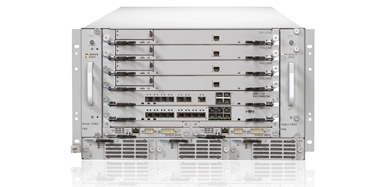
Radware announced that "a leading global mobile telecommunications provider has purchased its Alteon® 10000 application delivery controllers (ADC) to help the carrier meet the explosive growth it has seen from customers using smartphones and mobile services, while at the same time consolidating its ADC platforms. The agreement is valued at over $1 million .. the operator needed a solution that would help it not only deliver greater throughput and on-demand scalability to manage unpredictable spikes in data traffic, but also consolidate its ADC units to reduce its data center footprint and lower the cost of ownership"

" .. it enabled the operator to adopt a virtualization program using a deployment model for creating a separate, isolated vADC for each application, enabling a virtual data center computing environment with flexible, independent and secured configurations that avoid over-provisioning. This allows the carrier to deploy new services faster than before and better align its ADC services that require frequent configuration changes"

See "Radware's Alteon 10000 Helps Global Mobile Carrier Reduce its Data Center Footprint and Manage Mobile Data Traffic" - here.

Tuesday, August 14, 2012

2 Major US MNOs to Use Radware for Traffic Steering


Radware announced ".. agreements with two leading mobile operators in North America for purchases of its Alteon® 10000 [see "Radware's Alteon 10000 - Mobile Service Edge Switch for Security and Optimization" - here] application delivery controllers (ADC). The contracts, which will be implemented in stages as the carriers' infrastructure build-out progresses, have an initial combined value in the multimillion-dollar range"

See also "TM Wins: US Tier1 Uses Radware to Manage DNS Traffic ($2M Deal)" - here.

".. the Alteon 10000 provides the carriers with the ability to intelligently steer traffic to multiple value added services based on user, application, location and other Layer-7 attributes, thus supporting dynamic and complex mobile data policies. This results in a reduction in the number of traversals inside the mobile core network without changing the network infrastructure, and optimizing the mobile services for better quality of experience".

See "Radware's Alteon 10000 Delivers Highly-Performing, Resilient and Scalable Mobile Data Services to Two Major North American Mobile Carriers" - here.

Tuesday, July 10, 2012

[Infonetics]: DDoS Prevention Market Grows; Challenged by Hosted/SaaS Solutions


A new research by Jeff Wilson, principal analyst for security, Infonetics Research, concludes that "Sustained DDoS activity will drive the prevention market to 24% growth in 2012 over 2011 .. Combined, all segments of the DDoS prevention market—data center, carrier transport, mobile, and government—are forecast by Infonetics to top $420 million by 2016 .. The data center segment of the DDoS prevention market is growing fast and is expected to pass the carrier transport segment by the end of 2012".

"While the market for dedicated DDoS prevention solutions remains strong, going forward the overall performance of the market and the vendors in it will be challenged by the widening availability of hosted/SaaS solutions and new integrated security platforms that include DDoS prevention as a feature".

"Arbor Networks, the largest vendor in the DDoS prevention appliance market, maintains a commanding overall lead with nearly 3/5 of global revenue, although Radware [see "Radware Adds SSL Support" - hereis challenging in the government network segment"


See "Infonetics Research forecasts DDoS prevention market to grow 24% in 2012 as competition heats up" - here.

Thursday, June 28, 2012

DDoS Announcements: Radware Adds SSL Support

 
Radware announced that " its Attack Mitigation System (AMS) is the first solution of its kind that detects and mitigates denial of service (DoS) and distributed denial of service (DDoS) attacks that are SSL encrypted .. Today's anti-DoS security solutions do not effectively mitigate HTTP-encrypted DoS and DDoS attacks. Through patent-pending technology, Radware's AMS is the only network security solution with the ability to protect against high rate, SSL-based, Web-encrypted DoS and DDoS attacks, in both symmetric and asymmetrical network traffic environments that typify today's anti-DoS scrubbing and cleaning centers".

Avi Chesla (pictured), Radware's CTO, said: "Recently, we have seen some powerful DoS and DDoS attacks that took advantage of the encrypted SSL traffic, targeting firms that depend on secured online transactions such as financial institutions, government agencies, social networking companies and others. Any organization that relies on SSL-based traffic without a proper decryption engine working in synch with an attack mitigation solution is exposing itself to great risk".

See "Radware's Attack Mitigation System Protects Online Businesses Against Encrypted DoS & DDoS Attacks" - here.

Friday, April 27, 2012

TM Wins: US Tier1 Uses Radware to Manage DNS Traffic ($2M Deal)

 
Radware announced a ".. $2 million sale of its Alteon®10000 application delivery controller (ADC) to a leading Tier 1 telecommunications carrier in the United States. The telecom provider will deploy Radware's carrier-grade ADC in its network hubs across the U.S. as part of a major upgrade to its domain name system (DNS) application .. With Radware's Alteon 10000, the carrier has an advanced ADC platform delivering up to 80 Gbps of on-demand capacity for unparalleled application scalability, availability, reliability and performance".
  
See "Radware's Alteon 10000 Delivers the Capacity and Performance Needed to Help a U.S. Tier 1 Carrier Expand Its DNS Application" - here.