Showing posts with label Video. Show all posts

Wednesday, September 16, 2015

Ovum: 3 Key Factors to Best Broadband Consumer Experience


A new report by Michael Philpott [pictured], Practice Leader Consumer Services, Ovum finds that "In order to support their expectations of their broadband experience, the majority of fixed line consumer broadband users surveyed need a download speed of at least 10Mbps .. the best consumer experience is supported by three key factors: 
  • a download speed of at least 10Mbps; [related post - "Broadband Minimal Speed is ..." - here]
  • a stable and reliable network that delivers content with a wait time of no more than 3 seconds; and 
  • outstanding customer service that can resolve most customer issues at the first point of contact.


The research, which combined a consumer survey with quantitative market data on the fixed broadband market in 30 countries, confirmed the rise of SD and HD video as a commonplace application that is driving the end-user experience, and hence the need for networks to be able to support high-quality video delivery". 


See "Ovum:10Mbps has become the new minimum to support customer broadband expectations" - here.

Monday, September 14, 2015

Huawei Launches MOS Based Video Experience Measurement


Huawei unveiled its "video experience evaluation system, U-vMOS .. The system measures indicators from sample analysis of subjective video experiences coupled with analysis from related technologies to provide objective assessments on the overall video service experience. It provides a unified standard to measure the user experience which guides operators and the video industry chain in enhancing user satisfaction.


..  Huawei video research teams combined ergonomics, sample research, and in-depth technical studies to identify the top three factors that affect the video experience: video quality, interactive experience, and video view experience. 

Huawei defines three core philosophies in U-vMOS, which can measure these three main factors.
  • Core philosophy 1: Huawei carried out in-depth research on the limits of the human eye and how much resolution it can actually take in. The grading standard from the subjective viewing experience of various users watching videos of different resolutions on screens of different sizes from a typical distance is also defined in the algorithm. U-vMOS supports a resolution ranging from 360P to 8K and video played on screens ranging from 4.5 inches to 100 inches, breaking through the confines of the original vMOS definition in which differences could only be compared across screens with the same resolution. Considering the features of the human eye and actual reactions from viewers over different screens with varying resolutions, a score is assigned with the optimal viewing experience of the human eye as the full score.
     
  • Core philosophy 2: With data from extensive lab tests and verifications, Huawei defined the objective indicators that evaluate user interoperability in varying use scenarios and the viewing experience, including the initial loading time, zapping time, and seek response time. This philosophy enables the U-vMOS to measure user experience indicators throughout the viewing process.
     
  • Core philosophy 3: Huawei takes sample analysis on the subjective preferences of various audiences in different video application scenarios, and sets up a mathematical model that uses those preferences and parameters as weights. Huawei then adds a subjective preference parameter to the formula so that the U-vMOS system can adapt to different scenarios and continue to expand its "knowledge base".
See "Huawei Unveils Video Experience Measurement System U-vMOS" - here.

Monday, June 8, 2015

Anritsu Adds IneoQuest's Behavioral Video Analytics

 
IneoQuest Technologies announced that it has "..partnered with Anritsu Corporation to integrate its behavioral video analytics (Audience Measurement Platform – AMP) with Anritsu’s eoSightTM and eoLiveTM suite of products for advanced Customer Experience Analytics.

IneoQuest’s real-time video analytics capabilities add further business value to Anritsu’s growing customer base. By providing real-time data and video streams from the mobile infrastructure and client players, IneoQuest’s AMP solution will enable Anritsu to provide the most complete view of the customer experience down to the device and user level.

IneoQuest’s AMP Dashboard

..By incorporating IneoQuest’s real-time and historical analytics, Anritsu’s total solution bridges the gap between video service, network and customer experience through real-time dashboards and next-generation customer experience analytics, and provides the foundation for future monetization of high-value video services"
.

See "IneoQuest and Anritsu Announce Partnership to Provide Advanced Analytics for Video Customer Experience Management (vCEM)" - here.

Saturday, June 6, 2015

Vodafone: Video Portion Jumped from 37 to 48%; Does 4G Increase ARPU?


Vittorio Colao, 
CEO, 
Vodafone Group
Vodafone published its annual report for 2015 (here). The "CEO Strategic Review" has some interesting facts on Vodafone's activity:
  • We have witnessed exceptional demand for data this year, whether 4G in Europe or 3G in emerging markets, with data growth totalling 80% for the full year, and accelerating every quarter in Europe. As video and music services proliferate, and data coverage widens and becomes more consistent, customers are increasingly using their smartphones and tablets for entertainment, work and social interaction.
     
  • Our 4G customer base has quadrupled to 20.2 million. While progress has been rapid, still only 13% of our European customer base is on 4G, providing us with a very substantial opportunity for future growth.
     
  • With quicker network response times, better in-building penetration and higher peak speeds, 4G is stimulating significant growth in data, with usage typically doubling when customers migrate from 3G to 4G .. Higher usage has helped drive higher revenues per customer in some markets, especially

  • Europe 4G customers

    Europe average smartphone data usage

  • As customers use more and more data it is important that we monetise this.  Higher usage has helped drive higher revenues per customer in some markets, especially in the UK where 4G data usage trends are particularly strong. In some markets, average revenue per user (‘ARPU’) has continued to fall as the benefit of increased data usage has not offset the fall in market prices


  • 4G is driving an increase in data usage, both in absolute and per-user terms. On average our 4G customers use twice as much data as our 3G customers and that has helped average smartphone usage increase from 473MB to 755MB during the year. This is supported by the large increase in video streaming, which now accounts for 48% of data traffic.

Sunday, March 29, 2015

Avvasi - Oracle's PCRF Partnership Offers Monetized Video Services


Avvasi announced its "partnership with Oracle and its industry-leading Communications Policy Controller (PCRF). 

The Avvasi Oracle joint solution enables service providers to deliver monetized video services.

Avvasi’s real-time Xperium™ QoE management solution, Q-SRV, will be orchestrated by Oracle’s Communications Policy Controller. The integrated solution will help service providers monetize the explosion in data usage in order to deliver the highest quality customer experience"
.

See "Avvasi Partners with Oracle to Deliver Video Services" - here.

Sunday, February 8, 2015

Sky Italy Uses Akamai's Managed CDN for VoD


Akamai Technologies announced that "Sky Italia has selected Akamai's Aura Managed Content Delivery Network (MCDN) solution to achieve maximum control and the highest quality of service of its online content including live and on-demand video. With the Aura MCDN, which provides Sky with dedicated CDN capabilities that are maintained by Akamai, Sky can flexibly scale to support its capacity needs of 100's Gbps and beyond. The new content delivery architecture has allowed Sky to also improve download speed by 25 percent and reduce bandwidth cost by 10 percent.
With the biggest over-the-top video audience in Italy, Sky Go (2.35 million users) and Sky on Demand (1.4million) are included with Sky's subscription services. Because of the growing importance of its online channel, Sky adopted an architecture based on multiple Content Delivery Networks (CDNs) to obtain maximum control over its delivery capabilities at all times, even during high on-line traffic peaks, such as major sports events.

Integrated with Akamai's Media Delivery Services, the Aura MCDN provides Sky the architectural infrastructure it sought. Because the Aura MCDN delivers more than 30 percent of traffic on behalf of Sky, the company is able to manage traffic peaks that have reached up to 250Gbps. At the same time, Sky has noticed a 25 percent average improvement in the download speed of its content. This translates into a higher quality of service for its subscribers. In addition, Sky has reduced its bandwidth costs by 10 percent because of the ability to direct portions of its traffic to less expensive telecommunication networks"
.

See "Akamai, Sky Italia Address Rising Consumer Expectations for Online Video" - here

Saturday, November 22, 2014

Ericsson Forecast: Video will be 55% of Mobile Data in 2020


Ericsson published a new revision of its Mobility Report (here). Among the findings:
  • Video: largest and fastest growing segment of mobile data traffic - Video continues to dominate mobile networks: in 4G-dominated networks it currently constitutes 45-55 percent of mobile traffic, driven largely by increased usage of video streaming and improvements in the mobile video experience .. In terms of future outlook, Ericsson estimates that mobile video traffic will increase tenfold by 2020, ultimately constituting around 55 percent of all mobile data traffic in 2020. 
  • 5G: subscriptions on the horizon - 5G is expected to be commercially deployed in 2020, and the technology is predicted to have a faster uptake than 4G LTE, just as 4G had a faster uptake than 3G. The difference here is that, in addition to new radio technologies, 5G will also encompass evolved versions of existing radio access (such as 3G and 4G), cloud, and core technologies to cater for the thousands of new ways that mobile technology will be used. 5G growth will be driven to a large extent by new use cases, especially in machine-type communications.


See "Ericsson Mobility Report: 90 percent will have a mobile phone by 2020" - here.

Thursday, September 4, 2014

Citrix: LTE Video Data is 5X Compared to 3G


A new report by Citrix (Bytemobile) finds that:

  • Mobile network traffic volume associated with video has increased worldwide over 2013 and now represents 52% of worldwide mobile network traffic volume, as compared to 45% in Q2 2013 

  • On a daily basis, social networking is the most popular mobile application, with 40% of mobile subscribers engaged, followed closely by news & information at 37% and shopping at 30%
  • There are 1.5x more requests for video over LTE than over 3G. These result in 5X more video data volume served over the LTE network than the 3G network due to longer viewing times and higher resolution content 


See "Citrix Data Shows New Trends in Mobile Subscriber Data Usage" - here.


Saturday, June 28, 2014

Akamai Examines Ultra HD Streaming Readiness


In its Q1 2014 "State of the Internet" report (here), Akamai Technologies examines the Internet's 4K video readiness:

"Given the growing interest in the streaming delivery of 4K (“Ultra HD”) video, we thought it would be interesting to begin tracking a “4K readiness” metric in the State of the Internet Report. 

With 4K adaptive bitrate streams generally requiring between 10 – 20 Mbps of bandwidth, starting with this issue of the report, we’ll be providing insight into the percentage of connections to Akamai from a given country/region with an average connection speed above 15 Mbps, similar to the high broadband (>10 Mbps) and broadband (>4 Mbps) rankings that we have published for the last several years. 

Globally, just 11% of connections to Akamai in the first quarter were at speeds of 15 Mbps or above, as illustrated in Figure 18. This average is significantly lower than those seen across the top 10 countries/regions. Unsurprisingly, South Korea led the list with 60% 4K readiness, a level almost twice that of Japan, which had 32% of its connections at that level in the first quarter. The Czech Republic had the lowest level of 4K readiness among the top 10, coming in at 17%. 

Not surprisingly, the makeup of the top 10 list for this metric is very similar to the global high broadband rankings, with seven countries/regions appearing on both lists. Sweden, Norway, and Finland appear within the top 10 for this metric, while they are absent from the top high broadband countries list, with the United States, Denmark, and Belgium appearing on that list in their stead. 


Overall, only 47 countries/regions qualified for inclusion in this metric. Of those, 23 countries/regions had 4K readiness rates above 10%, while just six had rates below 1%. The lowest readiness rates in the first quarter were found in India and China, which had just 0.3% and 0.2% (respectively) of their connections to Akamai at speeds above 15 Mbps

See "Akamai Releases First Quarter 2014 'State of the Internet' Report" - here.

Monday, November 11, 2013

Procera Partners with Avvasi; Prefers Partnerships over Allot's Acquisitions Strategy

 
Procera Networks continues to expand its partnerships with optimization vendors [see "Procera Partners with Skyfire: Detects and Steers Video Traffic for Optimization" - here], and announces a "a joint solution and strategic partnership that integrates Avvasi’s industry-leading Q-VUE product [see "Avvasi Launches Video Analytics Service Gateway - w/Location (RAN), Device and Subscriber Awareness"- herewith Procera’s PacketLogic™ Intelligent Policy Enforcement (IPE) system. 

The joint solution performs video Quality of Experience (QoE) measurement in real-time to provide the communication industry’s most comprehensive determination of video QoE in service provider networks. 

.. Procera has chosen Avvasi as a solutions partner to address key customers looking for greater insight into OTT video quality through measurement of Key Performance Indicators (KPI). Mobile operators are trying to better understand, plan and manage network resources while satisfying their subscribers’ desire to consume video content at a consistently high level of quality"

Procera told Sarah Reedy, Light Reading, (see "Procera Courts More Policy Partners" - here) that ".. its strategy is to build up its network offerings through partnerships like these, rather than through M&A like its DPI competitor Allot Communications, which bought up Ortiva and Oversi last year. The M&A approach "puts Allot at odds with what could be potentially large partnerships/deals with companies like Skyfire and Avvasi, and could be playing a role in Allot’s lack of growth" (see "Allot's Revenues from 2012 Acquisitions" - here). 


See "Procera Networks and Avvasi Partner to Offer Mobile Operators Video QoE Management and Analytics" - here.

Friday, October 25, 2013

Procera Partners with Skyfire: Detects and Steers Video Traffic for Optimization


Procera Networks and Skyfire, a fully-owned subsidiary of Opera Software (see "Opera Buys Skyfire for (up to) $155M" - here), announced a ".. joint solution and partnership to tackle the rapid growth of video traffic on global mobile networks, based on an open, scalable ICAP architecture .. The joint solution is designed to bring Procera’s leadership in intelligent policy enforcement together with Skyfire’s cloud-based mobile video optimization solution, Rocket OptimizerTM. Procera's Advanced Traffic Steering uses highly granular and accurate criteria to determine when and what video should be optimized. 

Together, the solution provides rapid scalability and quick time to market that is unprecedented in the industry, and provides over 2 times the boost in network capacity versus competing solutions by optimizing virtually all types of video traffic – including network-clogging HD video. This results in superior service provider economics and broadband subscriber experience. Procera and Skyfire, joining with other industry leaders, have also modeled their solution on an open ICAP architecture.

The interoperable solution is already being field-trialed by a major European operator".

See "Procera Networks and Skyfire Announce Deployment-Ready Partnership" - here.

Sunday, October 20, 2013

Google: "Almost 40% of YouTube’s traffic now comes from mobile"


Some quotes from Google's Q3 2013 earning call, made by Larry Page, CEO:
  • "..  We’ve also making great progress across devices with Youtube. Almost 40% of Youtube’s traffic now comes from mobile, up from 6% two years ago. And in August we updated our Youtube apps for android and iOS. You can now leave a video playing at the bottom of your screen while you explore other content.
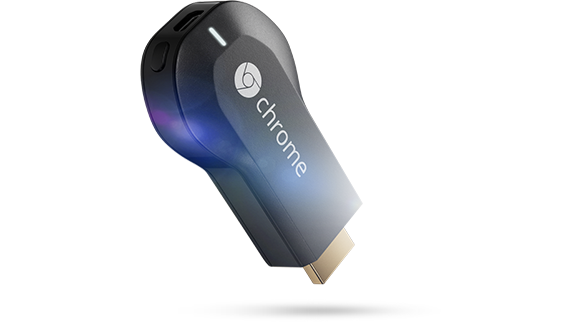
  • .. That’s why I love Chromecast which we launched in July and immediately became a best seller. On your phone, tablet or laptop and start playing some music from Youtube or a show from Google play or Netflix. One click the content is there on the bigger screen in your home, your TV, all for just $35"
     
  • YouTube has grown over 75% over the past two years
See "Google's CEO Discusses Q3 2013 Results - Earnings Call Transcript", by SeekingAlpha - here

Wednesday, October 9, 2013

{Core Analysis}: Video Optimization Market Reaffirms its Maturity; Citrix ByteMobile Leads


A new report of the video optimization market, by Patrick Lopez [pictured], Founder and CEO at {Core Analysis} finds that "The market trend for the segment reaffirms its maturity. Like last year, the summer has been quiet in term of activity while spring and the fall remain the high RFx quarters. We have recently seen two large groups select their vendor in the space (Telenor and Orange), more or less wrapping up the tier one group selection process for this cycle in mature markets. Growth in this segment now comes from Latin America and South East Asia, where many groups (Singtel, America Movil, ...) have yet to formulate / finalize a strategy in the space".
  • Citrix ByteMobile remains market leader, both in deployments and revenue. The deployment relative market share is decreasing slightly to 29%, while revenue market share is increasing.
    See also "Is the Optimization Market Declining?" with Citrix Bytemobile revenues, here.
     
  • Mobixell Networks remains number 2 in deployments with 23%, once again growing its market share over the period
     
  • Flash Networks remains a strong third with 17%, growing as well faster than the market
See "Video optimization mid-term update" - here.

Monday, June 10, 2013

Vantrix Adds Support for In-line Deployment


Vantrix announced announced the "..availability of version 3.2 of its flagship product, Bandwidth Optimizer. Its new bump-in-the-wire deployment option provides a transparent proxy that can be placed directly in the mobile data network without the need for an upstream Deep Packet Inspection (DPI), load balancing or HTTP browsing element. With bump-in-the-wire, Bandwidth Optimizer monitors and steers all traffic, deciding on which media traffic should be optimized and which can be bypassed for direct delivery".

Other features added: Enhanced on-the-fly MP4 optimization, PCRF Integration, extended reporting and Enhanced smart caching.

See "Vantrix Expands Deployment Options for Intelligent Media Optimization Solution" - here.

Tuesday, June 4, 2013

Ericsson: It is about Video


While I do not like these "prediction/index" reports, I believe that when it comes from an organization such as Ericsson, with its huge managed services operation, it has a stronger base.

Ericsson published a new edition of its Mobility Report, that "reveals that mobile-data traffic will continue to grow significantly in the coming years, a trend driven mainly by video. Overall data traffic is expected to grow 12-fold by the end of 2018. Increasing usage is driven by continual growth in the amount of content available as well as the improved network speeds that come with HSPA and LTE development"

"LTE services will be available to about 60 percent of the world's population in 2018. We expect LTE subscriptions to exceed 1 billion in 2017, driven by more capable devices and demand for data-intensive services such as video .. Video makes up the largest segment of data traffic in networks, and it is expected to grow around 60 percent annually up until the end of 2018. Video consumption is on average 2.6GB per subscription per month in some networks"

Some figures from the report:

Mobile-data-traffic-by-application-type,-2010-2018
Mobile data traffic by application type, 2010-2018
Application-mobile-data-traffic-volumes-by-device-type
Application mobile data traffic volumes by device type

Mobile-subscriptions-by-technology-and-region,-2012
Mobile subscriptions by technology and region,-2012

See "Ericsson Mobility Report: LTE and smartphone uptake drives video traffic growth" - here.

Thursday, April 18, 2013

Sandvine and Openwave Offer Joint VAS Steering Solution


Openwave Mobility announced a joint solution with Sandvine to
"enable mobile operators, to deliver advanced monetization capabilities by empowering them to rapidly introduce new Layer 7 services including targeted video optimization, innovative pricing models, and subscriber self-care"

This follows a previous announcement by Sandvine of similar solutions with other partners: "Sandvine: 40 Joint Deployments with PeerApp, Mobixell and Netsweeper" - here.

"Sandvine’s Policy Traffic Switch .. combined with Openwave Mobility’s Integra4 .. offers operators a solution whereby data traffic can be classified at line-rate and appropriate Layer 7 application traffic can be steered to Integra4 to apply services. These services can include video optimization, parental controls or even dynamic content insertion for engaging users with inline promotions. These promotions typically include new Application-based Price Plans which are easy for subscribers to adopt and are known to lead to significant incremental ARPU increase .. the Sandvine-Openwave Mobility solution has been successfully trialed with live traffic by a North American operator".

See "Openwave Mobility and Sandvine Collaborate to Empower Operators to Pursue Large-Scale Monetization Opportunities" - here.

Friday, April 12, 2013

Witbe: New Video Analytics Solution

  
Witbe launched its ".. new Analytics Solution dedicated to give service providers and content owners full visibility and control when delivering video and applications-based services to any screen, including set-top boxes, PCs, smartphones, tablets, connected TVs, etc. Witbe’s analytic portal leverages bigdata technologies to capture metadata and provide the depth and breadth of information needed to operate, optimize and monetize multiscreen services".

"Witbe’s new Analytics solution ads real-time reporting from all users, whatever their devices, for a precise and comprehensive view of the service delivery status per device type, network type, geographic area, Internet service provider (ISP), content delivery network (CDN), and more ..  Witbe’s multiscreen monitoring & analytics portal offers a range of comprehensive dashboards presenting factual quality, performance and usage information on infrastructures, devices and contents. Using unique correlation technologies, Witbe’s multiscreen monitoring & analytics help predict and resolve issues, further increasing customer satisfaction levels".

The company sent me some screenshots generated by the new product:


See "Witbe Launches Analytics Solution for Multiscreen Video Services at the NAB Show" - here.

Tuesday, April 9, 2013

Ericsson - New Video Processor and Compression Platform

   
Ericsson announced a ".. new high performance compression platform which raises the bar for efficiency and flexibility in the delivery of TV services over all networks. The AVP 4000, powered by Ericsson’s first-ever in-house developed programmable video processing chip, is a unique single platform addressing multiple applications, regardless of codec, resolution or network .. By addressing all applications, codecs, resolutions and profiles, Ericsson’s AVP single platform eases integration, expansion, re-purposing, training, repair and upgrades, considerably lowering the overall cost of ownership. It offers the highest performance and broadest capability in the industry on a single platform across all applications, from SD to HD, 1080p50/60, 3DTV and Ultra High Definition TV (UHDTV), and all codecs, including MPEG-2, MPEG-4 AVC and JPEG2000, with 4:2:0 and 4:2:2, 8-bit and 10-bit all supported"

See "Ericsson launches compression platform powered by new video chip" - here.

Friday, April 5, 2013

Optimization Deployments [240]: Iusacell [Mexico] Selected Vantrix for Web and Video Traffic


Vantrix announced that "Iusacell has signed an agreement to use Vantrix’s video and web optimization for its network".

See "Iusacell Selects Vantrix for Intelligent Content Optimization" - here.

Monday, March 18, 2013

How does Netflix Manage Video Delivery?


Greg Sandoval, interviewed Neil Hunt (pictured), chief product officer, Netfilx (since 1999) to The Verge getting some interesting quotes about Netflix network challenges:
  • A big piece is the actual delivery: making sure that we can continue to deliver 30-percent plus of the total internet downstream traffic. That's a big project. Our initiative with Open Connect [here and here] ... As part of Open Connect, we pay the cost and expense of installing Open Connect servers at common peering points or within an ISP's network at the most effective point. This makes it easier and more efficient for an ISP to deliver the best quality Netflix video, including our Super HD and 3D streams, by caching Netflix videos close to consumers and thus offloading it from a good part of an ISP's network
     
  • .. In Europe, essentially all of our traffic is delivered through Open Connect .. The major ISPs in Europe like British Telecom have embraced Open Connect and deployed servers very rapidly .. we're able to upload new content to Open Connect caches overnight in off-peak traffic, because we know the content and what will be popular tomorrow we don't fill on cache-miss, like most CDNs
      
  • We bring in hundreds of hours a week of new content, encoded in many formats and different bit rates for all the devices [here] we support. That's a fair amount of traffic pushed out towards to the servers every night
       
  • we expect to be delivering 4K within a year or two with at least some movies and then over time become an important source of 4K. 4K will likely be streamed first before it goes anywhere else.
Source: Netflix 2012 Q4 Report


See "Netflix Chief Product Officer: expect 4K streaming within a year or two" - here.