Showing posts with label Usage Based Billing. Show all posts

Monday, November 9, 2015

Comcast Expands Usage Based Billing (Don't Worry - it's 300 GB)


Karl Bode reports to DSLReports that "Comcast continues to ignore customer backlash, and continues to dramatically expand the company's broadband usage caps and overage fees. A close look at Comcast's usage cap "trial" FAQ indicates that the company plans to quietly expand caps into Little Rock, Arkansas; Houma, LaPlace and Shreveport, Louisiana; Chattanooga, Greenville, Johnson City/Gray, Tennessee; and Galax, Virginia starting December 1. 

In all of these markets users now face a 300 GB monthly usage cap, with $10 per 50 GB overage fees.

..A copy of the notice being sent to users informs them that they shouldn't worry about the caps, because the "median usage for XFINITY Internet customers is 40 GB of data in a month" and "it appears this new 300 GB data plan will not impact you
."

See "Comcast Dramatically Expanding Usage Cap Areas December 1"- here.

Tuesday, August 18, 2015

Does Comcast Use Data Caps for Fair Service?


Karl Bode reports to techdirt that "For years the broadband industry tried to claim that they were imposing usage caps because of network congestion. .. big ISPs have tried to argue that caps are about "fairness," or that they're essential lest the Internet collapse from uncontrolled congestion.

Comcast is of course slowly but surely expanding usage caps into its least competitive markets. More recently the company has tried to deny it even has caps, instead insisting these limits are "data thresholds" or "flexible data consumption plans."
 

But when asked last week why Comcast's caps in these markets remain so low in proportion to rising Comcast speeds (and prices), Comcast engineer and vice president of Internet services Jason Livingood candidly admitted on Twitter that the decision to impose caps was a business one, not one dictated by network engineering:

Read more - "Comcast Admits Broadband Usage Caps Are A Cash Grab, Not An Engineering Necessity" - here.

Tuesday, February 24, 2015

Telus [Canada] Explains Why UBB will Start on March 30

  
A year after Telus started experimenting usage charges (see "Telus to Start Charging for Usage ("it is fair")"- here) the change becomes a national policy for the Canadian operator's fixed ISP services, on March 30.

The surcharge will be automatic, but notifications to customers getting closer to the limit will start on an undefined date in the future.

Telus' "Usage-Based Internet Charges" (here) explains that "Starting March 30, 2015, fees will be applied to customers who exceed their Internet plan’s monthly data allowance. Most TELUS customers are already on an Internet plan that meets their current needs. Only those that exceed their plan – the heaviest Internet users – will incur an additional charge. If you are one of those customers, you will be notified before being charged.

Why? 
  • a small number of customers regularly exceed their monthly data allowance, and while TELUS’ Internet plans have always had thresholds, historical consumer data usage patterns have not required us to apply any fees for those customers who exceed their allowance. 
  • ..  the consumption of video over the Internet has dramatically increased. As a result, in the last 16 months alone our customers’ monthly Internet data usage has more than doubled. Further, much of this consumption is being driven by a minority of our customers - in fact, less than 5% of our Internet customers are consuming 25% of the data on our network in any given month. 
How much?

If you exceed your monthly usage allowance, we will automatically provide you with additional data buckets of 50GB as needed. Our charges for additional data are among the lowest in Canada:

  • First bucket: $5
  • Subsequent buckets: $10
  • Monthly maximum: $75
Any unused portion of your last data bucket will expire at the end of your billing cycle. Your data usage will be reset to zero and your regular monthly usage allowance will apply.

You can also subscribe to Unlimited Data Usage for $30/mo – or just $15/mo if you also subscribe to any TELUS TV service.


Bill Shock prevention? 
  
Going forward, we’ll also notify you by email when you have:
  • Reached 75% of your data allowance
  • Reached 95% of your data allowance, and
  • Exceeded your data allowance

Thursday, July 31, 2014

The FCC "Deeply Troubled" by Verizon's LTE Optimization


Few days after Verizon published its plan to optimize traffic at congested cells [see "Verizon Expands "Optimization" to LTE Subs to Fight Cell Congestion" - here], the FCC Chairman, Tom Wheeler, sent them a number of questions, expressing he is  "deeply troubled" by the move, and questioning if this should the right policy for "reasonable netwrok management*" or it is actually done to  "enhance revenue streams".

See also "Net Neutrality Approval Reopens US Market for DPI and Policy Management" - here

*Reasonable network management.  A network management practice is reasonable if it is appropriate and tailored to achieving a legitimate network management purpose, taking into account the particular network architecture and technology of the broadband Internet access service. Legitimate network management purposes include: ensuring network security and integrity, including by addressing traffic that is harmful to the network; addressing traffic that is unwanted by users (including by premise operators), such as by providing services or capabilities consistent with a user’s choices regarding parental controls or security capabilities; and by reducing or mitigating the effects of congestion on the network.

The letter uploaded by jbrodkin2000


Monday, July 21, 2014

[Study]: 85% of Operators are Leveraging OTT Apps to Attract Customers


A new study by Allot Communications (surveyed the data plans and charging trends of 175 mobile operators worldwide) finds that "85% of operators are leveraging apps to attract customers and increase ARPU .. Facebook is mobile operators’ top choice for zero-rated apps and Unlimited data plans are in decline".

Some examples of Zero rate programs:
  • Facebook Offers Free Messaging Through 18 MNOs - here
  • Success for Application-Based Service Plans in Zimbabwe - here
  • Vodafone India Offers Free Twitter Access - here
  • VimpelCom - Free Access to Wikipedia - here
  • Smart [Philippines] Uses Sandvine for Application-Aware Service Plans - here
  • Aircel [India] Offers Facebook Aware Service - here

Source: Allot Communications 

"Shared data plans are on the rise From 2012 to 2014, operators offering unlimited data plans have diminished from 35% to 15% while operators offering shared data plans with shared data caps increased from 29% to 42%"


Source: Allot Communications 


"As the evolution of data plans continues, unlimited data plans are becoming an offering of the past. Operators are moving away from actions that degrade QoE such as throttling Internet speed and when usage exceeds the volume cap; they simply charge the overage and maintain QoE"


Source: Allot Communications 

See "Allot MobileTrends Report Records the Rise of Application-Centric Mobile Operators" - here.

Friday, May 16, 2014

Comcast: "we have no plans to announce a new data usage policy"


David L. Cohen [pictured], Executive VP and Chief Diversity Officer in Public Policy, Comcast posted to the MSO's blog, in order clarify some "misunderstandings" (see "Comcast Data Cap: Controversial Usage-Based Billing Plan Reportedly Comes To Light At MoffettNathanson Summit" - here).

 "Yesterday, I spoke at the MoffettNathanson Media & Communications Summit in New York City about a range of topics. Since some of my comments have been picked up out of context and misinterpreted in a number of places, I thought it was worth clarifying a couple of things about the Internet, data caps, and prioritization"
  • Data Caps are "flexible data consumption plans" 
[see also "Comcast Response to Recent Claims: Higher Base Cap w/Tiered Plans or Overage Fees" - here]

"To be clear, we have no plans to announce a new data usage policy .. We have been trialing a few flexible data consumption plans, including a plan that enables customers who wanted to use more data be given the option to pay more to do so, and a plan for those who use less data the option to save some money .. It’s important to note that we remain in trial mode only .. We're now also looking at adding some unlimited data plans to our trials"
  • Net Neutrality
"First, I expressed my support – and Comcast’s support, for legally enforceable Open Internet rules .. Second, an Open Internet is about much more than "fast lanes" and "paid prioritization". What I said about those issues was (1) that I wasn’t even sure what the definition of "fast lanes" and "paid prioritization" were; (2) that they were not covered by the 2010 Open Internet Order and that, therefore, I did not believe that they were illegal".

See "Clarifying Data Caps and Prioritization" - here.

Friday, April 25, 2014

AT&T: 1M Subscribers Switched from Unlimited to UBB in Q1


Some slides from AT&T's Q1 2014 earnings:


See "Quarterly Earnings — 1Q 2014" - here.

Tuesday, April 8, 2014

Telus to Start Charging for Usage ("it is fair")


Telus announced (here) that for "select customers in Prince George, BC and surrounding areas, additional usage charges will apply for usage over your Internet plan’s monthly data allowance beginning June 1, 2014. Customers included in this trial will be notified through a message on their April Internet bill. For an electronic copy of your bill, login to your TELUS Home Services account and select Download/Print on your TELUS e.Bill page"

Telus usage allowance ranges between 15-500GB/month, according to the service plans. Maximum charge will be $75 for additional usage of 350GB or more.
  • "Why is TELUS tracking my Internet data usage? Monitoring Internet data usage – and allowing customers to track and view their own usage – ensures all customers are on a plan that is right for them, and can clearly understand how they are using their Internet service.
     
  • Why is TELUS charging for use over the monthly data allowances? It’s fair that people pay for how much they use, as you would with any other service. Our goal is to offer customers a broad spectrum of plans that meet everyone’s needs, and to get customers on the right plan for them".

EXAMPLES
Monthly Rate Plan
Monthly usage allowance
Total Data Usage
Additional Usage
Additional Charges
Total Charge
$55
150 GB
225 GB
75 GB
$15
$55 + $15 = $70
$55
150 GB
525 GB
375 GB
$75
$55 + $75 = $130
$60
250 GB
410 GB
160 GB
$35
$60 + $35 = $95

Thursday, April 3, 2014

Arayka Launches Usage-based, Optimized WAN Connectivity Service


Aryaka Global PoPs
Aryaka announced " general availability of the world's first global enterprise Network OnDemand, which provides immediate access to private WAN connectivity and optimization, based on metered usage and pricing. The new provisioning option allows enterprises to scale their global presence and network usage without the traditional restrictions of MPLS or appliance-based networking and optimization solutions. Aryaka's customers can pay for just what they use beyond their subscription to accommodate temporary spikes in traffic, large and sporadic file transfers or disaster recovery and data replication". 

 
See "Aryaka Releases Network OnDemand: First Agile Connectivity Option for Global Enterprises" - here.

Wednesday, December 4, 2013

[Infonetics Survey]: Openet Tops the Policy Management Market


Shira Levine, directing analyst for service enablement and subscriber intelligence, Infonetics Research provided some additional information from Infontics' 2013 Policy Management Strategies and Vendor Leadership: Global Service Provider Survey:
  • Bandwidth management continues to be a primary driver behind policy management spending, but this year’s survey confirms once again that policy is expanding beyond its traditional realm, assuming a key role in operators’ strategies around innovative services and pricing
      
  • This shift is driving new requirements for policy solution capabilities, with flexibility and scalability becoming increasingly important and causing some major shifts in the vendor landscape as operators swap out systems that aren’t meeting their needs
     
  • When asked to identify the top business drivers behind their policy management investments, survey respondents put bandwidth management functions at the top of the list; service creation and revenue generation also received high ratings
       
  • Usage-based services, advanced subscriber control, and bandwidth on demand led the list of use cases again, while voice over IP and M2M gained momentum compared to Infonetics’ 2012 policy survey
      
  • Flexibility constraints are the #1 reason operators are replacing their existing policy management systems  
  • Marketing teams continue to hold key roles in the policy management decision-making process at many operators
     
  • For the 2nd year in a row, respondents named Openet as a top policy management vendor, followed by Oracle/Tekelec, and Huawei

See "Operators using policy management to innovate services and pricing will shift vendor landscape" - here.

Saturday, November 16, 2013

Gigaom Bandwidth Caps Watch (8 out of 15 ISPs on the Black List)


Stacey Higginbotham ("Over 60% of US Broadband Subscribers have Data Caps" - here)  [pictured] explains that "We’re not fans of ISPs capping broadband here at Gigaom, so we’re keeping a close eye on how those caps evolve and who they affect. Check out our updated list on who’s capping your broadband .. In most cases, the companies implementing caps maintain that 99 or 98 percent of their users don’t go over them and have median usages that range between 12 and 18 GB per month. So here are the top broadband providers in the U.S. and their caps. Last year we included a column for exceptions to the cap, but this year there aren’t any, so we took that column out". 

ISPs with no caps: TWC, Verizon, Cablevision, Frontier, Windstream, Fairpoint and Cincinnati Bell. 4 ISPs have overage costs - Comcast (see "Comcast Response to Recent Claims: Higher Base Cap w/Tiered Plans or Overage Fees" - here), AT&T, Suddenlink and MediaCom.

See the full table - "Want to know if your ISP is capping data? Check our updated chart" - here.

Saturday, November 9, 2013

GigaOM: Over 60% of US Broadband Subscribers have Data Caps


Stacey Higginbotham [pictured] writes to GigaOm about the recent developments in usage-based billing policies in the US broadband market:

"Comcast is expanding its usage-based broadband trials. Given the larger roll out, it looks like a 300 GB cap plus a $10 overage fee that gets you 50 more GB is the winner .. which translates roughly into 40 cents per hour of HD television streamed via the internet .. And it’s not alone. Caps are on the rise in the U.S.:

[see also "Comcast Response to Recent Claims: Higher Base Cap w/Tiered Plans or Overage Fees" - here]


"Look, I’m sick of writing this same story about how caps aren’t necessary, how they act as a curb on innovation, how they protect a television business that won’t adapt and how the cable companies don’t actually have a profitability problem when it comes to investing in their networks. What’s happening here is a five-year erosion of unlimited broadband brought about by a fundamentally uncompetitive market. And this massive shift on broadband policy was utterly ignored by the FCC, which refused to even gather data about caps for years?.

See "Looks like Comcast is quietly pushing a 300 GB cap and overage charges" - here.

Wednesday, August 7, 2013

Swisscom: How do we Fight OTT; UBB will Disappear over the Next 3 to 5 Years


The slides below are taken from Swisscom's Q2 2013 report.
  • Swisscom's iO (launched at the end of June 2013 (here) - " lets you make calls, chat and share images with other iO users over the Internet for free, no matter where you are. At home, on the go and abroad – iO brings you closer to your friends and family in Switzerland and around the world. Simple, secure and international"
  • The 2nd slide continues the Swisscom's trend of moving away from usage based charges (see "Swisscom Shows the Unlimited Business-Case" - here).

    "All usage based traffic revenues will disappear over the next 3 to 5 years"


Friday, May 31, 2013

NSN Reality Check: 3 Types of Unlimited Data Plans

 
Leslie Shannon (pictured), Senior Strategic Marketing Manager, Nokia Siemens Networks, covers the current trends in unlimited data plans, as ".. after luring customers with unlimited data plans, operators soon discovered the downside for their networks: more congestion. This eventually led to a worldwide shift away from unlimited data plans, particularly with the introduction of LTE, which many operators used as an opportunity to pull back on these plans".

"But not everyone. There are still three categories of unlimited data plans out there: Looks unlimited but isn't ..( T-Mobile USA) .. Looks unlimited and is (Sprint, US; LG U+, Korea) .. Unlimited data with varying speeds (Swisscom, DNA Finland)".

Source: Swisscom - see "Swisscom Shows the Unlimited Business-Case"

"Happily, Quality of Service Differentiation can really help here. The key is to think in terms of ‘deprioritizing’ a select few rather than throttling everyone – or no one. Dropping network priority for subscribers over a certain threshold – but only in times of congestion – is common in all of the networks in Hong Kong, for example, and has the advantage of delivering full network speeds when there is no congestion. Alternatively, operators can deprioritize only the highest-usage customers after they reach a set limit, so in practice throttling only those subscribers who cause the most network grief" 

See also "[ABI]: Shared Data Plan Available to 5% of Global Subscribers; Unlimited to 15%" - here

See "The temptation of unlimited data" - here.

Thursday, May 16, 2013

Sandvine: UBB Reduces FileSharing Consumption


Sandvine has just published its “Global Internet Phenomena Report 1H2013”.

Dave Caputo, CEO, Sandvine said: "We predict from this data that 2013 will be the year long-form video will make its move onto mobile networks, The “home roaming” phenomenon, the concept of subscribers voluntarily offloading mobile traffic onto Wi-Fi networks, has continued. This combined with increased consumption of real-time entertainment on mobile networks globally, and the doubling of Netflix traffic on mobile networks in North America, suggests that users are getting comfortable with watching longer form videos on their handheld devices”.

The report also follows the Usage Based Billing trend, and its impact on application usage (the "comparison did not look at the volume of traffic generated by the two types of
networks. A direct comparison proved difficult as each CSP offers various levels of speed tiers and usage caps which can greatly impact overall usage"), With a number of US-based fixed-access CSPs who participate in the Global Internet Phenomena report having implemented UBB over the past 18 months, we decided to compare how subscribers behave on networks that have implemented UBB versus behavior on unlimited usage networks

The figure below shows "a comparison of usage between the two types of networks during peak period .. What stands out most clearly is the fact that Real-Time Entertainment’s traffic share is almost identical on both  networks, demonstrating that high bandwidth streaming audio and video traffic is of such high value to all subscribers  that they are unwilling to stop or alter the way the consume it even though they have a cap placed on their monthly usage. What is also interesting is how much lower a share Filesharing traffic has on networks with UBB compared to those who do not have it"


See "Sandvine Report: Apple Takes Big Bite of Streaming Video" - here.

Saturday, March 16, 2013

CDN.Net Offers a Customizable and Usage-based CDN

   
It is time for a new type of CDN, a simpler and claimed to be cheaper one.

CDN.net launched as the ".. first user customizable and usage-based content delivery network (CDN), offering a cost effective way for businesses of all sizes to improve Web performance and reliability .. Backed by a global federated compute network, CDN.net is launching with 30 premium, hand-picked Points-of-Presence (PoPs) providing global coverage to guarantee a 99.99 percent SLA, and will spin up new locations adding availability of more than 150 locations in 40 countries worldwide. CDN.net offers the greatest choice and transparency of any CDN, catering to budget and quality demands on a completely pay-per-use basis".

CDN.Net Customization 

James Fletcher (pictured), Marketing Director, CDN.net said: "We’re taking a new approach to CDN, with a totally transparent service so customers pay for what they use, when they need it, with reliable performance and uptime. CDN.net is customizable on-the-fly to the needs of any business looking to deliver rich content quickly and affordably, wherever in the world their customers happen to be.

See "CDN.net Launches as First User Customizable Global CDN for Everyone" - here.

Monday, February 18, 2013

[Signals Research] Users are Willing to Pay for Personalization


A study of 3,500 mobile broadband consumers from Brazil, India, South Korea, UK and US by Signals Research Group (sponsored by Tekelec) finds that "Customers want more choices in how they can mix and match services, and they are willing to pay for a greater degree of personalization across services, such as: Email, Web Browsing, Social Networking, Multi-User Gaming, Sports/News/Video, Voice over IP, TV and Movies, Cloud, Remote Lock/Remote Wipe"


Source: Mobile Broadband Pricing and Bundling - the Voice of the Consumer, Tekelec 


".. In addition, customers ranked pricing concepts based on Usage and Specific Applications higher than those based on Bandwidth/Performance, Family Sharing/Bundling of Devices, Casual Usage, or Free Access with Advertising. Service providers have an opportunity to generate incremental revenues if they sell tailored services to customers whose devices are capable, but not yet part of a mobile data plan"

See "Mobile subscribers willing to pay for service bundles ‘their way’" - here.

Wednesday, February 13, 2013

[Not only Facebook] Verizon Warns: Some Applications Chat too much (1G/Month)


One of my recent posts showed that the latest Facebook application increased "signaling" traffic significantly over the previous version (see "ALU: Signaling Issue with New Facebook" - here, with a comment from ALU providing additional explanation).

Facebook is not alone - some application could consume your monthly quota, even when in background. A Verizon support page warns about several Android applications that "might have serious negative effects on your device". One of the reasons to enter list is "Unexpected high data usage". The page has 13 applications, all games. Most are there since they keep the device from going to sleep mode, shortening batter life.

Some consume "a large amount of data while running in the background":
  • Hill Climb Racing - A device left untouched with the app running could use as much as 6.4MB in 24 hours, or 190MB in a 30 day period
     
  • Jail Escape - A device left untouched with the app running could use as much as 17MB in a 24 hour period, or more than half a gigabyte in 30 day period (removed from Google Play)
See "High Risk Android Apps" - here.

Friday, January 18, 2013

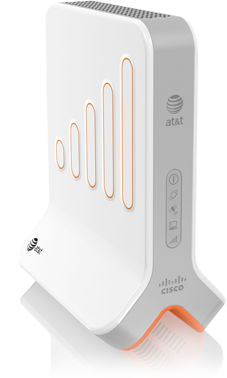
AT&T - MicroCell Traffic does not Count Towards DSL Cap


AT&T MicroCell
Phillip Dampier reports to Stop the Cap! that "AT&T Wireless customers with the company’s 3G MicroCell that covers for AT&T’s network shortcomings are given special treatment if they also subscribe to the company’s wired broadband services: use of the MicroCell is exempt from the wired usage cap"

The author claims that this violates Net Neutrality principles, by allowing only AT&T's traffic to be exempted from the monthly quota. I wonder if AT&T can use the same excuse Comcast used for its prefertioanl treatment to Xbox traffic over Xfinity service (here and here).

AT&T's clearly states this in its Broadband Usage FAQs page:

I have an AT&T 3G MicroCell. Since that utilizes my home broadband network to boost my wireless data signal, does that mean my wireless usage also counts against my wired broadband monthly data plan?

 
No, the wireless traffic from your AT&T 3G MicroCell does not count toward your monthly home broadband plan. Please register your AT&T 3G MicroCell account and your residential AT&T Internet account at www.att.com/internet-usage-MicroCell to help ensure accurate Internet usage billing. If you have broadband service with another provider, you do not need to register your account


See "AT&T Exempts Its Own MicroCell Product From DSL/U-verse Usage Cap; Everything Else Counts" - here.

Saturday, January 12, 2013

Will New Competition Drive AT&T to Bring Back Unlimited Data?


In an interview to Brian Chen, New York Times, Ralph de la Vega (pictured), President and CEO, AT&T Mobility was asked whether AT&T is going to bring back the unlimited data accounts, following the offering of T-mobile (here) and Sprint (chart below), both with Apple's iPhone5.

The short answer was "None at this time". AT&T counts on its customer loyalty -  "We’ve seen Verizon get the iPhone, we’ve seen Sprint get the iPhone and offer unlimited data plans. And now T-Mobile will get it. But while all that’s happened, our customer loyalty has improved and churn has gone down".

Source: Sprint 


See "C.E.S. 2013: Ralph de la Vega of AT&T Mobility" - here.