Showing posts with label Facebook. Show all posts

Tuesday, December 29, 2015

Zuckerberg: "What reason is there for denying people free access to vital services?"


 Facebook hosting Indian Prime Minister 
Narendra Modi, Sep. 2015
Mark Zuckerberg, Facebook's CEO, continues to defend its Free Basics service, which became the symbol of India's Net Neutrality debate (see "[India]: TRAI Stops Free Facebook" - here).

In an article to The Times of India, Mr. Zuckerbrge summarizes his position in one sentence "To connect a billion people, India must choose facts over fiction"

".. In every society, there are certain basic services that are so important for people’s well being that we expect everyone to be able to access them freely .. libraries .. free basic healthcare .. free basic education .. And in the 21st century, everyone also deserves access to the tools and information that can help them to achieve all those other public services, and all their fundamental social and economic rights.


That’s why everyone also deserves access to free basic internet services .. when people have access to free basic internet services, these quickly overcome the digital divide.

.. Over the last year Facebook has worked with mobile operators, app developers and civil society to overcome these barriers in India and more than 30 other countries.

We launched Free Basics, a set of basic internet services for things like education, healthcare, jobs and communication that people can use without paying for data.

More than 35 operators have launched Free Basics and 15 million people have come online. And half the people who use Free Basics to go online for the first time pay to access the full internet within 30 days .. Who could possibly be against this?

Surprisingly, over the last year there’s been a big debate about this in India .. Right now the TRAI is inviting the public to help decide whether free basic internet services should be offered in India .. What reason is there for denying people free access to vital services for communication, education, healthcare, employment, farming and women’s rights?

See "Free Basics protects net neutrality" - here.

Friday, December 25, 2015

[India]: TRAI Stops Free Facebook


Another step in India's Net Neutrality regulation process (see "India Planned Net Neutrality Laws" - here).

Even before its public consultation over ‘Differential Pricing for Data Services’ [here] the telecom regulator, TRAI, has taken an action on the partnership between Reliance Communications and Facebook.

[Related post - "FB CEO: We Support Net Neutrality (w/ Zero Rating)" - here and "Aircel [India] Offers Facebook Aware Service" - here]

The BBC reported that "Facebook's effort to provide Indians with free access to a limited number of internet services has run into trouble.India's telecoms regulator has asked the mobile network that partnered with the US firm to put their Free Basics offer on hold.

A spokesman for Reliance Communications - the mobile network that had supported the scheme - confirmed it would comply with the Telecom Regulatory Authority of India's demand. "As directed by TRAI, the commercial launch of Free Basics has been kept in abeyance, until they consider all details and convey a specific approval," a spokesman told the BBC.

Facebook said that it would continue to lobby for its scheme. "We are committed to Free Basics and to working with Reliance and the relevant authorities to help people in India get connected," a spokeswoman said".

See "India puts brakes on Facebook's Free Basics scheme" - here.

Monday, December 21, 2015

India - 600,000 Comments so far on Differential Pricing Regulation


BGR reports that India's "Telecom regulator TRAI has received around six lakh [i.e. 600,0000] comments on its consultation paper over ‘Differential Pricing for Data Services’ [here]— one of the important issues under net neutrality principles.

“Till Thursday, Trai received about 540,000 comments. These comments have suddenly come and mostly around Facebook’s Free Basics service
[see "FB CEO: We Support Net Neutrality (w/ Zero Rating" - here]Today comments would have crossed six lakh,” an official source told PTI. The last date for comments on the consultation paper is December 30 and for counter comments is January 7."

TRAI's questions to the public are: 
  1. Should the TSPs be allowed to have differential pricing for data usage for accessing different websites, applications or platforms?
     
  2. If differential pricing for data usage is permitted, what measures should be adopted to ensure that the principles of nondiscrimination, transparency, affordable internet access, competition and market entry and innovation are addressed?
     
  3. Are there alternative methods/technologies/business models, other than differentiated tariff plans, available to achieve the objective of providing free internet access to the consumers? If yes, please suggest/describe these methods/technologies/business models. Also, describe the potential benefits and disadvantages associated with such methods/technologies/business models?
     
  4. Is there any other issue that should be considered in the present consultation on differential pricing for data services?
See "TRAI receives 6 lakh comments on second net neutrality paper so far" - here.

Monday, November 2, 2015

FB CEO: We Support Net Neutrality (w/ Zero Rating)


Facebook CEO, Mark Zuckerberg expressed his views on the Net Neutrality debate in India (see "India Planned Net Neutrality Laws" - here and "Google India: "strong protest" Against Including Zero Rating in Net Neutrality" - here). Facebook is promoting its  intewrnet.org initiative to allow affordable access to developing countries around the world (see "Update to Internet.org Free Basic Services - here).

Press Trust of India reports that ".. Facebook founder Mark Zuckerberg [pictured] on Wednesday said his company is committed to net neutrality but supported zero-rating plans which have been criticised by many as violative of the principles of free Internet

When asked if Facebook supports net neutrality, Zuckerberg said: "Absolutely. Net neutrality is important principle. We do a lot to support both in terms of regulation and in our own work building an open platform that any developer can build something for regardless of who they are if they follow the basic rules ..  Internet.org and Facebook are 100 per cent supportive of net neutrality, we lobby for it across the world, we build an open platform with no filtering but at the same time we also need to make sure that we continue to push for access," Zuckerberg said

He said providing free Internet to everyone in the world is expensive and telecom operators spend billions each year bringing Internet to users. "What we are really trying to do is to use Free Basics (previously known as Internet.org) so that any developer who can give low bandwidth services for free can be zero-rated

On zero-rating plans of telecom firms like Bharti Airtel
[see "Airtel: The Internet, with Our Airtel Zero, is Neutral" - here], Zuckerberg said: "But to those who advocate against zero- rating I say look at a student who wants free access to the Internet for her studies

See "Zuckerberg affirms net neutrality but backs zero-rating plans" - here.

Saturday, October 3, 2015

Digicel: DPI is a Catalyst for VAS Revenues Increase


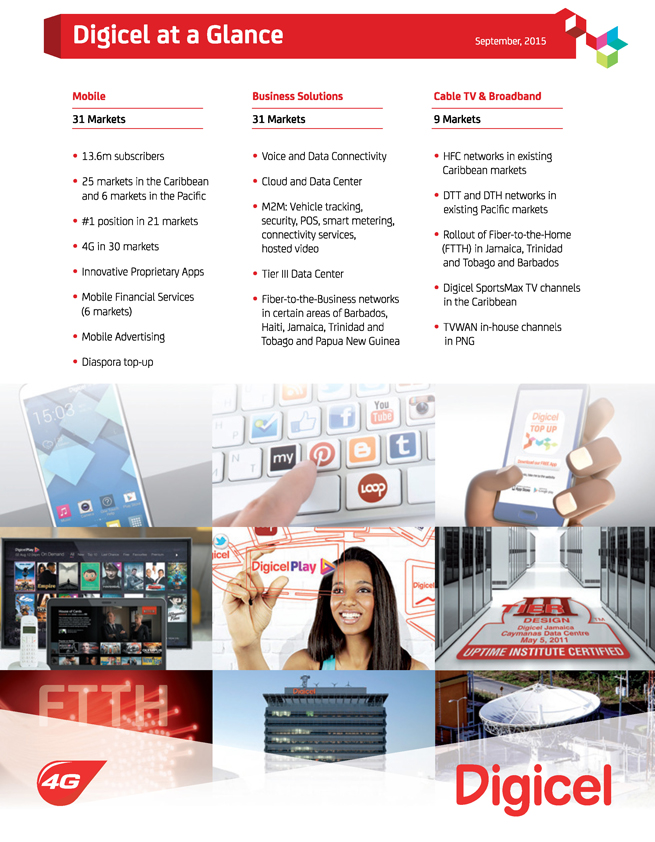
The Digicel Group (operating communication services in 31 countries to 13.6 million subscribers) has filed for an IPO recently with the SEC (here). The group is a Sandvine customer ("How does DigiCel Use Sandvine?" here and here) and explains in the F-1 form the benefits of DPI:

"Mobile Data and VAS

..VAS is an increasingly important portion of Digicel’s revenue, rising from 23.0% of its total mobile service revenue in the year ended March 31, 2013 to 31.2% in the year ended March 31, 2015 and 33.9% in the three months ended June 30, 2015. The increase in VAS has tracked an increase in availability of affordable smartphones, including Digicel-branded Android devices


.. An important catalyst for the increase in VAS has been Digicel’s innovative product and service offerings which include:

  • Service-based packages: Digicel’s data offers have evolved from volume based pricing to charging by service. Digicel’s deep packet inspection platform allows it to price plans based on the specific service that subscribers are consuming as opposed to volume-based pricing.

    Digicel is able to offer subscribers data plans that provide access only to one particular site, such as Facebook or Instagram. This capability has allowed Digicel to launch new plans across markets with a range of data allowances along with access to particular websites.

    This makes Digicel’s plans more attractive to subscribers because they can more easily understand what they are getting, and it allows Digicel to differentiate its plans from competitors.
     
  • Free access to Wikipedia [here]: Digicel allows all Digicel subscribers free access to this widely-known source of information on the Internet. Every time a subscriber accesses Wikipedia on the Digicel network, there is a small banner at the top of the page that tells the subscriber that access to the page is provided free of charge courtesy of Digicel.

    Digicel believes this is a strong marketing tool and it also benefits Digicel’s subscribers in terms of free access to this information. This represents an opportunity to illustrate to Digicel’s subscribers the value of the Internet by showcasing the type of services that subscribers can access with an Internet subscription and is designed to encourage Internet penetration.


Monday, September 28, 2015

Openwave: How Could MNOs Optimize Traffic in the Encryption Era?


According to Openwave Mobility "encrypted traffic travelling on many mobile networks has risen fivefold in just one year and has now reached 60% of all data. 

Based on current trends, encrypted traffic levels will exceed 80% within 12 months in several regions. This is now one of the biggest areas of concern for mobile network operators as sites such as Google, Facebook and Wikipedia use HTTPS encrypted protocols. 

The findings are based on observing and analyzing traffic trends at a number of mobile operator customers around the globe". 

Related post: "[ABI] Encryption Drives Mobile Optimization to a $40B Over 5 Year Market" - here.
 
"As networks go “dark”, carriers are unable to gain insight into the encrypted data travelling on their networks. Operators can struggle to optimize the traffic and this can seriously impact users’ Quality of Experience (QoE). Moreover, some operators are unable to apply filters to block content such as adult material or to identify video streams that could even be used for extreme purposes such as to radicalize vulnerable individuals"

John Giere [pictured], CEO, Openwave Mobility advice to MNOs: “Operators need to consider solutions that optimize the TCP/IP layer of their networks and apply smart heuristics to achieve optimization in the application layer too. There are solutions that can identify bandwidth-hungry objects, even when encrypted, and achieve 50% data savings on HD video, audio and apps. Best of all, they do not compromise subscriber privacy.” (see "Openwave Mobility: Federated SDM; Encrypted Traffic Optimization" - here)

See "Over 80% of Traffic on Mobile Networks will be Encrypted in 12 months" - here.

Saturday, September 5, 2015

PCC Deployments [364]: QBoCel [Mexico] Uses FTS for Application-based Plans


FTS announced that "QBoCel, a Mexican MVNO that operates on Telefonica's Movistar Mexico network, has selected FTS' MVNO billing and policy control solution to offer innovative services to its customers. The multi-year, multi-million dollar project marks a significant expansion for FTS in the Latin America region.

Using Leap Billing's policy control and charging capabilities, QBoCel plans to offer application-based plans such as video, Facebook and VoIP packages, to enhance the customer experience and meet user demands for personalized pricing tiers and flexible data plans. 

In addition, QboCel intends to offer zero-rated data with free access to specific content as well as sponsored data plans, where data is paid by the over the top (OTT) content partner and not by the user.

See "Mexican MVNO QBoCel Selects FTS’ MVNO Billing & Policy Control Solution" - here.

Monday, August 24, 2015

Google India: "strong protest" Against Including Zero Rating in Net Neutrality


Google, like other content providers, is traditionally in favor on Net Neutrality laws - see the US example - "FCC Expected to Adopt Net Neutrality this Quarter; Google Supports Neutrality" (here).

However, since the Indian regulator, TRAI is considering Zero-rating as "against the principles of Net Neutrality [see "India Planned Net Neutrality Laws" - here and "Airtel: The Internet, with Our Airtel Zero, is Neutral" - here], Google (and Facebook) seem to change sides.

Nikhil Pahwa reports to MEDIANAMA that "Google joined hands with Facebook to try and prevent the Internet and Mobile Association of India, which represents some of the largest Internet companies in India, from taking a stand that counters Zero Rating. 

According to emails exchanged between IAMAI’s Government Relations committee members, of which MediaNama has copies, Vineeta Dixit [pictured], a member of Google’s Public Policy and and Government Relations team, strongly pushed for the removal of any mention of Zero Rating from the IAMAI’s submission, as a response to the Department of Telecom’s report on Net Neutrality. Please note that Google hasn’t responded to our queries, despite multiple reminders.

..Dixit’s email to the IAMAI government relations committee, while reasoning that there is no consensus on Zero Rating, asked for its removal from the submission, saying: “We would like to register strong protest against this formulation and would request you to remove this (Zero Rating) from the submission.” Another email in that list indicates that only Facebook in the IAMAI has taken a stand supporting Zero Rating, and, funnily enough, STAR has taken positions both supporting and being non-committal on Zero Rating. This is a bizarre shift in STAR’s position, given that it had written to the TRAI saying that instead of telcos being paid for allowing Internet content (via Zero Rating), it should be telecom operators that pay content providers"/


See "Google joins Facebook in trying to prevent IAMAI from taking strong anti-Zero Rating stand" - here.

Sunday, May 31, 2015

Sandvine: NA Internet is Concentrated Around 3 Content Providers

Mobile Vs. Fixed: While Ericsson that sees "Facebook and 4 Other Apps" (here) in mobile networks, Sandvine sees (in North America's Fixed networks) much higher usage stats for Netflix, and claims that the internet is used to serve Netflix, Google and Facebook.

In its "latest Global Internet Phenomena Report focusing on North America and Latin America. The report is based on data from a selection of Sandvine’s 250-plus communications service provider (CSP) customers" Sandvine finds that:

  • Netflix continues to slowly increase its domination of North American fixed networks, accounting for 36.5% of downstream traffic in the peak evening hours
     
  • In Latin American, two companies, Facebook and Google, now control over 60% of total mobile traffic in the region
  • BitTorrent continues to see a decline in fixed access bandwidth share, and now accounts for only 6.3% of total traffic in North America, and 8.5% in Latin America
     
  • Netflix’s recent decision to encrypt their service will result in the majority of Internet traffic in Latin America and North America being encrypted in 2016 (see "Sandvine: Netflix Brings us to the Encrypted Age" - here)
See "Sandvine: In The Americas, Netflix + Google + Facebook = The Internet?" - here.

Wednesday, April 22, 2015

[Analysys Mason]: Will OTT VoIP Replicate the Success of OTT Messaging?


A new report by Patrick Rusby, analyst and Stephen Sale [pictured], Principal Analyst, Analysys Mason finds that "VoIP apps will probably not replicate the success of OTT messaging apps because the use case for OTT voice services is less clear"

Other findings:
    Kik App
  • "Penetration of OTT messaging (IP or social messaging), voice and video calling services varies significantly by country OTT messaging was the most commonly adopted category of OTT service, because it offers an improved user experience compared with SMS, at zero or minimal cost 
  • Penetration of VoIP on mobile handsets remains relatively low in Europe and the USA. In contrast to messaging, VoIP apps have not been able to offer a significantly differentiated user experience or price advantage for domestic calling
     
  • In Europe and the USA, Facebook Messenger, Skype and WhatsApp Messenger, the three dominant apps, were each used by over 30% of OTT messaging users in these regions. The market is characterised by a long tail of niche apps that appeal to specific groups, often based on age, and often within a specific country – for example, Kik in the USA and Snapchat in the UK". 


See "The Connected Consumer Survey 2015: OTT communication services"- here.

Thursday, February 26, 2015

Ericsson: It's Always Facebook and 4 Other Apps


A new report from Ericsson finds:
  • Two-thirds of app data traffic over mobile networks comes from top five apps in each country studied, with video streaming and social networking dominating .. each nation displays its own unique preferences - for example, in December 2014, the US top three included Netflix and YouTube, while South Korea was notable for peer-to-peer TV app AfreecaTV and home-grown search portal NAVER.

    Facebook
    was the number one app in each country studied.

  • Total mobile video traffic of next six years will be around 17 times that of last six years
     
  • Q4 2014: LTE subscriptions achieved higher net additions, with 110 million, than WCDMA/HSPA for the first time.
      
  • FY 2014: 800 million smartphone subscriptions added worldwide taking the total number to 2.7 billion, up 40% from a total of 1.9 billion subscriptions in 2013


See "Mobile data traffic dominated by top five apps: Ericsson Mobility Report" - here.

Sunday, January 18, 2015

Facebook Enables Free Data to Tigo Colombia Subscribers


Facebook's Internet.org continue to expand (see Airtel, Zambia), this time to Tigo subscribers in Colombia.

Related post - "[Allot]: tigo Internet Use Case: Application Based Charging" - here.

"At an event in Bogotá, Colombia, Mark Zuckerberg and President Juan Manuel Santos Calderón announced the availability of Facebook‘s Internet.org app for Tigo customers in Colombia. Through the app, Tigo customers in Colombia will have free access to government services including: Instituto Colombiano para la Evaluación de la Educación, an education assessment service and Agronet, a service that provides information on agriculture and rural development.

[Tigo's Fineprint - here]

This is the first time the Internet.org app is available in Latin America, and it’s also the first to include government services as part of the other free basic services in the areas of education, health, communication, jobs, finance, and local information.

The full list of free services includes: 1doc324 Symbols, AccuWeatherAgronetBabyCenter & MAMAFacebookGirl EffectInstituto Colombiano para la Evaluación de la EducaciónMessengerMitulaPara la VidaSu DineroTambero.comUNICEFWikipediaYoAprendo
".

See "Internet.org App Launches in Colombia" - here.

Saturday, August 2, 2014

Courtesy of Facebook: Zero-Rated Apps for Airtel Zambia


Facebook launched its first "Internet.org" service, based on the acquired Onavo technology [see "Facebook Acquires Onavo for $100M" - here] in Zambia.

Internet.org defines "Efficiency" as one of the solution they look for: "Transmitting data—even a text message or a simple web page—requires bandwidth, something that’s scarce in many parts of the world. Partners will invest in tools and software to improve data compression capabilities and make data networks and services run more efficiently" - this is where Onavo fits [See "Optimization Announcements: Onavo Offers "3rd Party" Compression Service" - here].

Guy Rosen, Product Management Director, updates about the new service to Airtel subscriber, in Zambia:

"today we are introducing the Internet.org app to make the internet accessible to more people by providing a set of free basic services. With this app, people can browse a set of useful health, employment and local information services without data charges. By providing free basic services via the app, we hope to bring more people online and help them discover valuable services they might not have otherwise.

The Internet.org app will be available first to Airtel subscribers in Zambia
[enabling] basic access to: AccuWeather, Airtel, eZeLibrary, Facebook, Facts for Life, Google Search, Go Zambia Jobs, Kokoliko, MAMA (Mobile Alliance for Maternal Action), Messenger, Wikipedia, WRAPP (Women’s Rights App). Zambia uReport


See "Introducing the Internet.org App" - here.

Wednesday, July 23, 2014

Allot Wins EMEA MNO for Zero-Rate Video Streaming and Social Media Services


Allot Communications announced today that it "received an order from a Tier-1 mobile operator in EMEA for the Allot Policy Control and Charging solution. The operator is leveraging Allot’s policy control and charging solution to provide 4 million subscribers with application-centric plans that fit their digital lifestyle.

The solution will allow the Tier-1 mobile operator to conduct in-depth monitoring and usage reporting and launch innovative plans for its subscribers. Among the application-centric plans, this operator will offer zero-rated plans for video streaming services and social media services (such as Facebook). The operator is planning to offer zero-rated plans at specific times during the day".


According to Allot's recent report (see ""[Study]: 85% of Operators are Leveraging OTT Apps to Attract Customers" - here") - "Comparing the key performance indicators of ARPU and churn rate, it is evident that globally, operators who offer application-centric plans present higher ARPU and lower churn. This finding is especially strong in developing countries"
   
Source:
Allot Communications Allot MobileTrends
 Charging Report H1/2014


See "Allot Communications Receives Order from Tier-1 Mobile Operator in EMEA for Analytics and App-Centric Plans" - here.

Monday, July 21, 2014

[Study]: 85% of Operators are Leveraging OTT Apps to Attract Customers


A new study by Allot Communications (surveyed the data plans and charging trends of 175 mobile operators worldwide) finds that "85% of operators are leveraging apps to attract customers and increase ARPU .. Facebook is mobile operators’ top choice for zero-rated apps and Unlimited data plans are in decline".

Some examples of Zero rate programs:
  • Facebook Offers Free Messaging Through 18 MNOs - here
  • Success for Application-Based Service Plans in Zimbabwe - here
  • Vodafone India Offers Free Twitter Access - here
  • VimpelCom - Free Access to Wikipedia - here
  • Smart [Philippines] Uses Sandvine for Application-Aware Service Plans - here
  • Aircel [India] Offers Facebook Aware Service - here

Source: Allot Communications 

"Shared data plans are on the rise From 2012 to 2014, operators offering unlimited data plans have diminished from 35% to 15% while operators offering shared data plans with shared data caps increased from 29% to 42%"


Source: Allot Communications 


"As the evolution of data plans continues, unlimited data plans are becoming an offering of the past. Operators are moving away from actions that degrade QoE such as throttling Internet speed and when usage exceeds the volume cap; they simply charge the overage and maintain QoE"


Source: Allot Communications 

See "Allot MobileTrends Report Records the Rise of Application-Centric Mobile Operators" - here.

Thursday, July 10, 2014

Success for Application-Based Service Plans in Zimbabwe


According to Dan Deeth, Sandvine, post to the vendor's blog, Econet Wireless' offering of WhatsApp and Facebook bundles [see "Econet Wireless [Zimbabwe] Uses Sandvine for Application-based Charging" - here] is "continuing to out-maneuver and out-innovate competitors. These unlimited bundles allow subscribers to purchase unlimited usage of their favorite service for a day, week, or monthly for a low fee ..In the short time they have been available, adoption of these bundles has been incredible for Econet. .. WhatsApp accounted for over 23% of total network traffic in March 2014. Since that time, adoption of these plans, as well as WhatsApp traffic has continued to accelerate thanks to positive word of mouth as well as the launch of new budget-friendly smartphones .. competing [Telecel Zimbabwenetworks have begun to offer similar plans in Zimbabwe".


See "More of WhatsAppening in Zimbabwe" - here.

Saturday, June 7, 2014

[Chile]: No Compromise on Net Neutrality


While the Net Neutrality on the US goes towards "Fast Lanes", Chile, the first countries to adopt a Net Neutrality law (see "Chile: First Country to Legislate Net Neutrality" - here) does not compromise on any aspect of Neutrality.

Leo Mirani reports to QUARTZ that "A surprising decision in Chile shows what happens when policies of neutrality are applied without nuance. This week, Santiago put an end to the practice, widespread in developing countries, of big companies “zero-rating” access to their services. As Quartz has reported, companies such as Facebook, Google, Twitter and Wikipedia strike up deals with mobile operators around the world to offer a bare-bones version of their service without charging customers for the data"

Some examples of Zero rate programs:
  • Facebook Offers Free Messaging Through 18 MNOs - here
  • Vodafone India Offers Free Twitter Access - here
  • VimpelCom - Free Access to Wikipedia - here 
Back to Chile's choice - ".. But Chile’s Subsecretaria de Telecomunicaciones has decided (Spanish) that such promotions violate net neutrality laws and must end in two days, on June 1.According to the law (Spanish), internet service providers must “not arbitrarily distinguish content, applications or services, based on the source or ownership thereof”.

See "When net neutrality backfires: Chile just killed free access to Wikipedia and Facebook" - here.

Sunday, April 27, 2014

[TeleGeography]: Private Networks Drive Demand for Int'l Bandwidth (+39% in 2013)


TeleGeography reports that ".. demand for international bandwidth grew 39 percent to 138 Tbps in 2013, a 4.5-fold increase from the 30 Tbps of bandwidth used globally in 2009.Internet backbones remain the primary users of international bandwidth, accounting for 75 percent of demand in 2013. However, the drivers of international bandwidth demand are changing. 

As private network operators, including large content providers like GoogleMicrosoft, and Facebook, expand their internal networks, their bandwidth requirements increasingly exceed those of the largest carriers .. Global network expansion has undergone a long-term shift in focus, from connecting users to users, to linking users to data centers and—increasingly—data centers to each other".


See "New global network builders emerge" - here.

Tuesday, April 1, 2014

Aircel [India] Offers Facebook Aware Service

   
Rajesh Kurup reports to The Hindu BusinessLine that "Telecom service provider Aircel has launched a service - Facebook for All – that provides free access to the social media platform for its customers. Under the service, Aircel enables its customers to network and be socially active on Facebook in nine different languages. Customers can have free access to Facebook Application, Facebook Messenger and Mobile version on their existing or new connections".

Compare to "Uninor [India] Shifts "from data to Internet"; Charges for Facebook and Whatsapp Use" - here, "Vodafone India Offers Free Twitter Access" - here and "Facebook Offers Free Messaging Through 18 MNOs" - here.

Back to Aircel - "Under the offer, Aircel will provide free 50 MB per month data on Facebook for a period of 60 days after activation. Existing customers will get free 50 MB data for 30 days and post 50 MB usage, the subscribers will have the option of using Facebook on their phones at ₹0.02 per 10 KB .. The customers also have the option of benefiting from the special tariff packs for Facebook which will be as low as ₹0.50 per day".

See "Aircel offers free Facebook access to its customers" - here.

Tuesday, March 11, 2014

Uninor [India] Shifts "from data to Internet"; Charges for Facebook and Whatsapp Use


Uninor, a subsidiary on Telenor announced that it has "decided to shift from volume based Internet offerings (MB and GB offerings) to service based Internet offerings (Facebook and Whatsapp). This will change the way in which Uninor offers Internet to its 33 million current and all future subscribers".

Morten Karlsen Sorby, nominated CEO of Uninor. said: “We are moving out of data and moving in to Internet. Internet is the way in which customers consume data and our approach will be to make that usage the cheapest among all operators

"50% of India’s mobile Internet users are active on Facebook and Whatsapp. Uninor has launched the new Internet strategy with two flagship products with Facebook and Whatsapp. Termed Sabse Sasta (most affordable) Facebook and Sabse Sasta (most affordable) Whatsapp, the products will allow subscribers unlimited access to these services at one fixed charge for a period ranging from 1 hour to 1 month. With just a one-time charge, subscribers can use Facebook and Whatsapp for the duration of the period without worrying about MBs and GBs .. Over the next few months, these new offerings will be made available across each of Uninor’s operational circles.

See "Uninor changes its Internet strategy - moves from 'Rs. per MB' to Sabse Sasta Facebook and Sabse Sasta Whatsapp" - here.