Showing posts with label Openwave Mobility. Show all posts

Friday, November 20, 2015

Openwave: 3 Tier1 Operators Deployed SDM Solution (Verizon?)

  
Openwave Mobility announced that "three Tier-1 operators have deployed its Subscriber Data Management (SDM) solutions
  • Openwave Mobility maintains the largest SDM/UDR (User Data Repository) deployment in the world with over 130 million subscribers at a Tier-1 operator in North America 

    [At the end of Q3, 2015, Verizon had 137.553M and AT&T had 126.406 wireless subscribers - here. Openwave could not  comment due to NDA with the cusotmer].
     
  • The SDM solutions are also being deployed with a Tier-1 operator in Japan
     
  • One of the largest group operators based in Europe. 
SDM is being utilized by these operators to address critical use cases such as UDR and identity management solutions. Some of these operators are now looking to deploy IoT devices.

In addition, Openwave Mobility has deployed its Smart User Repository (SUR) with several operators. SUR seeks to provide centralized management of all subscriber data. This allows operators to reduce service innovation cycles by exploiting common subscriber information
"

See "Three Tier-1 Global Operators Deploy Openwave Mobility’s Subscriber Data Management Solutions" - here.

Tuesday, October 20, 2015

Openwave Demoed Optimization (40% lower bitrate) for Live Gaming Broadcasts


Openwave Mobility announced that it ".. successfully showcased optimization of live-gaming broadcast traffic via sites including YouTube Gaming and Twitch for a Tier 1 European operator. Openwave Mobility is the first to use quality-aware traffic management for live-gaming broadcasts. The company lowered bitrates by over 40% for YouTube Gaming and Twitch while maintaining an excellent QoE for subscribers.

Indranil Chatterjee [pictured], VP of Product Management, Marketing & Strategy, Openwave Mobility explaineds: “Live-gaming streams are far more data demanding than VoD. And they can consume considerable bandwidth. That’s bad news for operators and a bad experience for the gaming fans. Operators are struggling to deal with the phenomenal growth in video – and now most of that is encrypted too. That’s another headache. For cost conscious subscribers, higher bandwidth means higher data bills. That’s where our innovative technology comes in”.

See "Openwave Mobility First to Use Quality-Aware Optimization for Live Gaming Broadcasts" - here.

Saturday, October 10, 2015

Openwave Mobility Integrates Qosmos' DPI


Qosmos announced that "Openwave Mobility has embedded Qosmos ixEngine® into its Integra Layer 7 SDN/NFV platform, used by operators to orchestrate value added services for mobile data.
[related post - "Openwave Mobility: Federated SDM; Encrypted Traffic Optimization" - here]

Integra architecture 
.. Based on real-time traffic intelligence from Qosmos ixEngine, Integra manages mobile traffic (included encrypted) in different ways:
  • Directing traffic to specific services like firewall, caching, or video optimization
     
  • Blocking traffic in the case of suspected fraud or security threats
     
  • Shaping and enforcing quality of service according to the application identified
     
  • Understanding and managing quota and promotion based on application intelligence
See "Openwave Mobility Strengthens Integra Platform with Qosmos ixEngine" - here.

Monday, September 28, 2015

Openwave: How Could MNOs Optimize Traffic in the Encryption Era?


According to Openwave Mobility "encrypted traffic travelling on many mobile networks has risen fivefold in just one year and has now reached 60% of all data. 

Based on current trends, encrypted traffic levels will exceed 80% within 12 months in several regions. This is now one of the biggest areas of concern for mobile network operators as sites such as Google, Facebook and Wikipedia use HTTPS encrypted protocols. 

The findings are based on observing and analyzing traffic trends at a number of mobile operator customers around the globe". 

Related post: "[ABI] Encryption Drives Mobile Optimization to a $40B Over 5 Year Market" - here.
 
"As networks go “dark”, carriers are unable to gain insight into the encrypted data travelling on their networks. Operators can struggle to optimize the traffic and this can seriously impact users’ Quality of Experience (QoE). Moreover, some operators are unable to apply filters to block content such as adult material or to identify video streams that could even be used for extreme purposes such as to radicalize vulnerable individuals"

John Giere [pictured], CEO, Openwave Mobility advice to MNOs: “Operators need to consider solutions that optimize the TCP/IP layer of their networks and apply smart heuristics to achieve optimization in the application layer too. There are solutions that can identify bandwidth-hungry objects, even when encrypted, and achieve 50% data savings on HD video, audio and apps. Best of all, they do not compromise subscriber privacy.” (see "Openwave Mobility: Federated SDM; Encrypted Traffic Optimization" - here)

See "Over 80% of Traffic on Mobile Networks will be Encrypted in 12 months" - here.

Monday, September 7, 2015

How Long will you Wait for Video to Load? Will you Pay Extra for QoE?


An "independent research conducted by Censuswide commissioned by Openwave Mobility has found that poor mobile video streaming is an even bigger headache than a dropped call for iPhone users. Over 2,000 iPhone users in the UK and US were interviewed ahead of the new iPhone launch on 9th September to study people’s mobile video habits:
  • Over half (59%) of subscribers in both countries will abandon streaming a mobile video if they have to wait longer than 15 seconds
     
  • Nearly a fifth (19%) will abandon a video after only a 5 second wait
      
  • In both countries almost 1/3 of subscribers (31%) expressed a strong view that video buffering is simply unacceptable, and video delivery by mobile operators is lagging behind the latest handset technology that is driving the industry forward
      
  • 39%, said they would pay extra dollars if the operator could only provide some assurance on the quality of video delivery
      
  • 1 in 2 customers blame the carrier for poor mobile video service and 1 in 3 blame Apple. Notably almost nobody blames the content providers or the Over The Top (OTT) players". 


See "Mobile Video Buffering is the Biggest Annoyance for iPhone Users" - here.

Friday, June 5, 2015

[ABI] Encryption Drives Mobile Optimization to a $40B Over 5 Year Market


While many think that the legacy DPI, optimization and traffic management functions lose their role in network management due to customers' demand for QoE, OTT services and growing video traffic, ABI research thinks differently - and the reason is the use of encrypted traffic.

A new report by Joe Hoffman [pictured], Practice Director, Mobile Networks, ABI Research sees the "worldwide market for mobile network monitoring and optimization exceeding US$40 billion over the next 5 years... LTE uptake in China leads worldwide traffic growth, including video, and pulls along the monitoring and optimization markets. 

Widespread adoption of SSL-encryption changes the game from compression, transcoding and transrating to throttling, pacing and manipulating the Adaptive Bitrate Stream from the content provider to achieve operator goals. State-of-the-art traffic management technology delivers a better customer experience and virtual capacity gains that operators will appreciate.

Mobile optimization is more important than ever and the advent of all IP services, including VoLTE, VoWi-Fi, LTE-U / LAA requires close attention from the operator to assure QoE. With an eye to monetization, DPI, Optimization and Policy remain the largest segments and come together as part of a total revenue enhancement solution. 


All leading network infrastructure vendors, including Ericsson, Nokia Networks and Alcatel-Lucent, offer their own or partnered solutions.Likewise, the independents, such as Citrix ByteMobile and Openwave Mobility, provide differentiated, targeted and ready-to-use solutions for every mobile broadband operator"

See "LTE Adoption to Drive Network Monitoring and Optimization Spend Past US$40 Billion" - here.

Monday, April 6, 2015

[Guest post] Virtualizing Subscriber Intelligence through Data Federation

By Indranil Chaterjee*, VP Product Management, Marketing & Strategy,  Openwave Mobility


Of course Subscriber Data Management is not new, but what is new is the fact that the Internet of Things is changing the very definition of what we call “a subscriber”. As we approach 2020 and the 50 billion connected devices that Ericsson and Cisco forecast, the range and sheer volume of subscriber data” is soaring and will overwhelm those operators who are unprepared. Just as we saw and are still witnessing a tsunami of video data, so too we are beginning a wave of subscriber data which can either overwhelm operators, or provide for new types of monetization as cars, CCTVs, and multiple office, retail and home devices take on the role of “subscriber” and begin uploading their subscriber data.

Today in almost every mobile operator this diverse data is stored in multiple stand-alone silos in a fragmented state. Fragmenting data related to subscriber profiles, billing, and device details across logical and physical architectures and locations increases power consumption and network footprint while compounding network complexity and inefficiencies. This makes management, operation, and maintenance of the infrastructure much more challenging than it should be. Subscriber Data Federation (SDF), a form of Data Virtualization, eases this complexity by helping operators create a robust connection between the data and the repositories that they sit in within having to physically merge all the data into a single, central repository.

By providing a unified view of subscriber data as well as dynamic and transactional information, mobile operators have the agility to rapidly introduce new services and establish new revenue streams by leveraging data regardless of its format or which database servers they happen to be stored on. Data federation allows applications and tools to access data from multiple repositories and storage structures, access languages and APIs. Through virtualized data architectures, mobile operators can reap the benefits of federated data while allowing all other applications to use the various data repositories directly. This way, operators can focus on what matters – improving the customer experience and increasing profitability by monetizing this subscriber information.

Mobile operators that lack data federation are limited to building applications from specific repositories – such as those within an optimal geographic range to minimize latency – and have to work within the protocols of various data structures and storage types. Typical repositories tend to have varying capabilities. For example, certain silos are allocated more resources for ultra-fast access to information for real-time applications while others are created for non-time-sensitive access and can afford some latency. If changes are made to a certain application, operators are required to make the changes in all repositories across the board that is associated with the particular application. This can clearly become a complex and resource-intensive task that not only risks the integrity of network information but also increase time-to-market for new monetization opportunities. In the ever-evolving mobile ecosystem, time is money after all, and lacking a federated approach to data integrity cuts into the bottom line.

While the network utopia of having a truly unified architecture is an eventual goal for most operators, not all organizations are ready to make the jump. Indeed disparate teams within an operator organization may have vested interested in managing their own repositories. They may not want to risk the integrity of the silo which they have grown to know and understand and which benefits them most by integrating it with another. From a technological standpoint, these separate teams may not want the full responsibilities of managing a unified data architecture because of the associated complexities. Fortunately, data federation provides a flexible interface between data silos that reads and writes data to existing systems, allowing for a consolidated view of all subscriber data, and allows mobile operators to transform their repositories to a unified architecture over time. Data federation is thus essentially a stepping stone to a single shared repository. By scaling the virtualization process of their repositories and engaging in a hybrid approach to federating data, operators can continue to support the dual strategy of consolidation (such as the case of Subscriber Data Management or SDM) and federation. By deploying data federation, those applications that need data federation get the benefits of federation, while other applications can continue to use their data repositories directly as required.

The ultimate benefit of virtualizing a data ecosystem is having a flexible interface among silos to both read and write data to existing and new systems. An integrated, holistic view and methodology for storing and accessing data without having to physically unite all silos will help mobile operators to seat their existing assets and efficiently leverage all their subscriber data effectively. This empowers them to minimize the Total Cost of Ownership for their networks while maximizing profitability without disrupting existing silos and the systems that depend on them.


_________

*Indranil Chatterjee has over 15 years of experience in product management, marketing, strategy and software development in the mobile communications and IT industries. Prior to joining Openwave Systems, Indranil was director of product management at Syniverse Technologies, responsible for new product development for wireless applications and mobile analytics. Before joining Syniverse, he served as Director of Wireless Solutions for Alcatel-Lucent. Indranil is a member of the Board of Governors of 4G Americas.

He holds an MBA from Duke University’s Fuqua School of Business and a bachelors degree in Mechanical Engineering from Indian Institute of Technology (IIT) – BHU, India.

Friday, April 3, 2015

Monday's Guest Post: What Monetization Strategies should Operators Adopt to Make the Best Use of Subscriber Data?


A new guest post will be published on Monday - "Virtualizing Subscriber Intelligence through Data Federation" by my 36th guest, Indranil Chaterjee.

"The Internet of Things is changing the very definition of what we call “a subscriber”.  By 2020 some pundits estimate that there could be as much as 50 billion connected devices. The range and sheer volume of subscriber data will soar and it may even overwhelm some operators who are unprepared. As everything from cars, offices, retail and home take on the role of “subscriber” and begin uploading their data – what monetization strategies should operators adopt to make the best use of subscriber data? Says Indranil.

Stay tuned!

Monday, March 30, 2015

[ABI]: Citrix, Openwave and Ericsson Lead the $400M Optimization Space


ABI Research announced it has evaluated the "..leading vendors for Video, Audio, Web and Data Optimization the Gi-LAN space, and finds Citrix ByteMobile with the most compelling total value proposition, followed by Openwave Mobility and Ericsson. ABI Research finds web and video optimization performance as mainly determined by the x86 architecture, and the vendors differentiate along the lines of packaging and the depth of value adding features such as monetization, big data analytics and traffic management bundles.

The leaders in each category include:

  • Overall: Citrix ByteMobile, Openwave Mobility, Ericsson:
     
    • The Citrix ByteMobile ATM takes top honors with its long standing market reach and total value proposition of its web and video optimization, content caching, and added value in DPI, traffic policy enforcement
       
    • Openwave Mobility takes second honors and keeps up the pressure with an innovation clean sweep in depth and breadth, analytics, subscriber and monetization innovation focus
       
    • Ericsson takes a not-surprising third award with the rich value proposition of its Multi-Service Proxy and Service Enablement Platform
       
  • Implementation: Citrix ByteMobile, Ericsson, Flash Networks
  • Innovation: Openwave Mobiity, Citrix ByteMobile, Ericsson
Joe Hoffman [pictured], Practice Director, ABI Research said“Nobody buys just video optimization, and now that the fundamental technologies are commoditized table stakes, we enrich the evaluation to consider the total value proposition including analytics and monetization, When an operator buys into one of these solutions, it is economically efficient to consider the big picture bundle.” 

"This research covers the leading vendors that offer video, audio, web and data optimizations solutions, including Allot, Avvasi, Flash Networks, Huawei, NEC, Nokia Networks, Opera Software, and Vantrix, and accounts for a large part of the US$400M in 2014 revenues in this market space".

See "ABI Research Ranks Citrix, Openwave Mobility, and Ericsson with Top Honors in the 2015 Mobile Web and Video Optimization Competitive Assessment" - here.

Wednesday, March 4, 2015

Openwave Mobility: Federated SDM; Encrypted Traffic Optimization

    
Openwave Mobility recent announcements: 

  • "launched the industry’s first carrier grade subscriber data federation solution. Smart Data Federator (SDF) is a flexible interface between data silos that reads and writes data to existing systems, allowing for a consolidated view of all subscriber data. SDF uses proven technology installed in the largest deployment of a UDR in the world, with over 130 million subs and over 5 nines availability. 
    Operators can use SDF to make the connection between the data and the repository, regardless of structure and storage type. SDF is placed centrally to other data repositories, giving operators the flexibility they need to build applications across silos. SDF also creates a secure link between the applications and the data. This means that operators can secure and manage all their data repositories through SDF. By deploying SDF the applications that need data federation get the benefits of federation, while other applications can continue to use their data repositories directly as required
    ".

    See "Openwave Mobility Unveils Subscriber Data Federation Solution" - here
  • "a new solution, Secure Traffic Manager, leveraging its NFV-enabled Integra, that optimizes encrypted mobile video and audio streaming traffic. Network operators will now benefit from a comprehensive solution that optimizes not just the TCP/IP transport layer, but also the video and audio application layer for encrypted traffic to maximize network utilization. Operators can now achieve 50% data savings on encrypted HD video, delivering an improved user experience for congested networks without compromising subscriber privacy.
     
    Matt Halligan 
    [pictured], CTO, Openwave Mobility said: “Secure Traffic Manager uses patent pending heuristics to detect and manage streaming content. We enable smarter policy-aware traffic management for the carrier while retaining the highest levels of security protocols for robust encryption”.

    See "Openwave Mobility First to Optimize Encrypted Video Streaming" - here.

Monday, October 20, 2014

[Guest Post]: Net Neutrality and the Role of NFV

By Matt Halligan*, CTO and VP of Engineering. Openwave Mobility


The state of Net Neutrality and the open Internet have been debated at length. While the pro and anti neutrality camps fight it out - “Free Internet” vs. “Fast-Lanes” - many have overlooked what impact Net Neutrality will ultimately have on online services and the end-user experience. With a commercial, multi-speed internet, NFV could be the path to innovation and monetization opportunities

Net Neutrality: The battle lines are drawn

In one corner we have content providers like Netflix and Google championing the “Free Internet” and “Freedom of Speech”, positioning Net Neutrality as the fairest way to rule the Internet. In the opposite corner we have the Internet Service Providers (ISPs), who want to reap back revenues from the rising costs of delivering fast broadband. But amidst the hype and scare mongering, an important message has been lost. Net neutrality does not exist – and hasn’t for quite some time. The fact is conglomerates like Google, Facebook and Netflix already benefit from Fast Lanes in the form of dedicated servers provided to them by ISPs. The vast amount of data created on the Internet today means that how most people perceive it to work is no longer the case. It’s not “Content > Internet Backbone > ISP > User” it’s far more complex, and far less neutral than people like to make out.

Restoring the balance

When the Internet was still relatively young, in order to promote growth and innovation, telecoms operators helped subsidize the Internet sector. It was free, open and innovative. Today the Internet is highly profitable, but extremely costly to run. While some large Internet-based businesses have benefitted from Net Neutrality – US and European mobile operators have cut back on investing in high-speed broadband networks. Under current Net Neutrality rules it just didn’t make sense financially. The result, both regions have lagged behind in the world broadband speeds stakes.

As Internet traffic grows exponentially, operators and ISPs have an uphill battle to provide users with a reliable service, and as a result the network congests and data speeds plummet. With these heavily burdened networks, perhaps the only way to restore fairness and improve user experience is to abandon the concept of Net Neutrality - completely.

The Role of NFV

The fact is Net Neutrality did exist but quite some time ago. Few were on the Internet and Fast Lanes were not really needed. With today’s networks, economy and technological growth, Net Neutrality is just not feasible. Providers cannot be expected to carry the burden of providing high-speed infrastructure alone, with little financial return. Therefore the fairest and smartest option is for data-intense services to contribute to the costs of supplying their content to users.

Which is why Network Functions Virtualization (NFV) can play a vital role in provisioning bandwidth.

Without the burden of Net Neutrality service providers are free to offer extra bandwidth or Fast Lanes as services. NFV can be utilized to granularly separate the network and prioritize services. NFV without Net Neutrality opens up a huge range of revenue generating opportunities while preserving the quality of experience that each user is prepared to pay for. For example, if a mobile carrier is delivering HD video content through NFV, the service to provide faster delivery and extra bandwidth can be switched on and off rapidly. Arguably, NFV technology would become the driver for investment in these services.

The Final Debate

As the argument for Net Neutrality gets more heated, it is vital to keep the end-user experience at the center of the debate. While it has been positioned by the likes of Google and Facebook to be in the user’s benefit for neutrality to remain, there is a far stronger case for it to be dropped – especially since these companies already benefit from a non neutral internet. As subscribers and users expect more data to be delivered faster it’s only fair that the providers of the content take an amount of financial responsibility in its provision. Whether Net Neutrality remains or not, one thing is certain – the dynamics of mobile broadband will need to change in order to prevent innovation from stagnating.
_________

*Matt Halligan has over 17 years of experience in the telecommunications industry and has held a range of technical and management roles within Research & Development. Prior to his role of Vice-President of Engineering at Openwave Mobility, Matt was Vice-President for Engineering within Openwave Systems, responsible for all R&D functions for the Mobile business, management of 180 engineers across the globe and site management of the Belfast facility. Before joining Openwave Systems in 2002, Matt spent 7 years at Nortel and was the Chief Software Architect for Nortel’s NITEC R&D facility, with responsibility for SDH optical networks software solutions. Matt graduated with first class BEng honors degree.

Tuesday, October 14, 2014

Openwave Supports HEVC for 4K Ultra-HD Video Optimization


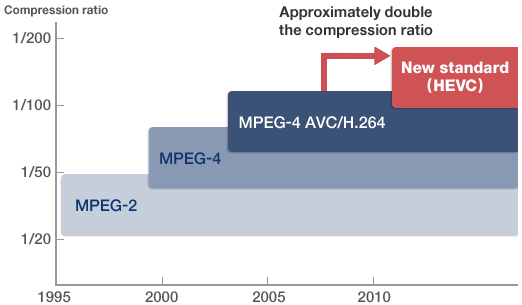
Openwave Mobility announced it is the ".. first company to provide comprehensive optimization for 4K Ultra-HD video on mobile networks. It offers carriers up to five times more data savings compared to previous technologies. Openwave Mobility’s DynaMO, is now capable of optimizing High Efficiency Video Coding (HEVC) [see "ITU New Approved Video Codec will Save 50% Bitrate" - here] to achieve optimum HD video playback on mobile devices .. DynaMO’s HEVC optimization is available for trials and demos immediately"

[Related post - "Openwave Mobility Deploys Cloud-based Mobile Video Optimization" - here]

source: 4K Shooters - here

"DynaMO is the industry’s first NFV-ready audio, HD and media optimization solution to help carriers manage the bandwidth constraints on their networks. DynaMO uses a combination of contextually-selective and congestion-aware optimization techniques to provide the highest quality video experience for users. Taking into account each subscriber’s device, it intelligently adapts video optimization to fit the original video. The solution monitors individual users’ data sessions, optimizing videos only when networks are congested and to the extent where smooth playback can be achieved".

See "Openwave Mobility Develops An Industry First: 4K Ultra-HD Video Optimization for Mobile Devices" - here.

Friday, September 12, 2014

Openwave Mobility Deploys Cloud-based Mobile Video Optimization


Openwave Mobility announced it has "successfully implemented the industry’s first public cloud-based mobile data optimization solution for a prominent North American service provider. 

.. Operators utilizing optimization via a public cloud can in some cases dramatically simplify their infrastructure planning and utilize economies of scale and “pay per use” on-demand elasticity. The public cloud deployment of video optimization is especially attractive to operators with roaming traffic or those who have fluctuating demands. 

DynaMO is also the industry’s most comprehensive mobile data optimization solution. The NFV-enabled solution combines contextually-selective and congestion-aware optimization techniques to optimize video, audio and web content".


See "Openwave Mobility First to Deploy Mobile Video Optimization in the Public Cloud" - here.

Tuesday, February 25, 2014

Product Announcements: Sandvine, Tilera/Procera, Openwave Mobility, Citrix/Bytemobile, Aricent, Ulticom, Elitecore


MWC announcements, 2nd round:
  • Sandvine Usage Management Brings New Mobile Billing Innovations (here): "Sandvine announced the launch of Usage Management release 5.0, which offers new capabilities to help both fixed and mobile communications service providers (CSPs) create, manage and implement new service plan offerings .. SmartRoam .. Pay-Per-Click Billing .. ServiceDesigner"


  • Tilera Chooses Procera Networks’ NAVL Engine for SDN and NFV Architectures (here): "Procera Networks and Tilera announced the availability of DPI-on-a-NIC for high performance deep packet intelligence. .. This integrated solution for SDN and NFV environments combines Procera’s Network Application Visibility Library (NAVL) software development kit with Tilera’s TILEncore-Gx™ Intelligent Application Adapters and ART software framework on a Network Interface Card (NIC).


  • Openwave Mobility Launches Industry’s First NFV-ready Audio, HD and Media Optimization Solution (here): "Openwave Mobility announced General Availability of DynaMO, the latest incarnation of its congestion control software ..The solution can also be deployed in a virtualized environment with dynamic scaling that is fully aligned with the industry initiative for Network Function Virtualization (NFV) .. DynaMO uses a combination of contextually-selective and congestion-aware optimization techniques. It provides the highest quality of video experience by intelligently adapting video optimization to fit the original video with each user’s device. DynaMO monitors individual users’ data sessions, optimizing video only when networks are congested and to the extent where smooth playback can be achieved".


  • Citrix Powers Data Monetization for Mobile Operators (here): "Citrix announced ByteMobile Insight, a big data analytics solution designed to provide immediate, actionable intelligence for mobile operator monetization, marketing and customer care organizations ..  ByteMobile Insight is a purpose-built solution encompassing data acquisition, processing and business intelligence. It collects and enriches usage, location and customer relationship management (CRM) data from a wide variety of sources, including ByteMobile platforms deployed in the mobile core network. Actionable intelligence is delivered to any operator organization via a sophisticated, interactive user interface as ready-to-use reports or via API or file extracts".


  • Aricent Launches Multi-Technology Universal SON – A Self-Optimizing Network Solution That can Automatically Optimize 2G, 3G, and 4G Networks Simultaneously (here): "Aricent launched an advanced self-optimizing network solution called Universal SON (Uni-SON). It automates optimization of multi-technology and multi-layered radio access networks thereby reducing operational expenditure (OPEX) and improving user experience significantly .. The biggest advantage of Uni-SON is that a single solution can help automate the optimization of 2G, 3G and LTE networks simultaneously. Its centralized architecture helps to capture a global view of the network, with decision variables spanning across different technologies and network layers".


  • Ulticom Upgrades Successfully Deployed DSC Product (here): "Ulticom announces the availability of Release 4.1 of their Diameter Signaling Controller (DSC).. Release 4.1 brings enhanced congestion avoidance, and simplified integration with operational management systems. Feature enhancements in Release 4.1 include: Enhanced SLF-based routing (SLF=Subscriber Location Function), Simplified operational management of connections, Congestion Avoidance via intelligent, prioritized traffic redirection based upon message content, Enhanced operational capability to allow improved network monitoring and flexible formatting to ease integration with back-end network management systems".

  • Elitecore introduces Passpoint-enabled Hotspot 2.0 and ANDSF support in its Wi-Fi Service Management Platform (here): "Elitecore Technologies announces that its SMP is ready to support PasspointTM certified Hotspot 2.0, an approach introduced by Wi-Fi Alliance for public access Wi-Fi to provide secure Wi-Fi access (Access Network Delivery Selection Function) from a list of Wi-Fi networks available for the client devices. Hotspot 2.0 complies with industry standards, which provides better bandwidth and seamless experience to alleviate mobile carrier traffic overheads. It will allow devices to discover and automatically select and connect to Wi-Fi networks based upon user preferences and network optimization. No user intervention will be required, all the user has to do is turn on the device and get automatic secure Wi-Fi connectivity.


Thursday, February 20, 2014

[ABI] DPI and Optimization Market to Reach $5B by '19


A new report by Sabir Rafiq [pictured], Research Analyst, ABI Research finds that "Web and Video Optimization and Deep Packet Inspection (DPI) investment will increase to over US$5Billion by 2019. .. The optimization solutions market continues to challenge those vendors, and continued consolidation is likely to achieve a healthy and sustainable ecosystem. Operators should be concerned with the amount of data consumed by their subscribers, and how this affects the overall Quality of Experience (QoE).”

Video and Web optimization solutions from vendors such as ByteMobile, Openwave Mobility and Vantrix are available to improve user experience and network performance. Deep Packet Inspection and monitoring vendors, Sandvine, Astellia, and others, deliver the data packet intelligence and helps operators ensure QoS/QoE at peak times. Operators can also find help with Content Delivery Networks (CDN) as leading infrastructure vendors, including Ericsson, Nokia Solutions & Networks, Cisco, and Huawei offer differentiated solutions. A focus on content delivery allows operators to optimize content to control the delivery and enhance QoS/QoE"
.

See "DPI and Web/Video Optimization to Reach US$5Bn by 2019 as Vendors Rise to Meet Mobile Operators’ Needs" - here.

Monday, October 28, 2013

[Guest post]: How Mobile Operators Can Address the War on Porn?

By Michael Rodgers*, Senior Strategist of Products, Openwave Mobility

UK Prime Minster David Cameron recently raised the stakes in his “war against porn” by asking Internet providers to apply stricter filters on adult content.

Child safety has been cited by many political insiders as one of the reasons behind the UK’s push towards stricter content laws. Cameron’s vision which also includes controls on Google search, is that the country’s households should “opt-in” to access to adult content.

The new measures would initially be automatically applied to new customers then expanded to existing subscribers through providers actively contacting their customer base regarding filtering options. The UK’s biggest Internet providers have all agreed to Cameron’s filter scheme meaning that 95% of UK homes will be filtered by the end of the year.

However, with nearly two thirds of the UK’s 12-15 year olds’ owning smartphones filtering only home networks will not fully shield them.

The reality is that very few parents know what their children and teenagers browse on their mobile phones, with the majority of youngsters knowing far more about the device’s capabilities than the parents footing the bill. Many parents are vigilant with their children’s laptop use, limiting it to “public areas” like lounges where screens can be easily glanced at, but unfortunately mobiles are often neglected. It’s nearly impossible to know what teenagers are viewing on their small touch-screen devices without assistance.

If the UK puts the responsibility of content-filtering onto mobile operators too they will be forced to figure out a comprehensive, cost-effective, solution that doesn’t aggravate their customers. Content-filtering solutions will need to incorporate:
  • URL Categorization 
  • Content Blocking
  • Captive portal with end-user sign-up: by default adult content is blocked, and access has to be requested)
     
  • User repository: to keep track of who signed up and user age
A simple way for operators to filter adult content would be automatically through their price plans. By enabling automatic parental-controls / content-filtering on shared and family plans for example, operators could discreetly protect younger users without parents having the additional task or responsibility of setting it up. Using the UK approach of needing to opt-out of the filters would ensure comprehensive protection for those who need it. Although such shared plans are relatively new in the UK market with EE having just released its “Shared 4GEE” plan last month, this would immediately work well in the US market where shared plans are more established. However, in the UK market where it is common place for parent to set up individual plans for their children and teens, offering a “Young Adult” plan with automatic filtering would be an easy and simple way for UK operators to protect younger users.

The UK is not alone in its movement in filtering adult content over the Internet. North American mobile operators are currently looking at ways to contain explicit content when browsing on devices. Although the operators are concerned about protecting vulnerable users, there is also an element of business ROI behind the move. It is estimated that the traffic from adult content currently accounts for 10-15 percent of the total traffic on mobile networks in the US. By reducing this type content more network capacity will be available and provides operators with another effective tool to manage network congestion.

As child-safety on the Internet is becoming more of a priority for governments as well as parents, mobile operators need to proactively begin addressing this issue now. Offering price plans that automatically filter inappropriate content, will not only provide an additional level of care that operators provide their subscribers, it will help differentiate their price plans in a competitive market with a “family-friendly” options. Acting on the issue now will enable operators to revolutionise price plans and help them stay ahead of the curve, demonstrating a willingness to take ownership of child-protection. This is especially vital when so many parents are unaware that such protection exists in mobile Internet world.


___________

*Michael Rodgers is a senior product marketing strategist at Openwave Mobility with over 20 years of experience in mobile telecoms, primarily focused on product management and marketing of mobile data infrastructure and value-added services products. At Openwave Mobility, Michael is currently responsible for marketing the company’s policy and charging product portfolio with a key focus on helping mobile operators innovate on data pricing models.

Prior to Openwave, Michael spent six years with Ericsson where he held a variety of positions including technical consultant, systems engineering and product management/marketing roles.

Michael holds a BSc, Science Physics & Chemistry from Trinity College Dublin, an MSc, Physics Opto-electronics and MA, Music technology from Queen’s University Belfast.

Monday, July 1, 2013

[Guest post]: Mobile Video is changing – as much to do with people as technology

By Chris Goswami*, Director of Marketing and Communications, Openwave Mobility

When it came to mobile video and 3G, it was always a clear case of video killed the radio star, with the surge in demand for video delivered to smart devices completely overtaking the ability of networks and operators to manage. Based on my attendance at the Global Mobile Video Summit in Berlin, it seems that things are changing.

People are changing faster than technology

Mobile video has moved from niche interest to regular communications. Indeed Gail Smith of Cavell Group went further and stated that “the dominant medium for communications is becoming video”. Even if we don’t quite agree, it’s not hard to see shifts in people’s behaviour. Ten years ago, the industry disappointment we used to call “video calling” is now all the rage – but they call it Facetime or Skype Video, and is driven in part by those front-facing cameras on our smartphones and tablets. Furthermore, mobile video is increasingly being uploaded (not just downloaded) especially at sporting events and holiday destinations as a new “wish you were here” video trend becomes increasingly familiar. And of course, social networking is also propelling mobile video usage – it’s just so easy to click on that link in the Tweet you just received.

These trends are even causing macro level changes in the business of those working in “movies”. At the conference, John Nolan from North-One TV, lamenting the TV industry’s inability to monetise mobile, said “In the good old days, to make a movie you had to be rich, clever, and connected. Today, everyone is a producer and everyone is a distributor!”

Bigger screens, front-facing cameras, longer, richer videos, and the fact that people no longer need a PhD in Gadgets to work the camera on a phone – all of these are factors causing shifts in the way people are interacting and collaborating through video.

But technology is changing too

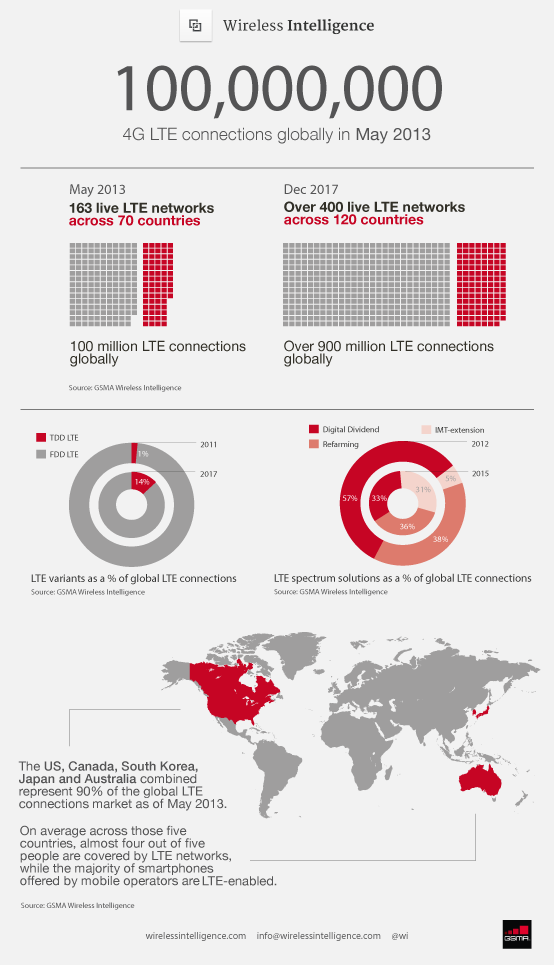
4G/LTE is called “LTE” for a reason, it’s a long-term evolution. Wireless Intelligence stated recently that there are now 100 million 4G/LTE connections. Wow! That’s a big number, right? Surprisingly, it’s a relatively small number when you consider there are around 3.4 billion unique connected users in the world. If you spin this statistic around, at least 97 percent of people in the world are not using LTE. As well as coverage there remain serious issues of interoperability between handsets which will persist for a long time.

But of course there are significant developments in LTE that do help advance mobile video consumption. First there’s the obvious: lower latency, higher throughput and spectral flexibility to aggregate carriers together. There is also the prospect of guaranteed QoS provided by more bandwidth, although that remains to be proven. Best of all, there is the new technology (not yet commercially available) of LTE Broadcast. For mass consumption, this point-to-multipoint broadcast of video content in a limited space (eg a sporting event), or in a limited time (eg breaking news), provides a colossal step-up in efficiency. It delivers rich video content to hundreds of users but using the bandwidth of only a single user. LTE Broadcast could certainly lead to new business models in the way mobile video is priced and distributed. In the end though, leaving aside disruptive technologies, we are still talking about limited radio spectrum which subscribers have to compete for. LTE is a helpful stop along the way but it is not our destination.

3G to 4G – lessons to learn

Three points.

First, the argument that “size matters” has been proven false (again). Mobile video optimization does reduce the volume of data in the network but that does not lead to automatic savings. More often, it leads to more users downloading more video, more of the time – and still causing congestion. Video optimization makes complete sense whenever and wherever congestion occurs, but not otherwise. Solutions such as congestion-triggered optimization are the key to achieving optimum use of bandwidth, not just minimum use of bandwidth. It’s a three-way balancing act between cost of optimizing, loss in QoE, and bandwidth savings. A more complex formula than “size matters”.

Secondly, more of a prediction than a lesson, ‘net neutrality in mobile is not going to fly. A few countries such as Chile and, as of last year, the Netherlands, have adopted stringent ‘net neutrality legislation for mobile, and the EU is currently wrapped up in discussions to bring about some measure of Europe-wide legislation. Rigid ‘net neutrality can only hold back deployment and adoption of mobile services. It’s one thing on fixed broadband to say that Internet Explorer should not be the only browser, and that traffic in big pipes should all be treated the same, but mobile networks are different. Mobile networks are inherently non-neutral. How can we say mobile networks are impartial when one side (operators) bears the burden of paying while another side (OTT players) takes the revenue? This inherent bias that has been built into mobile from day one cannot be defused by adding a veneer of “’net neutrality”.

Lastly, to state the obvious, monetization really matters. The low price per GB of video is causing margin erosion worldwide and contributing to declining revenues for European operators year-on-year.

Informa said recently: “Video streaming will account for a third of mobile data traffic on handsets in 2016; but money paid by mobile users for streaming will only amount to 0.6% of mobile data revenue”. This game has to change. And it is the right time to change. Today with the right technology in place, operators have the ability to treat every video flow individually, to decide in real-time how to charge for it, and how to achieve the best QoE. As we have stated before, some mobile operators, most notably US regional carrier C Spire have started to experiment with “video-as-a-service” and are offering packages such as two hour and five-hour video streaming plans, as well as tethering passes as add-ons to existing, low-cost plans. Although they have not made any figures public, this approach has directly contributed to increases in ARPU. Unsurprisingly, it seems that people will pay for what they want – as long as they understand what they are getting.

So changes in culture, yes; changes in technology, definitely; changes in revenue – just beginning.


__________
*Chris Goswami, PhD, Director of Marketing, Openwave Mobility has worked for 25 years in the telecoms industry. Within Openwave Mobility, Chris heads up Product Marketing, providing tactical support and business cases for areas of strategic interest. In his previous role in Openwave’s Global Solutions Team, he was responsible for coordinating solutions for complex customer problems in the mobile-data space.

Friday, May 24, 2013

Openwave Offers Analytics as a Cloud Service and Dashboards (Screenshots Inside)


Openwave Mobility announced the "..latest version of Mobile Analytics. This solution combines mission critical mobile data analysis functionality, greater ease-of-use and the option of hosting it in the cloud (Cloud Edition) or in-network (Business Edition). The solution can also be deployed in a virtualized environment with dynamic scaling that closely aligns with the industry initiative for network function virtualization (NFV) .. available immediately" 

"Key features of the new Mobile Analytics (Cloud Edition) and (Business Edition) solution include: Virtualized deployment model .. Dynamic segmentation & real time report generation .. Integrated, interactive dashboards .. Trending ..Correlation of key data points .. Actionable intelligence and Standard interfaces to integrate with existing data warehouse, user repositories and restful API.

Openwave shared with me some screenshots of the new dashboards:
  • The Devices Dashboard provides a starting point for analysis based on the mobile devices using a carrier's network:
source: Openwave Mobility


  • The Categorization Dashboard provides a starting point for analysis based on the sites visited based on their Category:
Openwave Mobility

  • The Segmentation Dashboard provides a starting point for analysis based on the sites visited based on subscriber segment:
Openwave Mobility

See "Openwave Mobility Launches Cloud-Based Mobile Data Analytics Solution" - here.

Saturday, April 20, 2013

PCC Deployments [241]: C Spire Wireless [US] Deploys Shared Data Plans and BoD with Openwave Mobility


Openwave Mobility announced that "C Spire Wireless has implemented Openwave Mobility’s Promotion and Pricing Innovation (PPI) Mobile Data Charging solution to power the company’s CHOICE and SHARED Data plan offerings, providing unmatched flexibility, control and value for customers: 
  • C Spire’s CHOICE plans enable prepaid and postpaid customers to purchase passes for premium data services such as video streaming and tethering at the time of consumption via an intuitive in-line subscription experience. CHOICE passes allow customers to pay for only the services they need, when they need them, and comes with the ability to monitor usage in real time to avoid bill shock.
  • C Spire is also leveraging PPI to power its SHARED Data service plans which allow customers to purchase monthly data plans with varying quotas that can be shared among multiple subscribers and devices. C Spire’s SHARED Data plans provide a much wider range of options for customers to choose from to meet their individual needs as compared with other similar offerings on the market. Subscribers of both CHOICE and SHARED Data plans benefit from the overage protections provided by PPI’s intuitive real time end-user engagement interface. Upon reaching data quota thresholds, subscribers are notified in-line and can elect to purchase a Top-Up pass with a simple click of a button.

See "C Spire Wireless Partners with Openwave Mobility to Launch CHOICE and SHARED Data Plans" - here.

Thursday, April 18, 2013

Sandvine and Openwave Offer Joint VAS Steering Solution


Openwave Mobility announced a joint solution with Sandvine to
"enable mobile operators, to deliver advanced monetization capabilities by empowering them to rapidly introduce new Layer 7 services including targeted video optimization, innovative pricing models, and subscriber self-care"

This follows a previous announcement by Sandvine of similar solutions with other partners: "Sandvine: 40 Joint Deployments with PeerApp, Mobixell and Netsweeper" - here.

"Sandvine’s Policy Traffic Switch .. combined with Openwave Mobility’s Integra4 .. offers operators a solution whereby data traffic can be classified at line-rate and appropriate Layer 7 application traffic can be steered to Integra4 to apply services. These services can include video optimization, parental controls or even dynamic content insertion for engaging users with inline promotions. These promotions typically include new Application-based Price Plans which are easy for subscribers to adopt and are known to lead to significant incremental ARPU increase .. the Sandvine-Openwave Mobility solution has been successfully trialed with live traffic by a North American operator".

See "Openwave Mobility and Sandvine Collaborate to Empower Operators to Pursue Large-Scale Monetization Opportunities" - here.