Showing posts with label personalization. Show all posts

Wednesday, November 27, 2013

[Infonetics]: VoLTE is the Accelerator for an Expected $1.9B SDM Market (2017)


A recent report by Shira Levine, directing analyst for service enablement and subscriber intelligence, Infonetics Research finds that "After several years on the back burner, the concept of the user data repository, where subscriber data is consolidated in a centralized repository, is finally taking off .. Use cases such as revenue assurance, churn management, and opex savings have long been drivers behind user data repository spending, but voice over LTE (VoLTE) has proven to be a real accelerator, as has interest in leveraging subscriber data to better enable monetization of the network


"The global subscriber data management market is forecast by Infonetics to grow to $1.9 billion by 2017, fueled by the big data trend". This is a small increase from Infonetics' May forecast - "SDM Market Looks for Strong Analytics; to Reach $1.8B by 2017" - here but still lower compared to 2012 forecasts "SDM Market to Reach $1.9B by 2016; Oracle and Amdocs Compete" - here 

See "VoLTE, personalization and monetization powering momentum in subscriber data management" - here.

Friday, November 22, 2013

Monday's Guest Post: Towards Business-Focused Policy Management

 
A new guest post will be published on Monday - "Femtocells, LTE and the Move to Personalization – The Evolution of Policy" by my 31st guest, Martin Morgan.
 
"LTE is changing the speed at which operators do business. Increases in sophistication in customer behavior are radically changing how operators develop and market their services" says Martin.

Stay tuned!

Monday, February 18, 2013

[Signals Research] Users are Willing to Pay for Personalization


A study of 3,500 mobile broadband consumers from Brazil, India, South Korea, UK and US by Signals Research Group (sponsored by Tekelec) finds that "Customers want more choices in how they can mix and match services, and they are willing to pay for a greater degree of personalization across services, such as: Email, Web Browsing, Social Networking, Multi-User Gaming, Sports/News/Video, Voice over IP, TV and Movies, Cloud, Remote Lock/Remote Wipe"


Source: Mobile Broadband Pricing and Bundling - the Voice of the Consumer, Tekelec 


".. In addition, customers ranked pricing concepts based on Usage and Specific Applications higher than those based on Bandwidth/Performance, Family Sharing/Bundling of Devices, Casual Usage, or Free Access with Advertising. Service providers have an opportunity to generate incremental revenues if they sell tailored services to customers whose devices are capable, but not yet part of a mobile data plan"

See "Mobile subscribers willing to pay for service bundles ‘their way’" - here.

Monday, December 17, 2012

[Heavy Reading]: MNOs Need Personalization; Limited by IT


A new research by Ari Banerjee (pictured), senior analyst, Heavy Reading (commissioned by Amdocs) finds that "service providers are looking to offer personalized data plans and real-time visibility and control over data spending in order to improve the customer experience and better monetize 4G investments. The research also reveals that service providers currently lack the integrated charging and policy management capabilities required to enable this".

Key research findings reveal that:
  • As 4G LTE (Long Term Evolution) becomes the standard network technology, service providers’ marketing departments want to launch more advanced services and price plans
     
  • IT organizations need new capabilities in order to fulfill Marketing’s wish lists (70 percent of respondents said their companies cannot enable innovative data price plans because of IT limitations)
     
  • There is overwhelming consensus among service providers that charging and policy management integration is key to enabling more advanced services and price plans (75 percent of respondents said their companies are looking to manage rules for policy and charging from one location, i.e. implement a centralized product catalog)
Banerjee, said: "Those who recognized the importance of charging and policy integration last year, have since launched tiered and family plans and are now looking to enable even more advanced services with real-time user visibility and control capabilities. Those who weren’t convinced last year about the need for policy and charging integration are much more convinced today, and therefore they are now looking to enable tiered and family plans"

See "Amdocs and Heavy Reading Research: Personalized Data Plans and Real-Time Data Spending Control Top Service Providers' Wish Lists for New 4G Services" - here.

Friday, December 7, 2012

Elitecore Enhances PCRF with Enterprise Self Provisioning, Analytics, Parental Control and more


Elitecore Technologies announced it has added several new features to its PCRF product, NetVertex (here, here and here) including "Enterprise Policy, Policy Analytics and RADIUS support for Wi-Fi Offload".

Dhaval Vora (pictured), VP, Product Management explains:

  • Enterprise Policy enables operators to address growing enterprise demand for Data Services Control within or outside the organization. It includes a service selection portal allowing Enterprises to self-manage their employees’ data consumption for usage, time & access controls, consistent QoS, Bandwidth-on-Demand, hierarchy-based personalization and more, effectively transferring controls from operators to enterprises

  • Policy Analytics will help design and launch subscriber-specific promotions & plans (such as include Social media-only services, Device specific plans, city-wise usage, access network usage, students or Government sector plans) based on various inputs of revenue, usage and traffic feeds reports to PCRF
     
  • RADIUS support for Wi-Fi Offload provides native support for Wi-Fi Offload through a single PCRF deployment. Operators no longer need to procure a separate Diameter Translation Agent to talk to PCRF for Wi-Fi offload.
Other new features include Parental Controls and a Device management module which maintains information on different devices available in the market, enabling operators to easily launch device-specific plans easily without having to configure device details everytime.

See "Elitecore releases latest PCRF with powerful new features" - here.

Sunday, August 5, 2012

TM Forum: 75% of SP have/Plan to Implement PCRF


A new report from the TM Forum (sponsored by Amdocs, BroadHop, Intracom, Orga Systems, Vedicis and Volubill) reviews " .. the evolution of the policy server from the first wave of risk reduction and bandwidth management applications, through the current personalization & monetization phase and on through to the emerging service and device expansion stage". 

"We find that the significance of the policy server continues to grow as we migrate to long-term evolution (LTE) and introduce new services like cloud, OTT enablement and M2M .. Almost seventy five percent of [service providers] have already implemented policy servers, or are planning to in the near future.. Policy management in conjunction with other network and systems elements like charging is among the most important emerging capabilities for service providers looking to differentiate themselves and create higher levels of customer loyalty and revenues".

".. the only way to realize its potential is through cross-departmental collaboration, in depth planning and analysis, careful selection of components, and high degrees of integration".

See "Policy everywhere: Acting on network intelligence" - here.

Wednesday, February 29, 2012

Procera's DPI Enables Yoigo VoIP's Monetization


Procera Networks had so far a number of announcements regarding its Spanish customer, Yoigo (here, here). Unlike many other DPI deployments, Yoigo does not hide and does not afraid to explain how it uses DPI showing interesting use-cases.

This time Procera shows a deployment of "OTT - VoiP Monetization" use-case - a DPI based business model - something that usually exists only in vendors' presentations.

Yoigo "has announced VOIP Bono (here, Spanish), a Mobile VOIP add-on plan to their standard mobile data offerings. This service allows access from phone or other device for voice calls over Internet (VoIP) via Skype, Viber, or any other VOIP application. Customer can expect to get about 600 minutes of talk time with the 100MB allowance devoted exclusively to VoIP calls, and will cost 6 euros per month, with an average cost of 1 cent per minute for Mobile VOIP".

Yoigoo's "VOIP Bono is powered by the PacketLogic solutions that Yoigo has deployed in their network since 2007" - that is DPI is used to detect the use of  VoiP applications, and count minutes - this is not easy! 

Johan Andsjö (pictured), CEO of Yoigo said: "The growth of voice over IP has the potential to change the mobile operator landscape .. VOIP Bono delivers a price leading Voice over IP service that is cheaper than SkypeOut for mobile broadband customers. Procera’s Intelligent Policy Enforcement solutions enable Yoigo to stay current on the latest VOIP applications and accelerate Yoigo’s new service launches."

See "Procera Networks Powers Yoigo Mobile VOIP Services" - here.

NI Deployments [126]: Telkomsel [Indonesia] Selected NSN to Monitor and Analyze Customer Insights


Nokia Siemens Networks announced that "Telkomsel .. expects to provide improved service quality using Nokia Siemens Networks’ Customer Experience Management* (CEM) on Demand portal .. [the] portal will enable the operator to offer several benefits to its customers. For instance, they can enjoy targeted offerings based on personal preferences. Telkomsel’s hotline could be faster in solving customer issues and necessary information being available instantly. Network problems could be solved even before the customer realizes there are any".

"CEM on Demand provides a new portal as a single entry point to dashboard views of mobile operators’ key performance indicators (KPIs) and recommends actions they can take to improve their customers’ experience. CEM on Demand makes it easier to access and share this information across the entire operator organization while in the office, or on the go via smart devices such as laptops and iPads" (see announcement  here).

Sarwoto Atmosutarno, President Director of Telkomsel said: “It is very important for Telkomsel to monitor and analyze customer insights to be able to offer optimal service quality at all times. We needed a solution that would not only do that, but also help us understand how services are delivered to, and perceived by, end users in order to prioritize corrective actions".

See also "Telkomsel Uses Ericsson for Service Differentiation and Traffic Control" - here.

See "Telkomsel Indonesia takes control of customers’ experience with Nokia Siemens Networks technology" - here.

Monday, February 27, 2012

Openet <-> Bytemobile <-> Citrix for Better Quality of Experience

  
Advise to vendors: if you want full attention to your press releases, don't wait for the first day of MWC .. and compete with the 8  releases from Ericsson, 4 from NSN and so many others. 

So in this post I will cover two announcements, in which Bytemobile serves as a pivot.

Citrix and Bytemobile announced a partnership between the two companies that "combines Citrix NetScaler's expertise in mobile computing solutions and flexible application delivery with Bytemobile's best-in-class traffic management and data optimization solutions, as well as its global footprint of MNO deployments. The synergy between these core competencies will enable operators to deliver the best possible subscriber experience under all network conditions and fully monetize all subscriber traffic – while scaling their solutions to meet subscriber demand"

See "Citrix and Bytemobile Partner to Develop Scalable Solutions for Mobile Operators" - here

See also "Sandvine and Citrix Integrated Offload Solution - See How !" - here.

Openet and Bytemobile announced a partnership ".. designed to deliver smarter traffic management and personalized quality of experience (QoE) for carriers and their customers. Openet’s Policy Manager and Bytemobile’s Smart Capacity platforms will work together to analyze and control traffic while creating and enforcing policies for individual users".

"Sample use cases for the Openet-Bytemobile collaboration include:
  • Management of traffic-intensive applications by differentiating and personalizing data services – delivering the appropriate level of video quality to roaming users for specific services to prevent bill shock
  • Quality-differentiated service plans by subscriber, content and content provider
  • Intelligent device- and content-type enforcement based on subscriber entitlement"
See "Openet and Bytemobile Partner for Smarter, More Personalized Quality of Experience" - here.


Sunday, February 26, 2012

Mobixell Explains its Joint Solution with HP


Mobixell Networks plans  ".. to demo Policy-driven Mobile Data Optimization solutions and Value-based Charging solutions ..designed around the Mobixell Seamless Access Mobile Internet Gateway (MIG) and the Policy and Charging Rules Function (PCRF) of the HP Subscriber, Network and Application Policy (SNAP - here) solutions .. Together with the PCRF of the HP SNAP solutions, techniques used to optimize data streams are applied or not applied by Mobixell Seamless Access according to pre-defined rules such as whether the subscriber is pre or post-paid, roaming or in the home network, etc. This approach can dramatically save on optimization resources which are often employed under circumstances when they are not actually needed".

I asked Noam Green (pictured), Mobixell's VP Marketing, why would operators use optimization based on subscribers' profile, instead of just using it whenever they can in order to relive congestion and reduce operation costs:

Noam: "Reducing operator’s operation costs (and specifically reducing overall data volume) was indeed the initial compelling reason for deploying optimization solutions. Over the past year and a half we have seen a shift in operator’s view of why and when to activate content optimization, from mere volume saving towards Quality of Experience and network congestion management. This is one of the reasons Mobixell has introduced a new way of approaching mobile data optimization. That’s Mobixell EVO™, an Evolved Optimization approach for mobile networks. This new approach focuses only on congestion rather than just arbitrarily reducing data volume. Network congestion, is one of the major effects on user’s Quality of Experience which is becoming a very important factor for using optimization. 

User profiling is another level operators are already deploying, which enables them to enable different levels of services (Class of Service (CoS)), or according to their billing cycle (e.g: closer to the end of their quota), or even location (roaming, vs. local). Some of our customers are deploying different levels of optimization according to pre and post-paid customers, or enabling DBRA (Dynamic bitrate adaptation) to their premium customers or only on premium content.

Web acceleration and Video Optimization are expanding from mere network savings towards quality experience enhancers. Combining these two with policy engines (such as standard PCRF) enables maximum flexibility and best Quality of Experience for operator’s customers".

See "New Mobile Solution to Let Operators Customize Data Optimization Strategy for Each Individual Subscriber" - here.

Wednesday, January 18, 2012

DPI Win: Procera Gets $2M Follow-on Order from US MSO

   
Procera Networks announced that "it has received a $2 million follow-on order from a leading North American Cable MSO. This third follow-on order comes just three months after the MSO awarded a $6 million follow-on order in September 2011 [here]

Related posts: " Procera: Cox Generated $2.2M in 2010" - here.
 
Brian Ahearn (pictured), who was recently appointed as Procera's VP of Worldwide Sales [here] said: "Cable operators are continuously looking for new and innovative business models to better serve their customers. Personalized services are a key option to add value to their customers"

See "Procera Receives $2 Million Third Follow-On Order From Leading North American Cable MSO" - here.

Tuesday, January 3, 2012

SDM Deployments [114]: Vodafone Egypt Deploys NSN One-NDS/NetAct for Personalization, Monitoring and Optimization

 
Nokia Siemens Networks announced that "Subscribers of Vodafone Egypt, the country’s largest telecom operator, will soon enjoy a host of customized services. The operator is upgrading its subscriber data management system built on the One-NDS platform provided by Nokia Siemens Networks. This will enable Vodafone Egypt to speed up the process of launching new, targeted services .. Nokia Siemens Networks’ NetAct [see below] network management system will enable effective monitoring, management and optimization of Vodafone Egypt’s network"

Vodafone Egypt had over 35M mobile subscribers on September 30, 2011 of which 96% were used a pre-paid service. Vodafone says on its 2011 H1 report that  "In Egypt the economic environment remains challenging. Whilst Egypt service revenue was flat year-on-year in H1, growth in Q2 was 1.2%, driven by an increase in the customer base and improved data usage offsetting a decline in messaging and visitor revenue" (here).

See "Personalized mobile services for Vodafone Egypt subscribers" - here.

Tuesday, December 20, 2011

Ovum: Operators Dissatisfied with SDM Solutions; Expect More Business Value


While the Subscriber Data Management market is "is forecast to grow rapidly over the next few years" (here) and supported by giants such as Oracle and Amdocs, it seems that something is still missing and operators do not find the solution they really need.
 
Shagun Bali (pictured), Analyst, Telecoms Technology, Ovum recommends vendors in the SDM space to "..revisit their marketing and partnering strategies. As the telecoms industry evolves toward more subscriber  personalization, operators have similar expectations from their suppliers as well".

"A key message from the recent [SDM and Data Warehousing Summitwas that operators are dissatisfied with vendors’ current [SDM] offerings. Operators’ focus has shifted from reducing costs to delivering value and managing customers’ experience over their networks. They expect vendors to understand and help them deliver business value. Vendors also showcased their SDM capabilities to help operators overcome their data management challenges. But overall, operators’ challenges outpace vendors’ current solutions"

"Operators were enthusiastic in discussing the potential they see in using subscriber data in more sophisticated ways. Operators treat such data as a strategic asset – the oil that will fuel their future growth. Some take the idea so far as to see themselves transforming in five years or so into companies that primarily manage data and also provide communications services"
See "Big Data is a big challenge for operators and vendors" - here.

PCRF Deployments [111]: Pelephone [Israel] Selected Ericsson's SAPC

    
Doron Kurtz, Pelephone's VP Engineering & Technology announced during a press conference that the mobile operator selected Ericsson's PCRF system, SAPC (covered - here), "the first PCRF in Israel".

Amitai Ziv reports to The Marker (and twitted me the slide - thanks!) that according to Pelephone's presentation, the system enables personalized charging (according to the subscriber profile), volume base service plans, real time notifications and a Turbo Button (Bandwidth on Demand) feature.

See here (Hebrew).

Earlier this week, customers of Pelephone's first MVNO (Ramy Levi) complained that Pelephone reduced their download speed to 2 Mbps, vs. 7.2 Mbps when using the native Pelephone service (here).

Tuesday, December 6, 2011

DPI Deployments [108]: Public Mobile [Canada] Uses Procera for Personalized, Device Aware, Policies and Charging

   
Procera Networks announced that ".. Public Mobile deployed Procera’s PacketLogic solution set in implementing new 3GPP-standard charging models that are enabling personalized services, such as on-demand pre-paid data roaming .. In order to keep prices down, the wireless company needs visibility into its network traffic that is both granular and scalable ..Public Mobile is also an early adopter of Procera’s new PacketLogic Report Studio feature, generating analytics for their business decisions. Already, they have used the solution to respond to customer trends in smartphone use, enabling accurate capacity planning and enforcement of terms of service"

Public Mobile operates in Toronto and Montreal area, and claim to have 150,000 subscribers as of Q3 (here - note the comments). One of their web pages (here) answers with a simple "no" the question "Can I use my data phone to connect to the internet on my laptop (tethering)?", which may explain the need for a device aware DPI solution.

Brian O'Shaughnessy (pictured), CTO, Public Mobile said: "Procera's proven ability to cost-effectively implement device-aware policies and their flexibility in new charging models were the primary reasons we selected Procera for this deployment .."

See "Procera Networks Delivers Optimal Solution for Public Mobile" - here.

Wednesday, November 30, 2011

PCC Deployments [106]: Orange[Tunisia] Uses Volubill for Personalized Charging and Bandwidth Management


Orange Tunisia coverage map
Volubill announced that its "..VBS solution will provide Orange Tunisia with increased organizational and orchestration abilities to better manage charging policies for a growing portfolio of service packages across a complex array of network systems. It will also allow the operator to more effectively market its offerings to a growing subscriber base .. Volubill's charging and policy solutions will be leveraged to design new self-care capabilities for customers, implement more personalized and segmented charging models, and provide enhanced bandwidth management functions to promote fair use of network resources among all customers".

Volubill Business System (VBS) was announced recently (see "Volubill: "We have chosen to restructure our product suites" - here) , and includes a policy manager and charging servers.

Orange Tunisia (previously Divona Telecom) is partially owned by the Orange Group (49%). On June 30, 2011 it had 431,000 mobile customers.  

See "Volubill Brings Convergent Charging to Orange Tunisia" - here.

Tuesday, November 15, 2011

[Update 46: Oracle Launches PCRF] PCRF - DPI Compatibility Matrix

    
Another big name is now added to the list of PCRF vendors - Oracle. The PCRF-DPI matrix [here] has been updated with the new entrant, as well as other changes occurred recently (M&As, product updates and links housekeeping). 

The software vendor announced "the release of Oracle Communications Policy Controller .. With the solution, CSPs can optimize data usage and ensure a fair allocation of network resources by expanding or contracting bandwidth as appropriate based on customer subscriptions and service aware policies. Specifically, CSPs can distribute bandwidth based on personalized service plans that can be adjusted to consumer preferences – such as separate social media, video streaming and VoIP plans – for a richer customer experience and a greater return on network investments .. enables the enforcement of regulatory requirements, such as bill shock. It also enables customers to set parental controls, which can be customized to each device.

Oracle's PCRF is part of the Oracle Communications Service Delivery product family (see previous posts - here and here). With Amdocs' recent acquisition of Bridgewater, the suggestion for Oracle to buy Amdocs made 18 months ago (here) is now [a bit] less likely to happen.

No information so far regarding supported PCEFs.

See "Oracle Introduces Oracle Communications Policy Controller to Help Service Providers Better Manage the Explosion in Data Usage and Deliver the Highest Quality Customer Experience" - here.

Friday, November 11, 2011

Research Tells MNOs how to Increase Cash Return (Hint- Just Be Smarter!)

[posted on 11/11/11 11:11 JST]      
 
Research done by Chris Barraclough (pictured), MD and Chief Strategist, STL Partners/Telco 2.0 (commissioned by Tellabs) finds that "Mobile operators are missing a clear opportunity to double cash returns by following current network strategies .. Cash returns on invested capital for mobile operators today are typically 5.8%, in line with utility company stocks. The report concludes that mobile operators can more than double cash returns to 13.3% by delivering smart services. Smart services can improve operators’ share value and performance, turning today’s value stocks into tomorrow’s growth stocks."

"To achieve the 1.6% increase in cash returns enabled by moving to a smart network, the following elements are essential: [Items in bold are frequently discussed in this blog]
  • Efficient network configuration
  • Network security
  • Device management
  • Network sharing
  • WiFi offload
  • Traffic shaping
  • Multicast and content delivery networks (CDNs).
To increase cash returns by a further 5.9%, the following smart services must be introduced:
  • Delivering personalised and differentiated user services that leverage assets such as customer data
  • Making additional operator assets, such as location, presence, payments, identity and authentication, available to users and other service providers [see "Tekelec's PCRF Used with Verizon's "Turbo Button" API" - here
  • Implementing differentiated pricing and charging for users and upstream service providers based on customer segmentation and tiered service levels"


See more - "Mobile operators missing opportunity to double cash returns for investors" - here (press release) and here (report)

Wednesday, November 9, 2011

Tekelec's PCRF Used with Verizon's "Turbo Button" API

   
Following the recent story by Mark Hachman at PC Magazine - "Verizon API To Give Apps 'Turbo' Bandwidth Boost" (here) I was wondering if Verizon's PCRF system (a Tekelec product - here) takes part in this Bandwidth on Demand (BoD) system.

To get some clarifications, I contacted Joanne Steinberg (pictured), Strategic Marketing Director at Tekelec. Joanne confirmed that "Verizon is using Tekelec’s Policy Server (PCRF) as well as their own innovative, in-house network optimization API development to deliver service innovations such as the turbo button. As stated in the PC Magazine article, the turbo button can provide "guaranteed quality of service" and the network optimization API will "likely expose attributes like jitter, latency, bandwidth, and priority to app developers."

According to the PC Magazine story - "Verizon will publish an API that could allow consumers to "turbocharge" the network bandwidth their smartphone apps use for a small fee ..Verizon anticipates that a customer running an app on a smartphone will have the option to dynamically snatch more bandwidth for that app, if network congestion slows it down ..  Even with it LTE technology driving its fastest mobile network in the U.S., Verizon still sees a day when congestion can impact high-bandwidth apps".

Joanne sees the following values with API/Policy management system:
  • This is a great example of how policy can be used to help service providers deliver more personalized services, add value to over-the-top and in-house applications, and generate more revenues from mobile data
     
  • Service providers can also personalize services by providing subscriber data such as location information to applications if the subscriber opts in, guarantee quality of service, and allow subscribers to prioritize their preferred applications. They can also provide analytics to over-the-top application providers such as information on how different policies impact application usage.
See also - "Verizon Wireless Continues To Open Its Network To Developers With Launch Of Location, Messaging And Network APIs" - here.

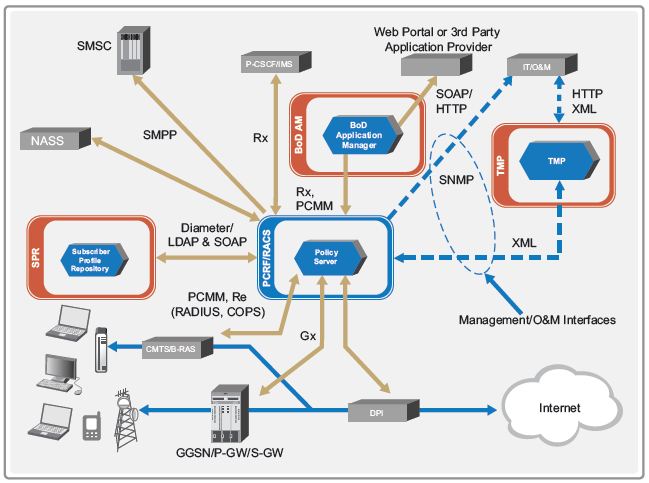
Tekelec Policy Server Interfaces (Source: Tekelec)


Tuesday, November 8, 2011

NI Announcements: HP Adds Vertica Analytics Platform

     
HP announced that ".. the HP Actionable Customer Intelligence portfolio has been enhanced with the Vertica Analytics Platform from Vertica, an HP Company. Real-time, big data analytics from Vertica can help CSPs develop a complete, wrap-around view of the customer and the network, allowing them to understand customer behavior and deliver more personalized services.

Bob Stutz, senior vice president, Business Solutions said: “To drive business growth, CSPs must deliver more personalized services and manage service quality more effectively .. With HP’s extensive portfolios, CSPs can create a customer-centric OSS as well as build ACI solutions that transform customer information into valuable business strategies.”

HP also added the "HP Virtual Identity Profile Broker, which builds a single view of the subscriber in order to offer him or her personalized services"

In addition HP updated the HP OSS Transformation portfolio, and announced ".. new offerings for HP business consulting practice"

See "HP Expands Offerings to Help Telecoms Personalize and Manage Services for Better Customer Experience" - here.