Showing posts with label Small Cell. Show all posts

Saturday, August 29, 2015

Ooredoo Qatar Deploys Nokia's Small Cells


Nokia Networks announced it has ".. won a deal with Ooredoo Qatar to deploy its small cells in hotspots across the country. .. Nokia Flexi Zone small cells were then discreetly installed in strategic locations such as café and restaurant rooftops to ensure additional capacity, coverage and better network availability, as well as reduce latency.

Ooredoo Qatar’s vision and work have led Qatar into this decade as one of the best-connected countries in the world. The operator is currently focused on providing the most innovative services, including ultrafast 4G+ services, to its customers. It recently announced the launch of Ooredoo SuperNet, one of the most significant network evolutions in Qatar’s history". 


At the end of H1 2015, Ooredoo Qatar has approximately 3.4M subscribers. 


See "Nokia Networks, Ooredoo Qatar sign deal to deploy small cells for more capacity, coverage in hotspots" - here and "Ooredoo Deploys Small Cells to Boost Supernet across Qatar" - here.

Friday, June 26, 2015

ACS Uses Saguna to Bring MEC to Enterprise's Small Cells

  
Saguna Networks announced that the ".. Saguna Open-RAN platform has been selected by ACS, a part of the $1.5Bn+ Pivot Group .. ACS's new Smart Perimeter Enterprise solution leverages Saguna’s Mobile Edge Computing (MEC) software solution to provide locally provisioned value-added voice, data and video services to small-cell-enabled enterprises.

..ACS’s Smart Perimeter Enterprise Solution™ locally provisioned voice, data and video services reduce Enterprise operating cost and can augment, and even replace, traditional tethered and unlicensed solutions. The MEC-based solution offers new revenue streams to the mobile operator, while saving the client money. It leverages the investment in an IP mobile network and licensed spectrum while improving coverage, reducing the cost of small cell deployment, and providing the analytic data required to ensure a consistently high quality of experience (QoE).

Bob Pike [pictured], CTO at ACS commented “ACS is excited to bring the promise of MEC to the enterprise market and deliver new services from the mobile network radio edge. With the Saguna Open-RAN software, creating a complete MEC solution was fast and simple. We have been able to bring to market a fully integrated and secure, managed MEC platform running multiple value-added services with more to come.”

See "Saguna Open-RAN Mobile Edge Computing Platform Powers ACS New Smart Perimeter Enterprise Solution" - here.

Friday, October 3, 2014

Alcatel-Lucent Partners with Accenture to Improve and Monetize Broadband


Pierre Nanterme CEO, Accenture & 
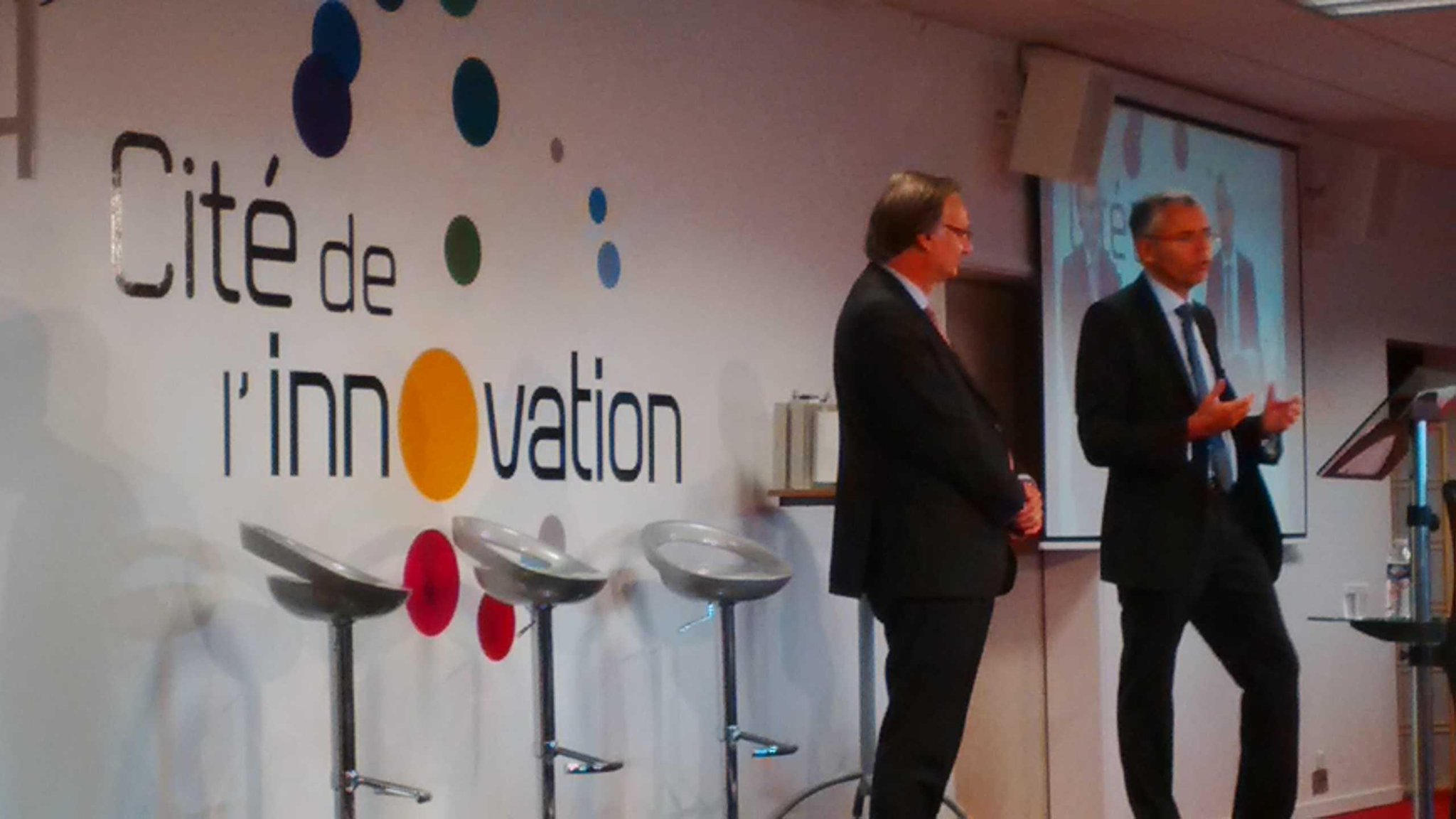
Michel Combes CEO, Alcatel_Lucent
Accenture and Alcatel-Lucent announced that they have "formed a strategic alliance to help communications service providers (CSPs) and large enterprises implement integrated ultra-broadband solutions to address the challenges of rising costs and increased data consumption caused by high demand from digital customers and applications.

The agreement calls for the two companies to form the Accenture Alcatel-Lucent Business Group. 


 Its initial offerings will include solutions where the companies team to design, build and run scalable, cost effective customer care operations for all-IP networks that will to

The companies will dedicate sales and delivery resources to jointly provide solutions and services for customer care for mobile devices based on Alcatel-Lucent’s Motive line of products and explore small cell wireless network solutions with a focus on integrating cellular technology and WiFi between service providers and large enterprises". 


See "Accenture and Alcatel-Lucent collaborate to help clients monetize ultra-broadband opportunities" - here.

Wednesday, December 18, 2013

SON Deployments [279]: SingTel Deploys Ericsson; "20% Faster Internet"


Ericsson announced that "SingTel has chosen Ericsson's SON Optimization Manager to extend benefits of network automation to their WCDMA networks. The solution adapts intelligently to network traffic conditions, delivering optimum coverage, capacity and quality at all times .. With this system, SingTel and Ericsson optimize multiple network elements and domains, allowing the integration of multiple technologies 2G, 3G and 4G into a single optimization model".

SingTel itself announced that "mobile customers can look forward to faster and more consistent data speeds in crowded locations as SingTel implements a range of groundbreaking network capacity enhancements. The enhancements, which include the Self Organising Networks (SON) solution and small cells technology are being progressively rolled-out in busy locations such as shopping malls, event and concert venues, and selected commercial and residential buildings" (see "SingTel boosts mobile data speeds and network capacity in crowded locations" - here).

Related posts:
  • Singtel: 10% of Subscribers Consume 64% of Data; Implements Tiered Services - here
  • SingTel Digital Media CEO: "user experience will become the greatest differentiator for service providers" - here
  • Singtel: Theoretical LTE Download - 75Mbps, Actual 3.4-12Mbps - here 
"Ericsson's comprehensive SON solution [see white paper below] includes self-optimization features such as coverage capacity optimization and load balance (CCLB), and automatic neighbor relation (ANR) handling. Self-healing functions are being developed to automatically compensate for cell outages by adjusting the neighboring cells to find the optimal configuration. These features help to maintain a high performing network that can deliver a more consistent experience for SingTel customers with faster download speeds and reduced drop calls".

Mr Tay Yeow Lian, VP Mobile Core Engineering, SingTel said: "With SON and other network enhancements, our customers will enjoy up to 20 per cent faster internet access in crowded places that are prone to network congestion. The chances of encountering a dropped call at these packed locations will also be reduced by as much as 40 per cent. SingTel has invested heavily in its networks to deliver the fastest mobile services in Singapore. We are the only 4G service provider to offer speeds of up to 150Mbps and nationwide dual-band coverage. By investing in new technologies, we seek to provide our customers with an even better experience with their communications and multimedia applications."


See "SingTel deploys self-organizing network solution with Ericsson" - here.

Monday, February 11, 2013

Ubiquisys Partners with Saguna - Adding Cache to Small-Smart-Cells

 
Saguna Networks exposes one more OEM partner (see "Saguna CEO: "We have 4 New OEM licensees for our Mobile Caching Technology"; Going Live on Q2" - here) - this time it is Ubiquisys, a UK-based vendor of intelligent small cells.
   
Indoor public access small cell
The vendors announced that they are ".. cooperating to provide an integrated content and application acceleration offering based on small cells for mobile network operators. The joint solution combines Saguna Networks’ Saguna CODS for optimizing the delivery of content and applications over mobile networks with Ubiquisys’ smart cell, a range of intelligent 3G/4G/WiFi small cell hotspots with an integrated computing platform based on Intel® architecture". 
   
"The joint solution features transparent popular content caching and DNS caching on the Ubiquisys smart cell, which supports all existing mobile network capabilities, including lawful interception, real-time charging, policy management and more. The solution embeds cloud content and flexible application processing resources at the edge of the mobile network to improve user experience and mobile network economics. The application is distributed and remotely provisioned on smart cells through the Intel AppUp® SMB Service, which is built on the Intel Hybrid Cloud software platform that enables service providers to deliver the benefits of cloud computing on distributed networked devices". See also "The rise of intelligent small cells", by Will Franks (pictured), Ubiquisys - here.
  
See "Saguna Networks and Ubiquisys Partner to Provide Content and Application Acceleration for Small Cells" - here.

Friday, February 8, 2013

Vendor Preview: FibroLAN's Small Cell Backhaul w/Cache

 
Earlier this week I mentioned the Saguna-FibroLAN partnership (see "Saguna CEO: 'We have 4 New OEM licensees for our Mobile Caching Technology'" - here) in which FibroLAN licensed Saguna's caching and radio optimization software (CODS) for its second generation Falcon series for LTE mobile backhaul (here).

I asked FibroLAN's CEO, Shamir Stein (pictured) to further explain the new solution, that places popular data as close as possible to the users.

Shamir provided the following details about the new product:

  • FibroLAN's carrier Ethernet backhaul products support indoor and outdoor small cell deployments. Among other features it provides Power over Ethernet (PoE) to the small cells, and centralized synchronization using an integrated GPS.
     
  • Content caching, based Saguna's code, uses SSD storage and handles any kind of content (including video). It promises savings of up to 50% on backhaul bandwidth, while speeding up content delivery. It also supports DNS caching, eliminating the need for round trip delays associated with DNS queries (which could be significant, mainly for web pages with multiple objects).
  • The product aggregates several cells, in a flexible model that combines daisy chaining and star topologies. It also supports a campus configuration - in this case the the caching become even more efficient resulting from the larger number of people using it. 

  • FibroLAN will demonstrate the new product line at MWC 2013, and availability is planned for Q2 


Friday, January 18, 2013

AT&T - MicroCell Traffic does not Count Towards DSL Cap


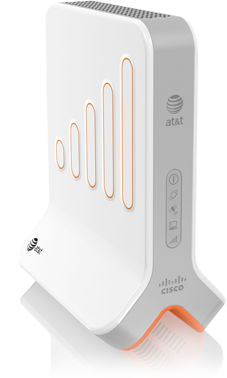
AT&T MicroCell
Phillip Dampier reports to Stop the Cap! that "AT&T Wireless customers with the company’s 3G MicroCell that covers for AT&T’s network shortcomings are given special treatment if they also subscribe to the company’s wired broadband services: use of the MicroCell is exempt from the wired usage cap"

The author claims that this violates Net Neutrality principles, by allowing only AT&T's traffic to be exempted from the monthly quota. I wonder if AT&T can use the same excuse Comcast used for its prefertioanl treatment to Xbox traffic over Xfinity service (here and here).

AT&T's clearly states this in its Broadband Usage FAQs page:

I have an AT&T 3G MicroCell. Since that utilizes my home broadband network to boost my wireless data signal, does that mean my wireless usage also counts against my wired broadband monthly data plan?

 
No, the wireless traffic from your AT&T 3G MicroCell does not count toward your monthly home broadband plan. Please register your AT&T 3G MicroCell account and your residential AT&T Internet account at www.att.com/internet-usage-MicroCell to help ensure accurate Internet usage billing. If you have broadband service with another provider, you do not need to register your account


See "AT&T Exempts Its Own MicroCell Product From DSL/U-verse Usage Cap; Everything Else Counts" - here.

Thursday, December 27, 2012

[ABI]: Small Cell for Public Venues - $3.1B Market by 2018


A recent research by Nick Marshall (pictured), principal analyst, mobile networks, ABI Research finds that "Public venue small cells are an emerging class of small cell equipment, which are expected to grow at a CAGR of 67% to $3.1 billion in 2018. The public venue small cell category is a subset of the existing enterprise small cell segment, and will represent 50% of the segment by 2018".

See also - "Survey: 98% of MNOs Believe Small Cells are Essential" - here.

"Deploying, installing, and operating small cells in public venues involves different considerations than street-level small cell deployments. Backhaul, power supply, and increased scale, with dozens or even hundreds of small cells in a densely packed network need to be handled. Also, unlike street-level deployments, public venue small cells face different interference challenges, dealing with higher interference between the small cells, rather than the surrounding macro"

See "Small Cells Expected to Carve a Niche in Public Venues, Worth $3.1 Billion by 2018" - here.

Saturday, December 8, 2012

Survey: 98% of MNOs Believe Small Cells are Essential


According to a recent report by Dimitris Mavrakis (pictured), principal analyst, Informa Telecoms & Media a survey shows that ".. 98% of mobile operator respondents believe small cells are essential for the future of their networks .. There are now 46 small-cell deployments by operators, including nine of the top 10 operators by revenue globally .. 55% of the mobile operator respondents are most interested in public access deployments over the next 12 months followed by enterprise rollouts with 35% of responses. Almost half (49%) of operators said their greatest concern surrounding outdoor metro deployments are the planning issues (e.g., finding suitable sites, power, etc), followed by backhaul challenges – cited by 35%".

"Almost all the survey respondents believe that LTE will be the biggest technology driver for small-cell deployments over the next five years although interest in LTE-A is growing. The survey also found that Wi-Fi was deemed to be complementary to small cells with deployments of both expected to take place in parallel".

See "98% of Mobile Operators Say Small Cells Essential for Future of Networks" - here.