Showing posts with label Charge by Application. Show all posts

Saturday, October 3, 2015

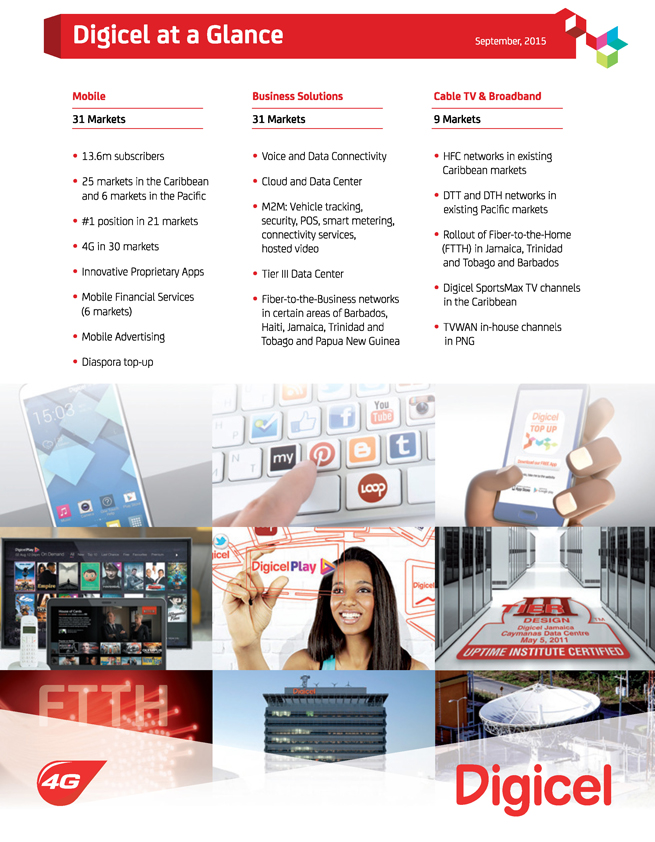
Digicel: DPI is a Catalyst for VAS Revenues Increase


The Digicel Group (operating communication services in 31 countries to 13.6 million subscribers) has filed for an IPO recently with the SEC (here). The group is a Sandvine customer ("How does DigiCel Use Sandvine?" here and here) and explains in the F-1 form the benefits of DPI:

"Mobile Data and VAS

..VAS is an increasingly important portion of Digicel’s revenue, rising from 23.0% of its total mobile service revenue in the year ended March 31, 2013 to 31.2% in the year ended March 31, 2015 and 33.9% in the three months ended June 30, 2015. The increase in VAS has tracked an increase in availability of affordable smartphones, including Digicel-branded Android devices


.. An important catalyst for the increase in VAS has been Digicel’s innovative product and service offerings which include:

  • Service-based packages: Digicel’s data offers have evolved from volume based pricing to charging by service. Digicel’s deep packet inspection platform allows it to price plans based on the specific service that subscribers are consuming as opposed to volume-based pricing.

    Digicel is able to offer subscribers data plans that provide access only to one particular site, such as Facebook or Instagram. This capability has allowed Digicel to launch new plans across markets with a range of data allowances along with access to particular websites.

    This makes Digicel’s plans more attractive to subscribers because they can more easily understand what they are getting, and it allows Digicel to differentiate its plans from competitors.
     
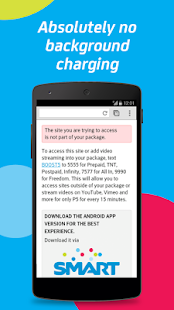
  • Free access to Wikipedia [here]: Digicel allows all Digicel subscribers free access to this widely-known source of information on the Internet. Every time a subscriber accesses Wikipedia on the Digicel network, there is a small banner at the top of the page that tells the subscriber that access to the page is provided free of charge courtesy of Digicel.

    Digicel believes this is a strong marketing tool and it also benefits Digicel’s subscribers in terms of free access to this information. This represents an opportunity to illustrate to Digicel’s subscribers the value of the Internet by showcasing the type of services that subscribers can access with an Internet subscription and is designed to encourage Internet penetration.

Tuesday, December 30, 2014

Airtel wont Surcharge VoIP; TRAI: "not in accordance with net neutrality, it was not illegal."


This time it took just few days for an MNO to drop its intentions to surcharge VoIP.

While Airtel said that "current VoIP model is not sustainable" the public reaction, as well as some government actions convinced it to drop the idea.

Reuters reports that "Bharti Airtel Ltd dropped a plan on Monday to charge clients extra for Internet communication services such as Skype, amid a debate on allowing equal access to web content and a backlash from subscribers .. The proposal sparked widespread complaints from Indians on social media and the creation of a website to fight against the plan. 

On Monday though, Airtel said the company had decided not to implement the policy in the face of "news reports that a consultation paper will be issued shortly by Telecom Regulatory Authority of India on issues relating to services offered by OTT players including VOIP
.

The head of TRAI, Rahul Khullar [pictured] , told local media last week that while Airtel's decision to charge more for these services was not in accordance with net neutrality, it was not illegal."


See "Bharti Airtel drops move to charge more for VoIP calls" - here.

Monday, July 21, 2014

[Study]: 85% of Operators are Leveraging OTT Apps to Attract Customers


A new study by Allot Communications (surveyed the data plans and charging trends of 175 mobile operators worldwide) finds that "85% of operators are leveraging apps to attract customers and increase ARPU .. Facebook is mobile operators’ top choice for zero-rated apps and Unlimited data plans are in decline".

Some examples of Zero rate programs:
  • Facebook Offers Free Messaging Through 18 MNOs - here
  • Success for Application-Based Service Plans in Zimbabwe - here
  • Vodafone India Offers Free Twitter Access - here
  • VimpelCom - Free Access to Wikipedia - here
  • Smart [Philippines] Uses Sandvine for Application-Aware Service Plans - here
  • Aircel [India] Offers Facebook Aware Service - here

Source: Allot Communications 

"Shared data plans are on the rise From 2012 to 2014, operators offering unlimited data plans have diminished from 35% to 15% while operators offering shared data plans with shared data caps increased from 29% to 42%"


Source: Allot Communications 


"As the evolution of data plans continues, unlimited data plans are becoming an offering of the past. Operators are moving away from actions that degrade QoE such as throttling Internet speed and when usage exceeds the volume cap; they simply charge the overage and maintain QoE"


Source: Allot Communications 

See "Allot MobileTrends Report Records the Rise of Application-Centric Mobile Operators" - here.

Thursday, July 10, 2014

Success for Application-Based Service Plans in Zimbabwe


According to Dan Deeth, Sandvine, post to the vendor's blog, Econet Wireless' offering of WhatsApp and Facebook bundles [see "Econet Wireless [Zimbabwe] Uses Sandvine for Application-based Charging" - here] is "continuing to out-maneuver and out-innovate competitors. These unlimited bundles allow subscribers to purchase unlimited usage of their favorite service for a day, week, or monthly for a low fee ..In the short time they have been available, adoption of these bundles has been incredible for Econet. .. WhatsApp accounted for over 23% of total network traffic in March 2014. Since that time, adoption of these plans, as well as WhatsApp traffic has continued to accelerate thanks to positive word of mouth as well as the launch of new budget-friendly smartphones .. competing [Telecel Zimbabwenetworks have begun to offer similar plans in Zimbabwe".


See "More of WhatsAppening in Zimbabwe" - here.

Thursday, June 19, 2014

TM Deployments [312]: Smart [Philippines] Uses Sandvine for Application-Aware Service Plans


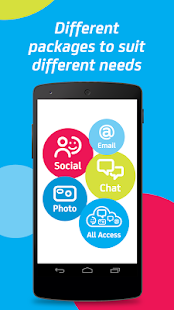
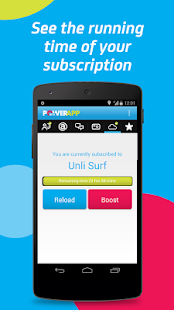
Sandvine announced that "Smart Communications is using Sandvine’s Network Policy Control solutions to support PowerApp – the world’s first mobile Internet store – which allows users to purchase “bite-sized”, application-specific, mobile service plans to fit their particular preferences and needs. 

[see the plan's FAQ - here]

PowerApp, developed by Smart Communications’ technology partner, Chikka Philippines, communicates with the data network to enable applications to dispense mobile data on demand, at precise speeds and bandwidths for highly valued services. 

Integrated with Sandvine’s Usage Management solution, PowerApp offers users service plans, such as Email, Chat, Photo and Social packages, in 15-minute, 3-hour or per-day unlimited access, depending on the particular application and plan, for an incredibly low fixed price. The packages provide “always-on” access to top apps anywhere, without the need for a Wi-Fi connection".


What are the available PowerApp packages?


See "Philippines’ Smart Communications Using Sandvine To Offer “Bite-Sized” Mobile Internet Plans" - here.

Sunday, June 8, 2014

[Disruptive Analysis]: "Fast Lanes" won't be Worth Much


A new study by Dean Bubley [pictured], Founder, Disruptive Analysis finds that "New Non-Neutral Mobile Broadband Business Models will generate $25bn in 2019 - just 6% of total mobile Internet/data access revenue, excluding those plans that just use outright blocking/throttling, and those with just some form of zero-rating of apps/content - the latter will also be important, at >1.5bn users getting 'something for free'".

The study looks into the "viability and potential scale of over 25 forms of "non-neutral" mobile broadband & Internet business models, such as "sponsored data", "zero-rated" apps and differential network QoS or "fast lanes" .. mobile operators are hoping that less-rigid "neutrality" rules will allow application-based charging for end-users, or perhaps new revenues from content companies paying for traffic on behalf of users (sponsored data) or for extra QoS. While some countries allow - or even mandate - blocking of certain apps, that is not generally an option in Europe, North America or most other advanced markets"


  • Conversely, so-called "fast lanes" for mobile video or applications are complex to achieve, cause huge controversy and - in the final analysis - likely won't be worth much anyway.
  • Zero-rating of certain applications is interesting - some say it distorts competition and encourages mobile operators to reduce "general" open-Internet quotas, in favour of revenue-share deals with content players, or gives Facebook or Google too much of a lock over new Internet users. Yet it also does allow access to Wikipedia or educational material for free, and in many cases is just a promotional tool rather than a strategic shift. Disruptive Analysis feels it should be watched closely, but is not yet a major Neutrality risk (although the Chilean regulators recently thought differently, and banned it). 

See "Only 6% of Mobile Broadband revenues from "non-neutral" access by 2019" - here.

Friday, April 25, 2014

DPI Deployments [305]: Econet Wireless [Zimbabwe] Uses Sandvine for Application-based Charging


A recent Sandvine case study presents their deployment at Econet Wireless Zimbabwe - "Econet Wireless Zimbabwe is using Sandvine’s Usage Management product with plug-and-play capabilities that will enable them to roll out new revenue-generating services for their pre-paid and post-paid subscribers. 

Sandvine was selected based on our ability to fulfill the technical requirements of usage-based charging over 3GPP Diameter Gy and policy enforcement over 3GPP Diameter Gx, which are critical for rolling out new services such as roaming notifications, bill shock prevention, family plans, and data bundles [including  promotions deals such as "Facebook Bundles" and "WhatsApp Bundles"}".

Econet Wireless Zimbabwe has over8M subscribers.

See "Success Story: Econet Wireless Zimbabwe Raises the Bar" - here.

Tuesday, April 1, 2014

Aircel [India] Offers Facebook Aware Service

   
Rajesh Kurup reports to The Hindu BusinessLine that "Telecom service provider Aircel has launched a service - Facebook for All – that provides free access to the social media platform for its customers. Under the service, Aircel enables its customers to network and be socially active on Facebook in nine different languages. Customers can have free access to Facebook Application, Facebook Messenger and Mobile version on their existing or new connections".

Compare to "Uninor [India] Shifts "from data to Internet"; Charges for Facebook and Whatsapp Use" - here, "Vodafone India Offers Free Twitter Access" - here and "Facebook Offers Free Messaging Through 18 MNOs" - here.

Back to Aircel - "Under the offer, Aircel will provide free 50 MB per month data on Facebook for a period of 60 days after activation. Existing customers will get free 50 MB data for 30 days and post 50 MB usage, the subscribers will have the option of using Facebook on their phones at ₹0.02 per 10 KB .. The customers also have the option of benefiting from the special tariff packs for Facebook which will be as low as ₹0.50 per day".

See "Aircel offers free Facebook access to its customers" - here.

Tuesday, March 11, 2014

Uninor [India] Shifts "from data to Internet"; Charges for Facebook and Whatsapp Use


Uninor, a subsidiary on Telenor announced that it has "decided to shift from volume based Internet offerings (MB and GB offerings) to service based Internet offerings (Facebook and Whatsapp). This will change the way in which Uninor offers Internet to its 33 million current and all future subscribers".

Morten Karlsen Sorby, nominated CEO of Uninor. said: “We are moving out of data and moving in to Internet. Internet is the way in which customers consume data and our approach will be to make that usage the cheapest among all operators

"50% of India’s mobile Internet users are active on Facebook and Whatsapp. Uninor has launched the new Internet strategy with two flagship products with Facebook and Whatsapp. Termed Sabse Sasta (most affordable) Facebook and Sabse Sasta (most affordable) Whatsapp, the products will allow subscribers unlimited access to these services at one fixed charge for a period ranging from 1 hour to 1 month. With just a one-time charge, subscribers can use Facebook and Whatsapp for the duration of the period without worrying about MBs and GBs .. Over the next few months, these new offerings will be made available across each of Uninor’s operational circles.

See "Uninor changes its Internet strategy - moves from 'Rs. per MB' to Sabse Sasta Facebook and Sabse Sasta Whatsapp" - here.

Monday, February 18, 2013

[Signals Research] Users are Willing to Pay for Personalization


A study of 3,500 mobile broadband consumers from Brazil, India, South Korea, UK and US by Signals Research Group (sponsored by Tekelec) finds that "Customers want more choices in how they can mix and match services, and they are willing to pay for a greater degree of personalization across services, such as: Email, Web Browsing, Social Networking, Multi-User Gaming, Sports/News/Video, Voice over IP, TV and Movies, Cloud, Remote Lock/Remote Wipe"


Source: Mobile Broadband Pricing and Bundling - the Voice of the Consumer, Tekelec 


".. In addition, customers ranked pricing concepts based on Usage and Specific Applications higher than those based on Bandwidth/Performance, Family Sharing/Bundling of Devices, Casual Usage, or Free Access with Advertising. Service providers have an opportunity to generate incremental revenues if they sell tailored services to customers whose devices are capable, but not yet part of a mobile data plan"

See "Mobile subscribers willing to pay for service bundles ‘their way’" - here.

Saturday, January 19, 2013

AT&T Opens FaceTime to iPhone 4S


One more step towards FaceTime over cellular for all and a more Neutral service by AT&T. The MNO now opens Apple's FaceTime to all subscribers on tiered-plans (i.e not on unlimited plans) even if they use the historical, stone-age iPhone 4S!

The evolution of AT&T FaceTime policy started with the plan to surcharge its use (July '12 - here). Since then AT&T has revised the policy every 3 months:  open to shared-data plans only (Aug '12 - here), open to LTE only on all tiered plans (Nov '12 - here) and the current announcement.

A blog post by Marc Collins (pictured), SVP, Data and Voice Products, explains that "in September 2012, we explained that we wanted to roll it out gradually to ensure the service had minimal impact on the mobile experience for all of our customers. As a result of ongoing testing, we’re announcing AT&T will enable FaceTime over Cellular at no extra charge for customers with any tiered data plan using a compatible iOS device".

See "FaceTime Update" - here.

Saturday, November 10, 2012

AT&T Opens FaceTime for iPhone5 on any Tiered Plan

FaceTime on iPhone5
  
At first AT&T stated it will surcharge the use of FaceTime over cellular (in Apple's iOS 6 devices - here); then it said it will be open to subscribes of shared data plans only (here), raising Net Neutrality Concerns (here and here).

Now it adds LTE devices (i.e. iPhone5 only) on any tiered data plan (therefore applies to the majority of customers - see chart below). Still not for all.
  
AT&T announced that ".. it will enable FaceTime over Cellular at no extra charge for iOS 6 customers with an LTE device on any tiered data plan. AT&T will also continue to offer FaceTime over Cellular to customers with any AT&T Mobile Share plan, as well as FaceTime over Wi-Fi, which has always been available for all customers. AT&T expects to roll out this functionality to customers over the next eight to ten weeks"

Source: AT&T Analyst Conference 2012

"As part of its commitment to serving customers with disabilities, AT&T is also making FaceTime over Cellular available to deaf and hard of hearing customers who qualify for special text and data-only packages"

See "AT&T Expands Facetime Over Cellular Availability" - here.

Tuesday, November 6, 2012

MNO Implements Application-based Tiers with Openwave


Openwave Mobility announced the ".. deployment of its Mobile Data Charging Solution with an operator in the Americas region. This solution, termed PPI (Promotion and Pricing Innovation) employs advanced policy control and charging (PCC) to enable carriers to develop sophisticated mobile data product offerings and promotions to target subscriber segments. PPI provides the operator with the ability to target a subset of their overall subscriber population with new application-based mobile data charging plans to drive incremental revenue while putting users more in control of when and how they use mobile data".

Openwave's PPI is pre-packaged to meet the most common requirements that carriers have including Mi-Video Pass, Mi-Roaming Pass, Mi-Tether Pass, Mi-Day Pass and Shock Absorber.

See "Openwave Mobility empowers operators by delivering innovative mobile data charging models" - here.

Saturday, August 18, 2012

AT&T will Block Facetime/3G to non Shared Data Plan Customers


AT&T goes for a more complex application and subscriber-based policy framework.
 
The carrier issued a statement (below) denying it will surcharge Apple's Facetime over 3G (planned for iOS6), but will provide it only to its shared data plans customers. Other customers will be able to use Facetime over Wi-Fi only.

(background - "ATT CEO on FaceTime Surcharge and Toll-free Data; Launched Shared Data plans" - here)

"AT&T will offer FaceTime over Cellular as an added benefit of our new Mobile Share data plans, which were created to meet customers’ growing data needs at a great value. With Mobile Share, the more data you use, the more you save. FaceTime will continue to be available over Wi-Fi for all our customers".

Tuesday, May 1, 2012

How does Orange Tunisia Use Smart Charging?

 
Recently Volubill announced that Orange Tunisia is using its Policy manager for to allow, among other features to implement "personalized and segmented charging models" (see "Orange[Tunisia] Uses Volubill for Personalized Charging and Bandwidth Management" - here).

So how does Orange use it?
  • Free access to Wikipedia (here), when accessed in the languages most used in the country (9 languages, including English, French and Arabic).
      
  • Volubill announced that "Orange Tunisia will be discussing the importance of its real-time charging capabilities in offering customers unique and differentiating services, at the upcoming second annual Policy Control & Real-Time Conference .. Orange Tunisia will be speaking on Volubill’s behalf about the “Happy Hour” feature, which allows for high-quality service coupled with mitigated data charges to customers between certain hours of the day".

    See " Volubill Powers Orange Tunisia’s New “Happy Hour” Feature for Customers" - here.

Saturday, February 25, 2012

PCRF Announcements: HP Integrates Policy and Charging


HP, like Openet and Amdocs (see discussion - here), sees the advantages of offering a single vendor integrated policy (PCRF) and charging servers.
 
The vendor announced that that "The HP Subscriber, Network and Application Policy (SNAP) management solution now integrates real-time charging (billing) so CSPs can apply business rules that allow personalized services and offers to customers .. With the integrated, real-time HP SNAP platform, CSPs can develop insightful policy and charging rules that enable personalized, context-aware offerings for customers. Such offerings can include tiered pricing plans, content packages, customized service bundles, and real-time up-sell offers".

See "HP Helps Telecoms Tap LTE Networks to Deliver Personalized Mobile Experience" - here.

Wednesday, July 27, 2011

Allot: 32% of MNOs Employ Application-Aware Charging Models

Allot's MobileTrends Report presents (in addition to wireless traffic statistics) the results of "a survey of more than fifty mobile networks around the world. The information gathered is publicly available on operators’ websites" regarding wireless charging models used by MNOs.

Main findings are:
  • 32% of mobile operators employ application-aware charging models (see - Telefonica/MovistarTeliaSonera, MetroPCS
  • 89% of mobile operators employ volume charging models (too many examples ..)
  • 51% of mobile operators sampled do not offer ‘unlimited’ or ‘flat rate’ pricing plans
See "Allot MobileTrends Report Shows Significant 77% Growth in Mobile Data Bandwidth Usage in H1, 2011" - here. The report is available here (registration required).

See also "Recent Trends in Policy Control" - here.

Wednesday, July 20, 2011

Telefonica/Movistar Leads CALA’s Trend of Pricing by Application

  
Daniele Tricarico (pictured) reports from Informa’s Mobile VAS CALA event in Miami about new pricing models in Latin America:

"..Pricing by app is already starting in CALA with Telefonica taking the lead. Colombia was the first market  where the Spanish group launched  the ”paquetes de internet”, a number of social media, mobile email and Internet packages that range in price according to the amount of services a subscriber wants access to. A speaker from Movistar Chile at the event confirmed that this is the trend – evolving from access per MB and per hour to access per application – and anticipated that the “paquetes” will be soon extended to the Andean country".

See "Price discrimination by app is a hot topic at Mobile VAS CALA"  - here.
  
Telefonica uses Sandvine's DPI solutions (see "Sandvine Exposes Telefonica/O2 Use Cases" - here mentioning that "Telefonica recently introduced a menu of tiered pricing plans that accommodate subscribers' personalized network usage patterns and budgets ).  


Monday, May 23, 2011

FCC Net Neutrality doesn't Allow Application Surcharge

 
Recently we have seen several initiatives by mobile operators to impose usage fees for the use of certain applications, mainly those competing with their core services (VoIP, messaging and video streaming). See the case of KPN (here), TeliaSonera (here) and a recent win by Allot (here).

While US mobile services were exempted from some of the FCC suggested Net Neutrality rules (here), Karl Bode reports to DSLReports.com that Mark Wigfield, media relations for the FCC said that "Our rules do prohibit this kind of behavior ..See paragraph 99*, which pertains to mobile, and prohibits blocking applications that compete with the providers primary service offering -- voice and video telephony -- and you can make a strong case that text also competes with voice and so blocking SMS applications would be barred .. Also, paragraph 67** prohibits charging a fee in order to block"

See "FCC Tells Us Their Neutrality Rules Prevent Pay-Per App But ISPs Will Simply Argue They're Pricing Creatively..." - here.

See also:
  • FCC: VoIP Replaces Regular Phone Service with Annual Growth of 21% - here
  • FCC: We Need "Apps" to Monitor Naughty Service Providers - here
  • FCC: Usage-Based Pricing is Important - here 
 *Paragraph 99:

Source: Allot Communications
 A person engaged in the provision of mobile broadband Internet access service, insofar as such person is so engaged, shall not block consumers from accessing lawful websites, subject to reasonable network management; nor shall such person block applications that compete with the provider’s voice or video telephony services, subject to reasonable network management.

**Paragraph 67:

67. Some concerns have been expressed that broadband providers may seek to charge edge providers simply for delivering traffic to or carrying traffic from the broadband provider’s end-user customers. To the extent that a content, application, or service provider could avoid being blocked only by paying a fee, charging such a fee would not be permissible under these rules.

Thursday, May 19, 2011

TeliaSonera to Charge OTT VoIP Usage

 
The trend of charging by application (or protecting legacy revenues) continues. Following announcements from KPN (here) and Allot (here), Michelle Donegan, reports to Light Reading from TeliaSonrea keynote at LTE World Summit 2011: "on over-the-top voice-over-IP (VoIP) services and pledged that they will not come for free on its 4G network".

See "TeliaSonera: No Free VoIP on Our 4G" - here. See also "TeliaSonera's LTE Comes with Traffic Management" - here and "Review of Current LTE Pricing" - here.

Tommy Ljunggren (picture), VP of system development for mobility services at TeliaSonera, said:
"We will not offer VoIP for free.. TeliaSonera hasn't worked out yet how its customers will pay for these services .. VoIP is "excluded" from TeliaSonera's 4G service for now, just as it is on its 3G networks. The operator either blocks or throttles VoIP over its 3G networks .. It could be by paying more for a better service tier for which TeliaSonera will guarantee quality of service (QoS) levels for VoIP, for example"