Showing posts with label O2. Show all posts

Tuesday, January 20, 2015

[UK]:"Unlike some countries", All ISPs Voluntary Signed for the Net Neutrality Code


The Broadband Stakeholder Group (BSG) announced that "all of the UK’s leading Internet Service Providers (ISPs) have now signed up to a voluntary Code of  Practice in support of the Open Internet.

The Open Internet Code [herewas launched in 2012, building on previous work on the transparency of traffic management. EE, Virgin Media and Vodafone have recently signed up to the Open Internet Code, meaning that all major ISPs, operating across both fixed and mobile networks, are now signatories.

Matthew Evans [pictured], CEO of the BSG which facilitated the code, said: “Unlike some countries where net neutrality has become a controversial topic for discussion, the UK benefits from a fiercely competitive market and high levels of transparency – which together offer the best assurance of an Open Internet. The Code now provides an even stronger and more effective foundation, whilst also allowing for an environment where new business models for internetbased services which benefit consumer choice can thrive.”

The signatories of the code are: BT, BSkyB, EE, KCOM, giffgaff, O2, Plusnet, TalkTalkTesco Mobile, Three, Virgin Media and Vodafone. 

By agreeing to the code, they confirm that they will:
  1. Ensure that full and open internet access products, with no blocked services, will be the norm within their portfolio of products.
     
  2. Provide greater transparency in instances where certain classes of legal content,applications and/or services are unavailable on a product. These products will not be marketed as “internet access” and signatories will be obliged to ensure that any restrictions are clearly communicated to consumers.
     
  3. Not target and degrade the content or applications of specific providers.Content providers are able to raise potential cases of targeted and negative discrimination with ISPs. If they are not satisfactorily resolved, these issues will be lodged with the BSG  who will share them with Ofcom and government. This initiative, which the BSG was asked to undertake on behalf of the Government, builds on the transparency code of practice published in 2011 which ensures that clear, understandable and comparable information on traffic management practices is available to consumers.
See "Remaining ISPs commit to the UK’s Open Internet Code" - here.

Sunday, November 16, 2014

UK: 4G vs. 3G QoE Tested


Ofcom published its first research into "..consumers' experience of mobile broadband in the UK since the 4G auction in 2013. The research measured the performance of 4G and 3G services on smartphones from the four main mobile operators - EE, O2, Three and Vodafone - in Birmingham, Edinburgh, Glasgow, London and Manchester". 

Using smartphones, some 210,000 tests of 4G and 3G mobile broadband were carried out both indoors and outdoors across the five UK cities between March and June 2014 .. The research compared the performance of 4G and 3G services overall and highlighted variations between operators across four key measures: Download speed, Upload speed, Web browsing speed and Latency". 


See "4G and 3G mobile broadband speeds research" - here.

Monday, August 18, 2014

Telefonica O2 Shines in Spirent's UK QoE Study


A new "Independent Review of Mobile Voice and Data Services Commissioned by Telefonica O2" by Spirent finds that ... Telefonica provides the best QoE for data services in the UK in almost every aspect of the test! 

Spirent's Datum QoE
Analytics Application
"The study included over 47,000 calls and 170,000 data tests over a three month period from May to July [using Spirent's User Experience Analytics System, Datum:

  • .. the web browsing speeds for Telefonica O2 on the 5 tested websites ranked 1st out of 4 measured networks at an average time of 2.7 seconds, with the lowest ranked network at 3.4 seconds
     
  • the file download speeds for Telefonica O2 and one other network were jointly ranked 1st out of 4 measured networks with average speeds of 11.3 Mbps and 11.6 Mbps, respectively, and with the lowest ranked network at 6.4 Mbps (the difference between the top 2 measured networks was not statistically meaningful, leading to a joint ranking)
     
  • the file upload speeds for Telefonica ranked 1st out of 4 measured networks at an average speed of 5.5 Mbps with the lowest ranked network at 3.0 Mbps
     
  • the web browsing success rate for Telefonica O2 ranked 2nd out of 4 measured networks at 97.9%, with the highest ranked network at a 98.6% success rate and the lowest ranked network at 96.4%
     
  • the file download success rate for Telefonica O2 ranked 2nd out of 4 measured networks at 98.6%, with the highest ranked network at a 99.5% success rate and the lowest ranked network at 97.4%
     
  • the file upload success rate for Telefonica O2 ranked 1st out of 4 measured networks at 99.2%, with the lowest ranked network at 97.6%.
Spirent's Datum QoE Reports
 
See "Spirent Releases User Experience Study of Britain’s 4G Mobile Services' - here.

Saturday, October 19, 2013

O2 Germany Follows DT w/DSL Caps (100-300GB)


Deutsche Telekom's decision to implement data caps on its DSL service (see "DT Implements Data Caps (but Excludes its Own Video and Voice Services)" - here and "DT CEO: "We cannot Explain our DSL Throttling Policy"" - here) opened the door for the other providers.

Michael Filtz reports to ZDNet that "O2 Germany has announced [here, German] that starting in July 2014 it will begin implementing its first national broadband data caps As part of the company's proposed 'Fair Flat rate' plan:

  • If DSL users on the company's 'All-in M' and 'All-in L' plans exceed 300GB for three straight months, their speed will be limited to 2Mbps when they use more than 300GB of data again on the fourth month. Additionally, the throttling will continue in subsequent months if users continue to break the 300GB limit. Normal download speeds for these plans are up to 16 Mbps and 50Mbps, respectively.
     
  • And users on the budget 'All-in S' plan can expect the throttling to kick in much sooner: they'll have a 100GB cap each month, where their speeds will be reduced from 8Mbps to 2Mbps, regardless of whether they've exceeded the threshold in the previous month".


See "O2 bringing in broadband data caps in 2014 in Germany, power users face throttling" - here.

Thursday, September 5, 2013

[UK]: Ofcom Consumer Guide for Traffic Management


I am following the UK traffic management regulation since the early days of this blog (see "DPI Deployments - Part4: UK - Everybody is Doing it !" - here), as the UK ISPs are more transparent in their disclosure (voluntarily or by regulation - see "[UK]: Self Regulation doesn't Satisfy Ofcom; Publishes Minimum Disclosure Level" - here) compared to ISPs in other countries.

On top of all that, Ofcom published a new consumer guide, explaining consumers what is traffic management and exposing ISPs policies. They used the common comparing Broadband Traffic Management to motorways, serving variety of cars and

"With 46 million people in the UK having access to broadband and many using it for data heavy activities such as streaming and downloading, the internet is becoming increasingly busy.To ensure that networks operate efficiently, ISPs can restrict or ration traffic on their networks, or give priority to some types of traffic over others. This is known as ‘traffic management’.

"Each ISP has its own traffic management policy and so when choosing a provider you should check their policy meets your needs. Below you will find links to policies of the largest providers. If your ISP is not on this list, visit your provider’s website or speak to their customer services department: BTKarooPlusnetSkyTalkTalk, Virgin Media (National and Cable), O2 (Home broadband and mobile broadband), EE (Handsets, broadband and mobile,broadband), ThreeVodafone."


See "New consumer guide on internet ‘traffic management’" - here.

Friday, December 28, 2012

[Anonymous]: Sandvine Recent Deals are with ...


An anonymous person left two comments on my recent Sandvine deal announcements posts:
  • "Sandvine: [Telefonica?] $4.5M Orders for Bill Shock and Tiered Services Enabling" (here) - the customer is O2 UK (O2 is part of the Telefonica Group)
     
  • "Sandvine: Already $10M Orders from Asian Tier-1" (here) - This customer is Telecom Malaysia.

    At the end of Q3, 2012 Telecom Malaysia had 2M broadband subscribers (see chart below). Related post - "Telekom Malaysia Admits that its new Traffic Management System Needs Tuning" - here.


Sunday, November 18, 2012

[Ofcom] UK Traffic Management; P2P Might be Reduced by 99%


In its 2012 update, Ofcom, the UK regulator reports also on the status of traffic management in the UK. Ofcom says  [see also "UK: Broadband ISPs (except Sky) Still Limit P2P; Some Prioritize VoIP!" - here]:
  • We looked at the traffic management polices used by fixed and mobile operators and found that there is often significant variation in fixed ISPs’ and mobile operators’ traffic management practices. While most apply traffic management in some form, others do not and use the fact that they have no traffic management as a part of their promotional message (e.g. advertising their service as ‘truly unlimited’ in terms of both data use and throttling of certain services). 
     
  • Most commonly, ISPs tend to apply traffic management to P2P services such as BitTorrent. P2P traffic is most likely to have restrictions placed on it because of the way it works: the nature of P2P software is such that it increases data usage along a network to fill whatever capacity is available. That, and the fact that P2P downloads are not typically as time-dependent as other types of application mean that many ISPs and mobile operators find that controlling P2P traffic is an approach to keep down network infrastructure costs
  • The impact of traffic management on users of P2P services can be significant – in some cases speeds of P2P traffic can be reduced to a fraction of the speed of other traffic on the network. We asked operators to estimate the impact of traffic management restrictions. Although most told us that such calculations were too difficult to make, others told us that the impact could be significant, e.g. one fixed ISP said the estimated impact of its traffic management policies was to reduce P2P traffic to 1% of what it would otherwise be at peak times
  • P2P is not the only type of traffic which is subject to traffic management. For example, O2 restricts the speed of video traffic on its lowest priced broadband package to 0.8Mbit/s, and offers higher-priced broadband packages that do not use traffic management for video traffic.
     
  • In some cases, particular types of traffic are given greater priority and consumers who particularly value a type of service can choose packages that prioritise such traffic. For instance, Plusnet offers a premium broadband service for an additional £5 a month which gives priority to gaming traffic and traffic for virtual private networks (VPN).
See more - "Infrastructure Report - 2012 Update" - here

Tuesday, August 14, 2012

UK MNOs: We did Well During the Olympic Games; US Streamers Like Athletics

 
Chris Donkin reports to mobile news that "Network operators claim to have coped well after experiencing rises of up to 80 per cent in voice and data services at Olympic venues during the first week of the London 2012 Games. Everything Everywhere, Three, O2, and Vodafone all reported a good service during the events as a result of multimillion-pound upgrade investments to cope with demand".
 
"Everything Everywhere said it had experienced a 70 to 80 per cent rise at venues and tourist hotspots, as well as a 10 per cent increase across the rest of the UK as customers accessed 3G services .. Vodafone also reported a sharp increase in data use across the UK, with a 20 per cent rise in the number of its customers accessing Facebook during the opening ceremony and 300,000 following events live on Twitter"
See "Games prompt 80 per cent surge in mobile voice and data usage" - here.
 
Sandvine published "graphic we prepared that attempts to sum up the impact Olympic streaming had in the US. In it you can see the variance in Olympic streaming traffic throughout the games, and the accompanying event that drove traffic to its peak each day".

See "Olympic Update: What Events Owned the Podium?" - here.


Monday, July 16, 2012

NI Deployments [163]: O2 Ireland Uses Arieso to Optimize Cell Sites and Reduce Congestion


Arieso [here] announced it ".. is working with O2 Ireland to make significant improvements to its network performance. Using location-aware technology, ariesoGEO is allowing Telefonica O2 Ireland to precisely place cell sites in areas with high network demand, optimising the performance of valuable network resources, and providing detailed insights into the network quality experienced by customers .. ariesoGEO has already helped identify specific changes in data traffic in major cities during business hours, allowing Telefonica O2 Ireland to optimise its network accordingly".
  
"The need for more cell sites, necessary to bolster capacity constrained networks, is currently creating a significant investment challenge for mobile operators. Getting it wrong can be not just unprofitable, but can actually be making congestion on the network worse. ariesoGEO is enabling O2 Ireland to accurately place sites and monitor them to ensure they meet performance requirements".

See "O2 Ireland boosts network performance and customer experience with Arieso" - here.

Wednesday, June 27, 2012

Large UK ISPs will Fight Copyright Infringements


Being fashionably late (for a party that is almost over now - see "French Copyright Law - 165 Cases Reached Court; File Sharing Declines" - here), the UK regulator, Ofcom published a "draft code for consultation that would require large internet service providers (ISPs) to inform customers of allegations that their internet connection has been used to infringe copyright".

See also "UK Culture Minister Vaizey:"ISPs have their role to play to help consumers find legitimate content" - here and

"The code will initially cover ISPs with more than 400,000 broadband-enabled fixed lines – currently BT, Everything Everywhere, O2, Sky, TalkTalk Group and Virgin Media. Together these providers account for more than 93% of the retail broadband market in the UK. The draft code requires ISPs to send letters to customers, at least a month apart, informing them when their account is connected to reports of suspected online copyright infringement.

If a customer receives three letters or more within a 12-month period, anonymous information may be provided on request to copyright owners showing them which infringement reports are linked to that customer’s account. The copyright owner may then seek a court order requiring the ISP to reveal the identity of the customer, with a view to taking legal action for infringement under the Copyright Designs and Patent Act 1988".

What seems to be a long process will start now and "Ofcom currently expects the first customer notification letters to be sent in early 2014"

See "New measures to protect online copyright and inform consumers" - here.

Thursday, April 26, 2012

2012 Olympics: Will ISPs Use Traffic shaping to Cope with Demand?

   
The summer Olympic games in London are going to be a milestone in broadband traffic management - in all networks - fixed and mobile and all users - UK subscribers, tourists and viewers around the world.
 
I already has several posts about the preparation for [data consumption] records: "Olympic Sized Bottlenecks" - here ; "UK 2012 Olympic Delegation: All Available Frequencies" - here ; "A Year Before the Olympics - London is Running Out of Mobile Capacity" - here, but it seems that there is still a problem to be solved.
 
Paul France reports to Cable UK that "A broadband trade association has said its members may introduce traffic management policies to cope with demand during the Olympics .. Businesses operating in London have been urged to allow staff to work from home during the international sporting event to reduce levels of congestion on the city's roads, but this move is set to have a knock-on effect on broadband networks .. The number of people planning to watch the Games online is also likely to place ISPs under strain .. As a result, trade body the Internet Service Providers' Association (ISPA) stressed that some of its members may utilise traffic management to cope with potentially unprecedented demand for bandwidth".

"Service providers are not expected to cap data use, but may use technology to manage the network at peak times to prevent access from stalling completely .. Despite the spokesman's warnings, O2, Orange and Virgin Media insisted they do not plan to introduce any additional measures to control usage, such as throttling or data caps .. BT explained that it is expecting to see higher-than-average levels of usage throughout London 2012, but stated that it has been working to increase capacity and is consequently satisfied that it will not need to implement additional controls"

See "ISPA warns members may use traffic management during Olympics" - here.

Thursday, January 26, 2012

O2 Uses Openwave to Insert Users' Mobile Numbers into HTTP Requests

     
The press reports that Lewis Peckover, system administrator, Probability, found that O2 inserts customers' mobile number into HTTP headers (x-up-calling-line-id field) sent to web sites. Lewis even set a web page (here) for O2 users (or anyone else) to see that. This is a common mobile proxy gateway, generally known as "header insertion".

According to the following article, x-up-calling-line-id field is generated by Openwave gateways, which are also used by O2. Equipment from other vendors does it as well, of course, see an example for that here. One reason to do that is to identify the user to 3rd parties, for chagrining or other purposes.

Few hours after his discovery, Lewis tweeted that "Looks like @O2 may have just resolved the issue. It has stopped showing my number. Anyone still seeing it?"

See report by Anna Leach for The Register - "O2 leaks 3G users' mobile numbers to every website visited" - here.

Sunday, May 29, 2011

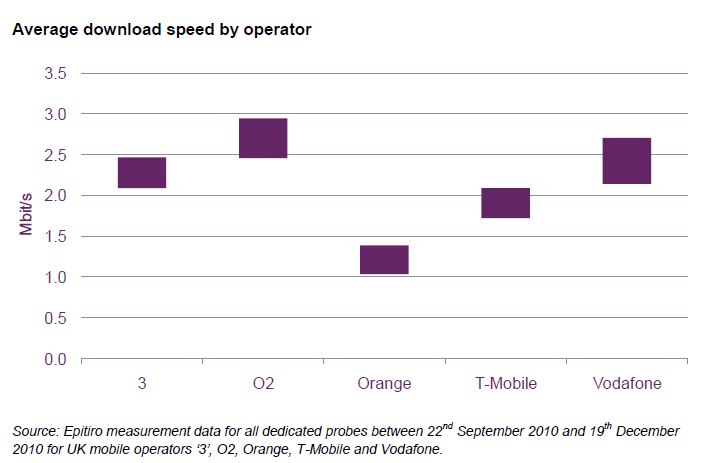
Ofcom Report Shows Significant Differences in MNOs Performance - O2 Leads

 
A recent report from the UK regulator, Ofcom, shows the differences in performance of UK's 3G mobile operators - "The research found some differences between the performance of operators’ 3G networks. O2, Vodafone and 3 offered faster average download speeds than T-Mobile and Orange .. The research, conducted between September and December 2010 in partnership with broadband monitoring specialists Epitiro .. involved over 4.2 million tests and measured average speeds as well as the performance of the five mobile operators in areas of good 3G network coverage" (see chart).

Ofcom also found that "17% of UK households are using mobile broadband to access online services, with 7% using it as their only means of internet access, compared to 3 per cent in 2009".

See "Mobile broadband speeds revealed" - here, full Report - here and coverage by channel 4 news (here and below).


Friday, March 4, 2011

O2 [UK] Plans to Charge OTT Providers will Wait for LTE

   
O2's UK CEO Ronan Dunne (picture) told David Meyer from ZDNet that "O2 is investigating various business models that involve working with content providers .. none of models will adversely affect the end user .. What we will do is use the example of LTE to provide an equivalent of the M6 toll road, [so content providers can] choose that particular channel to put the most media-rich content through. It's using the network efficiently with a view to optimising the experience for the end user".

See "O2: 4G mobile broadband will allow data 'toll roads'" - here. This is not the first time we see this - see also "O2[UK] Wants to Charge Content Providers" - here - but this time it is planned for the [un-announced yet] LTE era.

This strategy is based on the perception that once LTE is in place, it will provide "extra benefits", much more than we have (and need) is today's 3G. So, all regular traffic will be provided with today's QoE (which is probably considered as “good enough” by the carriers), and those that will pay extra (OTT content providers in this case) will get to use the new capabilities of the future LTE technology, for new services.

Such business model does not consider the dynamics of content consumption towards streaming video, on-line gaming etc. Experience shows us that the new capacity is quickly consumed, and demand for bandwidth exceeds supply.

Saturday, November 6, 2010

O2[UK] Wants to Charge Content Providers

    
The real issue behind Net Neutrality was always about sharing content revenues between the carriers and content providers, especially in mobile networks due to the high costs of building the infrastructure to support the demand for bandwidth.  

We saw some statements before (from both parties) - such as "Deutsche Telekom CEO: OTT providers should pay for High Quality" (here) and "Skype: Cooperating with Operators is Good; [Some] Net Neutrality is also Good" (here) and now we get it from O2:

"O2 wants to be able to charge content providers to offer their websites and services on its network, according to the mobile operator's chief executive Ronan Dunne (pictured)"

Story by David Meyer, ZDNet UK - "O2 wants web companies to carry cost of traffic" - here.

"If consumers alone are paying, it's hard to see where the incentive is for content providers to use networks efficiently," Dunne said, adding that he wanted "big companies" to pay their share ..content providers might want to "pay for carriage themselves" in order to provide a better quality of service over a mobile network than their rivals provide .. Competition will help us ensure that democracy does continue to thrive on the internet, even if we do have to manage traffic .. Networks can't under any economic model presume to have unlimited data capability. Part of the solution is to move away from 'one-size-fits-all' ... current explosion in data is driving costs up, [creating] potentially more demand than we can handle"

Compare this the recent statements from the BBC - "BBC: "traffic management may sometimes be necessary" (here) and we can clearly see the fight over Net Neutrality.

See also "DPI/QoS Deployments (24): O2 [UK] New Application and Time of Day Based Tiered Service Policies" - here.

Saturday, October 30, 2010

DPI/VAS Deployments (35): Telefónica O2 [Czech Republic] Cleans the Internet with NSN

 
Nokia Siemens Networks announced that "Companies that use Telefónica O2 in the Czech Republic for broadband Internet access now have more control and greater security over the service ..Nokia Siemens Networks has integrated its security-as-a-service into Telefónica’s operational support system/business support system (OSS/BSS) platforms. The security service is delivered to Telefónica O2’s enterprise customers from the operator’s secure, centralized, and continuously updated platforms in O2 data centers to protect fixed Internet access. A fixed monthly fee is charged to enterprises for the service."

See "Telefónica O2 gives Czech companies control of Internet access" - here.

O2 calls this service "O2 Clean Internet" (here), and presents the following benefits:
  • protect company computers from all internet threats
  • increase employee efficiency by blocking distracting, non-work-related web addresses – settings are controlled through a self-care portal (see screenshot)
  • no need to buy expensive devices and software
  • maintain control over your security expenses for a fixed monthly fee
    

“ .. there are concerns about security threats such as malware, and the implications of access to the web that a company provides and is responsible for, but cannot exercise control over,” said Oscar Gómez, director of Product and Services at Telefónica O2 Czech Republic. “.. Nokia Siemens Networks was chosen to create a bespoke Internet service that we can offer to enterprises that addresses both security threats and responsible use.”


Related posts:
  • Virgin Media [UK] Helps Customers to Fight Malware - here
  • TalkTalk Uses uawei to Detect Malware (or Parental Control?) - here
  • Australia: ISPs Should Detect Virus Infected Computers (DPI Becomes a Must for ISPs) - here
  • Sandvine - Who is the Global DSL/Mobile Cusotmer with 20 Properties ? - here


Thursday, September 9, 2010

DPI/QoS Deployments (24): O2 [UK] New Application and Time of Day Based Tiered Service Policies

  
O2 (a member of the Telefonica Group) has changed its traffic management policies, creating a differentiation between its 4 home broadband service plans - beyond just download/upload speeds and monthly usage limits.

The new traffic management policies consider the time of day (the weekday afternoon and evening hours are considered as peak time) and the application type (video streaming and P2P are subject to QoS policies). While such limitations are common now with mobile broadband services, we see that O2 finds this relevant to its fixed service.

See "What are the technical details of your traffic management?" - here.

For the "Access package" O2 will "During the busiest times we shape P2P traffic to a maximum throughput of 50kbps. Additionally, to give priority to traffic that most customers just can't wait for we have applied a Quality of Service (QoS) queuing system to prioritise traffic. That means streaming traffic gets ahead of browsing which in turn gets ahead of P2P. This will be applied during peak times from 11am-1am"

[Related post "Sandvine - Who is the Global DSL/Mobile Customer with 20 Properties? " - here]


For the "The Basics", "All Rounder" and "The Works" service plans, the limitations are as follows (note that the applications are generic, and do not refer to any specific content provider):

The monthly costs:


Note that the "unlimited" usage for the upper plans, is subject to "fair usage policy" which says that among other things subscribers must not "making excessive use of, or placing unusual burdens on, the network, for example by sending or receiving large volumes of email or excessively large email attachments" and if they do that, O2 may "terminate or suspend your Services, with or without notice as we consider appropriate" (here)

Saturday, July 17, 2010

Telefonica Follows Verizon and 3UK: Offers VoIP services to O2 Customers

 
If you can't beat them ... join them.

Telefonica announced a new VoIP service for its European mobile brand, O2. Unlike 3UK (see "Skype Does Good for 3UK" - here) and Verizon (see "Verizon likes Skype" - here), Telefonica will use its own Jajah service which it acquired last December for $207M ( see "Telefónica Acquires IP Communications Leader JAJAH" - here).

So this is not an OTT service. A new Net Neutrality challenge.

See the press release: "Telefónica Europe launches IP-based consumer phone services" - here.

"The first in a wide range of services powered by JAJAH is being launched today by O2 in Germany just six months after parent company Telefónica acquired the innovative Silicon Valley start-up .. The JAJAH IP Communications Platform also means that O2 customers will enjoy all the usual benefits of mobile VOIP without the hassle of software downloads, new hardware or complex installs .. In a first for any innovative IP-based voice solution anywhere in the world, the roll-out of Telefónica’s JAJAH-powered services will be supported by major advertising and media marketing campaigns in the coming months"

Related posts:
  • Frost & Sullivan: Mobile Operators Should not Impose Bans or Surcharges to VoIP - here
  • Skype: We Will Charge 3G Calls to Ensure QoS Stays High - here

Friday, July 2, 2010

Nielsen: "The top 6% smartphone users are consuming half of all data"

    
A common say by broadband operators (and DPI vendors) is that x% (usually 5%) of broadband subscribers consume yy% (usually 50%) of total traffic (like here and here). Without un-biased hard data, this was so far just a common argument to justify traffic management - like saying "these abusers take it all from the silent majority".

In addition, when mobile operators are moving to usage-based billing (see - AT&T, Verizon, O2 UK) they usually say something like "Currently, 98% of AT&T smartphone customers use less than 2 GB of data a month on average" - i.e. moving to unlimited data is good for you, Mr. consumer. Some challenge this - see an example here.

Nielsen Wire has just published some findings on US smartphone usage, showing percentile information.

See the chart below and the article - "Quantifying the Mobile Data Tsunami and its Implications" - here

The data comes from real phone bills ("from more than 60,000 mobile customers every month") and Q1 of 2010 shows an increase of 230% (!)  in the average data consumption. In 2010, the top 6% consumed 50% of all data.

According to Nielsen - "99% ..  are better off with a pricing scheme like AT&T’s new data pricing model than under flat-rate pricing where they are paying for much more than they ever use.". This confirms AT&T claims.

So I wonder why AT&T is doing this - maybe they expect this 230% yearly growth to continue .. (see "AT&T CTO: Traffic has Grown 5,000% in 3 Years" - here).  


Thursday, June 10, 2010

O2 UK - No more "Unlimited with a Limit"

 
Just 3 weeks ago we saw that O2 UK (part of the Telefonica group) "unlimited" data service plan has an actual limit (or "fair use") of 10G a month (here).

Today, O2 said it will no longer offer unlimited service plans (see "O2 introduces new mobile data pricing model" - here). O2's  announcement follows a very similar announcement from AT&T (here).

Starting from June 24, O2 will offer 6 bundled service plans, with data caps ranging between 500MB-1GB for a monthly charge of £25-60. "Additional data Bolt Ons which include 500MB for £5 or 1GB for £10 and O2 will ensure customers have the ability to easily monitor their use by sending them regular text messages".

O2 says that "Based on current usage patterns, 97% of O2 smartphone customers would not need to buy additional data allowances, as the lowest bundle (500MB) provides at least 2.5 times the average O2 customer’s current use." (see recent FCC data - here). Like AT&T, Wi-Fi service will remain unlimited.


Nevertheless, it seems that O2, like AT&T, is getting ready to monetize on iPhone4 (to be launched on the same day as the new service plans), iPad and the end-less number of new tablets that are expected to reach the market soon, and change significantly the data consumption levels.