Showing posts with label Illegal content. Show all posts

Saturday, June 22, 2013

Major UK ISPs & Google Increase Contribution to Fight Illegal Content


The Internet Watch Foundation (IWF) announced that ".. we are pleased with the announcement of the UK’s four largest ISPs – BT, Sky, TalkTalk and Virgin Media – that they will commit an additional £1m collectively over the next four years to further crack down on the creation and distribution of child abuse material online. The companies will work together with Government, IWF and CEOP to establish how best these funds can be spent to tackle the availability of online child abuse content. The additional funding will supplement the existing zero tolerance approach to child sexual abuse material online, adding to the existing contributions that each company makes both in relation to the ongoing battle against illegal material online, and investment in technology and awareness raising to help parents protect children in the online world".

IWF is also supported by traffic management vendors, who can use its blacklist to block illegal content.  Among the members are ByteMobile (Citrix), Cisco, Checkpoint, Allot Communications, Huawei, Fortinet, BlueCoat, Optenet, Adaptive Mobile, Sandvine and Openwave Mobility. See the complete list here. Google also donated £1M - See "£1million donation for child sexual abuse charity" - here and announced its ".. continued commitment to combating child exploitation online" - here. .

Susie Hargreaves, IWF Chief Executive, said: “This is a great commitment from the UK internet industry. We are ready to step up the fight against online child sexual abuse content. By expanding our resources and by allowing the IWF to proactively target child sexual abuse content, we can make real headway towards our shared vision of an internet free of child sexual abuse content.”

See "IWF ready to step up the fight against online child sexual abuse content" - here.

Wednesday, March 14, 2012

VAS/Security Deployments [132]: Sri Lanka Telecom Deploys Optenet

 
Opetnet announced a "a new partnership with Sri Lanka Telecom, the nation's number one integrated communications service provider and the leading broadband and backbone infrastructure services provider in the country. This is a new initiative for Sri Lanka Telecom in the Cloud Security space, and the telecommunications giant has deployed Optenet WOLF and Optenet WebFilter technology delivered with Optenet’s Multi-tenant architecture. The new service now provides web filtering to the residential market in particular counting over 50,000 End Users. Sri Lanka Telecom can expand their value added security services faster due to the high availability and scalability Optenet’s unique multi-tenant platform".

Source: Sri Lanka Telecom 2011 Annual Report
See "Sri Lanka Telecom Chooses Optenet’s Technology to Offer Consumer’s Protection to over 50,000 End Users" - here.

Tuesday, July 5, 2011

DPI Deployments (77) CyberOne [Australia] Uses ContentKeeper to Block Illegal Web Sites

 
ZDNet reports that "CyberOne is believed to be the first in Australia to implement voluntary internet filtering against Interpol's "worst-of-the-worst" blacklist of child exploitation material. Filtering was turned on this morning for the ISP's  cable network. CyberOne's DSL and wireless customers are not yet filtered .. Implementing the Interpol blacklist .. Interpol blacklist operates at the domain level. If the police find any extreme child exploitation material hosted, the entire domain is added to the blacklist. ISP customers attempting to access a blacklisted domain are redirected to an Interpol-supplied block page hosted on ContentKeeper's servers."

See "Interpol blacklist goes live in Canberra" - here.

CyberOne founder Maciej Mikrut said "it took about 10 minutes to install the filtering using the ContentKeeper Web (CK-Web) appliance from ContentKeeper Technologies, Australia's largest provider of content-filtering technologies.


See also "Australia: Telstra, Optus and Primus Agree to Voluntarily Block Illegal Web Traffic" - here.

Thursday, June 23, 2011

AT&T, Comcast and Verizon Will Punish Naughty Subscribers

    
Seems like we have gone back a few years, when illegal P2P file sharing was the main (or only) source for on-line media. 10 years after media sharing started, CNET reports that US largest ISPs will (somehow) detect piracy and take actions against subscribers using it extensively. Since ISPs do not like these subscribers anyway, this may serve their goals as well.

Greg Sandoval  (picture) reports that "After years of negotiations, a group of bandwidth providers that includes AT&T, Comcast, and Verizon are closer than ever to striking a deal with media and entertainment companies that would call for them to establish new and tougher punishments for customers who refuse to stop using their networks to pirate films, music and other intellectual property, multiple sources told CNET .. Under the proposed plan, participating bandwidth providers would adopt a "graduated response" to subscribers who repeatedly infringe copyrights. ISPs would first issue written warnings, called Copyright Alerts, to customers accused by content creators of downloading materials illegally via peer-to-peer sites, the sources said. Should a subscriber fail to heed the warning, an ISP could choose to send numerous follow-up notices. The plan, however, requires ISPs to eventually take more serious action .. such as throttling down an accused customer's bandwidth speed or limit their access to the Web".

See "Exclusive: Top ISPs poised to adopt graduated response to piracy" - here.

"Sources in the music and film sectors said that their antipiracy measures, coupled with the emergence of popular legal services, such as Netflix and Amazon, which provide inexpensive content that is also easy to access, has put them in the best possible position to compete with Web piracy".

I'd add iTunes, who pioneered the idea of legal content at a reasonable cost. And one more correction - services with proper QoE!


Friday, December 3, 2010

Netherlands: DPI is Needed to Block Illegal Web Sites

    
The Future of Copyright web site reports that "The Dutch government is considering monitoring all internet traffic by means of Deep Packet Inspection (DPI). Thus stated State Secretary for Security and Justice Fred Teeven to the Dutch House of Representatives last Thursday."

See "UPDATE: Dutch government considers DPI on internet traffic" - here.

"According to the ministry, DPI brings the advantage of knowing where internet traffic is directed. This makes room for the possibility of blocking access to only the illegal parts of a website instead of blocking a whole domain [see why - here] which may contain both illegal and legal information"

See also "Web Filtering Study from Sprouts" - here.

Tuesday, August 17, 2010

[Update] Israeli Police Instructs ISPs to Block Gambling Web Sites

 
According to the local press, one ISP started to block gambling sites, considered illegal in Israel, following the police instructions made a month ago (here).

Sites on the list are Victor Chandler and Stan James. The press reprots (here, Hebrew) that at least one ISP, 012, is already blocking these sites.

I can still access both sites .. (with a different ISP)

Related post (including a discussion on filtering by IP address vs. URL identification): "Australia: Telstra, Optus and Primus Agree to Voluntarily Block Illegal Web Traffic" - here

Wednesday, July 14, 2010

Israeli Police Instructs ISPs to Block Gambling Web Sties

 
The Israeli business news site, TheMarker,  reports that Israeli police has instructed all local ISPs to block access to a list of gambling web sites, operating aboard and targeting Israeli consumers (gambling is illegal in Israel, except of the government lottery).

According to the report - (in Hebrew - here) the police "hand delivered" to all ISPs a "list of IP addresses" they need to block. ISPs told TheMarker that "blocking by specific IP address will not help as the address will be replaced"

Related post (including a discussion on filtering by IP address vs. URL identification):  "Australia: Telstra, Optus and Primus Agree to Voluntarily Block Illegal Web Traffic" - here

Monday, July 12, 2010

Australia: Telstra, Optus and Primus Agree to Voluntarily Block Illegal Web Traffic

     
The Australian government is trying, for some time now, to set regulations that will require ISPs to block access to web site showing illegal content ("Blacklist").

Illegal content is a flexible definition - while it is usually associated with child pornography (such as the list updated by the IWF - Internet Watch Foundation) it may include other content as well, certainly when the list comes from the government (see "Google, Yahoo, Microsoft fire back at Australian Web censorship plan" - here).

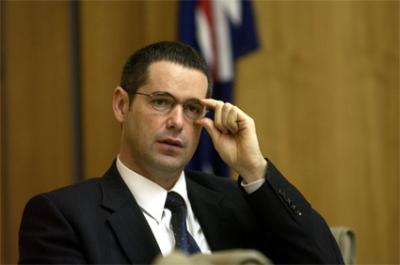
Last Friday, the Australian Communication minister, Stephen Conroy, announced that the government is going to make some modifications to its original plan which will delay the execution by a year. See "Outcome of consultations on Transparency and Accountability for ISP Filtering of RC content" - here.

3 major ISPs (Australia has over 200) - Telstra (45% broadband market share), Optus and Primus announced that they will voluntary block child abuse sites, probably hoping that what they will do will become the regulation itself, with no additional requirements.

There are a number of ways to implement a URL Blacklist service. It may be done based on filtering of IP addresses, with possible false-positive mistakes, or by DPI solutions that will examine the URL in each HTTP request. It’s a trade-off between cost and service quality. In both cases, continues update of the blackist is required.
Telstra's Group Managing Director, Public Policy and Communications, David Quilty said in a press release - ("Telstra supportive of interim internet child protection measures" - here): ".. it is important for people to understand that there is no magic solution which will make the internet 100 per cent safe. As a result, we will continue to work closely with the Australian Federal Police, ACMA and other authorities to combat the abuse and exploitation of children.