Showing posts with label US. Show all posts

Tuesday, March 24, 2015

ISPs Sue FCC Against New Net Neutrality


Brendan Sasso [pictured] reports to the NationalJournal that "Telecom companies filed a pair of lawsuits Monday in an attempt to reverse the Federal Communications Commission's new net neutrality rules. The suits are expected to be the opening shots in a long legal war against the controversial regulations .. The suits claim the rules are outside the FCC's authority, violate administrative law, and infringe on the companies' constitutional rights:
  • USTelecom, which represents AT&T, Verizon, and other companies, filed its lawsuit [see below] in the U.S. Court of Appeals for the D.C. Circuit
    See also: "USTelecom Files Protective Petition for Review" - here - "USTelecom strongly supports open Internet rules, but disagrees with the Federal Communications Commission’s decision to reclassify broadband Internet providers as common carriers in the order adopted March 12".
     
  • Alamo Broadband, a small Texas-based wireless Internet provider, filed its suit in the U.S. appeals court based in New Orleans.


See "Internet Providers Sue to Kill Net Neutrality" - here.

Monday, January 12, 2015

Broadband Minimal Speed is ...


Since my early days in data communications, when we were thrilled to migrate to a 64 kbps IBM 3274 terminal controller, things have changed. for Example - defining what is "high Speed" (or Broadband) is now a complicated task, involving also political and business aspects, not just new technologies and changes frequently:
  • Josh Taylor reports to ZDNet that "The United States Federal Communications Commission (FCC) is proposing to raise the minimum speeds allowed for broadband from 4Mbps down, 1Mbps up to 25Mbps down, 3Mbps up .. According to a circulated fact sheet, the FCC is considering raising the definition to "reflect current consumer demands, deployment trends, and technological advances .. The draft report found that 53 percent of rural Americans lack access to the 25Mbps/3Mbps speeds, while across the entire US, 17 percent of -- or 55 million -- Americans lack access to those speeds. In urban areas, all but 8 percent of residents have access to 25Mbps, according to the draft report".

    Source: FCC Internet Access Services: Status as of December 31, 2013

    See "FCC to define broadband as minimum 25Mbps" - here.

  • Akamai's State of the Internet report (here) says "Since 2012 Akamai has classified broadband as:
     
    • High broadband: Internet speeds greater than 10 Mbps when connecting to Akamai 
    • Broadband: Internet speeds of 4 Mbps or greater when connecting to Akamai". 
    • Akamai also defines "Beyond high broadband" (i.e. readiness to view 4K videos) as "4K adaptive bitrate streams generally require 10 – 20 Mbps of bandwidth". 


Friday, January 2, 2015

FCC Expected to Adopt Net Neutrality this Quarter; Google Supports Neutrality


Grant Gross [pictured] reports to NetworkWorld that "The U.S. Federal Communications Commission will adopt net neutrality rules in early 2015, maybe as soon as February, several observers believe, but few people want to predict what those rules will look like .. It appears that the FCC will move forward with net neutrality rules in the first quarter of 2015.

.. There's no consensus about the direction the FCC should take, however. Congressional Republicans, large broadband providers and a significant number of people filing comments with the agency have urged commissioners to back away from reclassifying broadband as a regulated public utility, like Obama and other strong net neutrality advocates have called for.

.. So where does this leave the FCC? Chairman Tom Wheeler said recently he has no set timeline for moving forward on net neutrality rules. The FCC should act quickly, but also make sure any rules it creates will stand up to potential court challenges, he told reporters in early December". 


See "Experts: FCC will adopt net neutrality rules in early 2015" - here.

In other news - Google position on Net Neutrality.


Tuesday, December 2, 2014

M-LAB Blames Transit Carriers for ISPs Service Performance Degradation


A new report by M-Lab concludes that "we observed sustained performance degradation experienced by customers of Access ISPs AT&T, Comcast, Centurylink, Time Warner Cable, and Verizon when their traffic passed over interconnections with Transit ISPs Cogent Communications, Level 3 Communications, and XO Communications.

In a large number of cases we observed similar patterns of performance degradation whenever and wherever specific pairs of Access/Transit ISPs interconnected. From this we conclude that ISP interconnection has a substantial impact on consumer internet performance -- sometimes a severely negative impact -- and that business relationships between ISPs, and not major technical problems, are at the root of the problems we observed.


Observed performance degradation was nearly always diurnal, such that performance for access ISP customers was significantly worse during peak use hours, defined by the Federal Communications Commission (FCC) as the hours between 7pm and 11pm local time. This allows us to conclude that congestion and under-provisioning were causal factors in the observed degradation symptoms. 

It is important to note that while we can infer that performance degradation is interconnection-related, we do not have the contractual details and histories of individual interconnection agreements. As such, we cannot conclude whether parties apart from the two we identify are also involved (e.g. in the case that an Access ISP shares an interconnection point with another, etc.). We leave this non-technical question open for further study by others and focus here on the impact of what we can observe on consumer performance through measurement
".


See "ISP Interconnection and its Impact on Consumer Internet Performance" - here.

Saturday, November 29, 2014

Global Pressure on Net Neutrality


The endless delays in making the Net Neutrality laws in different, generated a new coalition - the "Global Net Neutrality Coalition". With 37 organizations from 19 countries, the coalition defines that "Net neutrality requires that the Internet be maintained as an open platform, on which network providers treat all content, applications and services equally, without discrimination". 

"This global coalition could not have come together at a more critical moment. In the U.S., net neutrality has finally become a kitchen-table topic, following President Obama’s breakthrough statement in which he called for the Federal Communications Commission to pass bold rules
protecting the open internet
[see "What's Next for Net Neutrality?" - here. Meanwhile, the European Union could soon pass landmark net neutrality legislation, with the Telecoms Single Market [hereproposal currently sitting with the Council of the European Union"

Members of the Global Net Neutrality Coalition:

Access (Global), Acceso Libre (Venezuela), ACUI (Colombia), Article 19 (Global), Bangladesh NGOs Network for Radio & Communication (Bangladesh), Bits of Freedom (Netherlands), CC Meta (France), CELE (Argentina), Date Roads Foundation (US), Derechos Digitales (Chile), Digitale Gesselschaft (Germany), Digital Rights Foundation (Pakistan), EDRi (Europe), Electronic Frontier Foundation (Global), Free Press (US), Fundación vía Libre (Argentina), Internet Policy Observatory (Pakistan), Initiative für Netzfreiheit (Europe), Internet Ecosystem Alliance (Switzerland), IT for Change (India), Jinbonet (Korea), Just Net Coalition (Global), KiCTAnet (Kenya), La Quadrature du Net (France), Network Neutrality User Forum of Korea (Korea), OpenMedia International (Global), Paradigm Initiative (Nigeria), PEN International (Global), Public Knowledge (US), Open Technology Institute (US), Social Media Exchange (MENA), Software Freedom Law Center (US), Venezuela Inteligente (Venezuela), Web We Want (Global), Witness (Global).

See "Global coalition launches international net neutrality website" - here.


Saturday, November 1, 2014

FCC: The New Net Neutrality is "Hybrid"

 
After years of failing to established a consumer oriented Net Neutrality, the FCC has a new scheme, recognizing that an Internet connection has two, non-equal, sides - the consumer and the content provider.

Edward Wtatt reports to the New York Times that "The proposal is part of a hybrid solution that has gained favor among theF.C.C. staff over the last two months. Like other possible solutions, it seeks to reestablish the F.C.C.’s authority to enforce net neutrality, the general concept that no Internet traffic should be discriminated against unfairly.

But unlike policies previously considered, which treated the entire Internet ecosystem as a single universe, the hybrid proposal would establish a divide between “wholesale” and “retail” transactions
.
  • The retail portion, the transaction that sends data through the Internet service provider to the consumer and which allows the consumer to access any legal content on the Internet, would receive a lighter regulatory touch.
     
  • .. the hybrid approach would apply Title II of the Communications Act of 1934 to the connection between Internet service providers, or I.S.P.s, and content providers. For the purpose of agreeing to transport content from a company like Netflix through its network, an I.S.P. would be treated as a “common carrier,” subject to stricter regulation.In that instance, an I.S.P., as a common carrier, could not give an unfair advantage to one content provider over another. Paid prioritization , where a content provider pays for a fast lane to consumers, would be restricted unless it could be proved to be just and reasonable"
See "F.C.C. Considering Hybrid Regulatory Approach to Net Neutrality" - here.

Monday, August 11, 2014

FCC Expands Traffic Management Policies Questioning to all MNOs


Alina Selyukh and Marina Lopes report to Reuters that "The top U.S. communications regulator on Friday said he is asking all large U.S. wireless carriers to explain how they decide when to slow download speeds for some customers, after questioning Verizon Wireless about such a plan"

This follows the letter sent earlier to Verizon (See "The FCC "Deeply Troubled" by Verizon's LTE Optimization" - here) following the MNO's decision to expand its "optimization" policy to LTE and limit unlimited users in congested locations (see "Verizon Expands "Optimization" to LTE Subs to Fight Cell Congestion" - here).

Verizon's response to FCC worries was (here, by TheRegister) that it is the right thing to do and everybody does that (try to claim that in a trial):  "The Commission Has Recognized the Reasonableness of this Form of Network Management .. Such Practices Are Widely Used Throughout the Industry and Have Been Widely Accepted [we are] Managing our 4G LTE to Ensure the Best Wireless Experience [and] With network optimization, our customers continue to be free to go where they want on the Internet and to use the applications, services and devices of their choice"

So ... if everybody does it, need to ask them as well.

Back to Reuters report - "AT&T Inc representatives did not immediately comment. A Sprint Corp spokeswoman said her company "goes to great lengths to be transparent about its network management practices," and will respond to Wheeler's letter as appropriate. "Our network practices are consistent with the Commission’s rules on the open Internet, are innovative and are good for consumers and competition," a T-Mobile US spokeswoman said.
 
See "After Verizon, U.S. FCC quizzing other carriers on data management" - here.

Thursday, July 24, 2014

The FCC Reminds ISPs: Transparency Rule is in Full Force


The recent debate around the delivery of Netflix traffic in the US [see "Verizon vs. Netflix on Congestion - It is NOT Us!" - here and "Netflix - Speed to Comcast Customers Continue to Surge" - here], creating confusing among consumers, probably led the FCC to remind ISPs that the Open Internet (Net Neutrality) rules (or some of them) are still in effect.

The FCC issues a public notice, with an enforcement advisory (here), saying that "Providers of broadband Internet access services must disclose accurate information about their service offerings and make this information accessible to the public. This requirement, known as the Open Internet Transparency Rule, has been in full force and effect since 2011 [see "FCC's Net Neutrality Rules Made Official; Start on Nov. 20" - here].

..The Transparency Rule requires every fixed and mobile broadband Internet access provider to “publicly disclose accurate information regarding the network management practices, performance, and commercial terms of its broadband Internet access services sufficient for consumers to make informed choices regarding use of such services and for content, application, service, and device providers to develop, market, and maintain Internet offerings". 

Accuracy is the bedrock of the Transparency Rule. Under the rule, all disclosures that broadband Internet access providers make about their network management practices, performance, and commercial terms of broadband services must be accurate"

FCC Chairman Tom Wheeler [pictured] said (here): “Consumers deserve to get the broadband service they pay for. After today, no broadband provider can claim they didn’t know we were watching to see that they disclose accurate information about the services they provide. The FCC’s transparency rule requires that consumers get the information they need to make informed choices about the broadband services they purchase. We expect providers to be fully transparent about the details of their services, and we will hold them accountable if they fall down on this obligation to consumers

See "FCC to ISPs: Inaccurate Disclosures Violate Transparency Rule" - here.

Saturday, April 26, 2014

FCC: New Net Neutrality? Just be "Commercially Reasonable"

  
After several days of conflicting new of the future of Net Neutrality in the US, FCC Chairman Tom Wheeler [pictured] decided to "Set the Record Straight", in a post to the FCC official blog. the bottom line - "It is my intention to conclude this proceeding and have enforceable rules by the end of the year".

And the rules are:
  1. That all ISPs must transparently disclose to their subscribers and users all relevant information as to the policies that govern their network;
     
  2. That no legal content may be blocked; and
     
  3. That ISPs may not act in a commercially unreasonable manner to harm the Internet, including favoring the traffic from an affiliated entity.
Good news to the DPI and Policy management vendors! (i guess that "reasonable traffic management" will remain as well).

On the same time, the "Chairman Wheeler is encouraging the public to share their views now. He intends to have rules of the road in place before the end of the year to protect consumers and entrepreneurs. He will be listening, and your comments will help inform the final rules" (see "FCC Establishes New Inbox for Open Internet Comments" - here and "Comments to the New FCC Net Neutrality" - here)

See "Setting the Record Straight on the FCC’s Open Internet Rules" - here.

Saturday, March 15, 2014

SoftBank Vision for the US: Wireless as Broadband Alternative


Several slides from Softbank's "The Promise of Mobile Internet in Driving American Innovation, the Economy and Education" (here):


Thursday, December 5, 2013

FCC Chairman re-defines Net Neutrality: "we're going to see a two-sided world"


Richard Chirgwin, reports to The Register that the FCC maybe re considering its Net Neutrality rules - "That is, if the definition of “net neutrality” means there is never any scope for a provider to apply quality of service as a product differentiator – something which becomes contentious when people begin debating neutrality. As things now stand, the FCC takes a dim view of payment to get higher quality of service .. Wheeler endorses the idea that a Netflix might want to buy a higher QoS to ensure guaranteed performance, as distinct from best-effort performance".

Just compare this to President Obama's "I am a big believer in Net Neutrality" interview from 2010 (here).

FCC Chairman Wheeler [pictured] discussed that at Ohio State University (here). "What the Internet does is not an area that is appropriate for federal regulation … with a few notable exceptions .. I am a firm believer in the market. I think we're going to see a two-sided world [see "DT Believes in "Two-Sided" Business Model - OTT to Pay for QoS" - herewhere Netflix might say, 'I'll pay in order to make sure that you might receive … the best possible transmission of this movie'. I think we want to let these kinds of things evolve".

Related guest post, by Dean Bubley - "1-800 Apps Concept: Superficially Appealing but Unworkable" - here.

See "FCC boss hints at change to neutrality policy" - here.

Tuesday, December 3, 2013

[ABI]: VoLTE Triggers Re-assigning 2/3G Spectrum to LTE


Ying Kang Tan [pictured], research associate, ABI Research reports that "Spectrum repurposing is gaining momentum. The launch of Voice-over-LTE (VoLTE) services  [see "[ABI]:VoLTE will Help MNOs Fight OTT Voice and Messaging" - here] by major carriers first in South Korea and soon in the United States is part of the effort to move voice calls from the circuit switched 2G and 3G networks to the packet switched LTE networks. To achieve this, operators have built extensive LTE networks, which also serve as a marketing tool to stay in competition".

“For CDMA operators such as Verizon, aggressive LTE deployment is necessary because a VoLTE call cannot fall back to the circuit switched domain. Even for WCDMA operators like AT&T, it makes sense to do likewise because LTE is much more spectral efficient than WCDMA .. by the end of next year, when VoLTE has gained more momentum, ABI Research expects more than 93% of the North American population to have access to LTE".

Related post - "[Guest Post]: Circuit Switched Fallback: In Danger of crippling 3G and leaving LTE underused" - here.

The following Infographic by Alcatel-Lucent:


See "Telecom Regulators and Mobile Carriers Stepping Up Efforts to Repurpose 2G and 3G Spectrum for LTE" - here.

Friday, May 17, 2013

U.S. Department of State RFI for DPI


The U.S. Department of State (DoS) is in ".. search of potential sources for Deep Packet Capture and Inspection (DPCI). The scope of the envisioned Deep Packet Capture and Inspection (DPCI) solution is to provide the following high-level functionality:
  1. Capture 100 % of all network packets traversing the borders of the DoS’ Points of Presence (POPs).
  2. Perform rapid classification and analysis of these packets, for access by DoS security analysts.
  3. Recall only selected network packets for an analyst, to reconstruct a session of interest.
  4. Filter on packets of interest, to allow for investigating whether malcode is attempting to be infiltrated into the network.
  5. Create many sorts of queries and automated alerting on the collected packets, either ad hoc or predefined, to discover anomalous network traffic.
  6. Generate both low-level and high-level reports on network traffic based on a wide range of criteria, such as time period, source and/or destination IP address, IPv4 and IPv6 protocols and ports, Internet domains, and e-mail addresses.
One critical item to note is that the current 2 gigabit-per-second (Gbps, 2048 megabits-per-second) throughput at each of the network borders is slated to be increased to 10 Gbps in the near term. This means that the DPCI solution must be able to ingest packets coming from a 10 Gbps fiber interface"

See "Deep Packet Capture and Inspection" - here.

Wednesday, May 8, 2013

[CTIA 2012 Survey]: Data +69%, Voice +0.2%; SMS -4,9%

 
CTIA published its its semi-annual survey, providing information on both investments made in the US wireless networks and usage information. "U.S. wireless providers increased their annual network investments from $25.3 billion in 2011 to $30.1 billion in 2012 (up 19 percent). The $30.1 billion is the highest amount since the survey began in 1985, which is approximately 25 percent of the world’s total".

As for usage information:
  • Wireless subscriber connections: 326.4 million (102 percent penetration); 2011: 315.9 million (3.3 percent increase)
  • Wireless network data traffic: 1.468 trillion megabytes; 2011: 866.8 billion (69.3 percent increase).
  • Minutes of Use (MOU): 2.2999 trillion; 2011: 2.2955 trillion (4.4 billion minute increase or .2 percent).
  • SMS sent and received: 2.19 trillion; 2011: 2.3 trillion (4.9 percent decrease).
  • Ce: 74.5 billion; 2011: 52.8 billion (41 percent increase).
At the end of 2012, US MNOs had 301,779 cell sites, compared to 283,385 at the end of 2011 (+6.5%). 
   
See "CTIA-The Wireless Association® Semi-Annual Survey Shows U.S. Wireless Providers Invested Almost Six Times More Per Subscriber than Rest of World" - here.

Monday, April 22, 2013

US Air Force Looks for IPv6 DPI @ 10Gbps


US Air Force is ".. conducting market research to identify sources that may
possess the expertise, capabilities, and experience to meet the requirements for delivery of IPv6 DPI capability at a 10 Gigabytes per second (Gbps) throughput"

"Hanscom Air Force Base has program management responsibility for the Air Force Non-Secure Internet Protocol Router Network (NIPRnet) Gateways Program. As a result, the Air Force Network (AFNET) Gateways Program Office is requesting information to identify possible sources to deliver IPv6 DPI capabilities at a 10 Gbps throughput. This effort may consist of, but may not be limited to, the following activities: .. Interoperability with the Air Force Information Operations Platform (IOP) and the Cloudshield 4000 .. IPv6 DPI at 2.5 Gigabytes per second no later than (NLT) 31 August 2013 & 10 Gigabyte per second (Gbps) throughput NLT 1 Aug 2014". 

See "Internet Protocol version 6 (IPv6) Deep Packet Inspection (DPI) at 10 Gbps" - here.

Wednesday, February 27, 2013

US "6 Strikes" Anti-Piracy Enforcement Begins!


Pay, Don't share !
After some delays (originally planed for July 2012 - see "US Anti-Piracy Delayed; ISPs will not Terminate Accounts" - here) Jill Lesser, Executive Director, Center for Copyright Information announced that Feb 25 marked ".. the beginning of the implementation phase of the Copyright Alert System (CAS). Implementation marks the culmination of many months of work on this groundbreaking and collaborative effort to curb online piracy and promote the lawful use of digital music, movies and TV shows".

The CAS marks a new way to reach consumers who may be engaging in peer-to-peer (P2P) piracy and I am excited that our new website features information on the CAS, the Independent Review Processcopyright, P2P networks, and numerous consumer oriented legal sources for music, movies and television shows". 

According to the press Comcast is the first ISP implementing the system followed by AT&T, Cablevision, Time Warner, and Verizon later (here - see the 2011 MOU below).

See "Copyright Alert System Set to Begin" - here.


Thursday, January 3, 2013

Netflix Ranks US ISPs: Fiber Leads, "cable shows better than DSL"


Based on "Our 30 million members view over 1 billion hours of Netflix per month" Netflix finds that "Google Fiber is now the most consistently fast ISP in America .. Broadly, cable shows better than DSL. AT&T U-verse, which is a hybrid fiber-DSL service, shows quite poorly compared to Verizon Fios, which is pure fiber". See full ranking below.

On the same time, "Netflix Aims For Net Neutrality In 2013" (here). What started as the CEO complaining in a blog (see "Netflix CEO: 'Comcast no longer following net neutrality principles'" - here) is now a $1M lobbying campaign.


See "November ISP Rankings for the USA" - here.

Saturday, December 22, 2012

US Bill Suggests to Control Data Caps


Few days after the New America Foundation’s Open Technology Institute report concluded that US ISPs data caps are ".. product of an uncompetitive broadband marketplace where providers use data restrictions to increase revenues and protect legacy services such as cable television from online competition" (here) rather than "..manage growing traffic and maintain quality of service on their networks" a new Data Cap Integrity Act was introduced the US Senate.

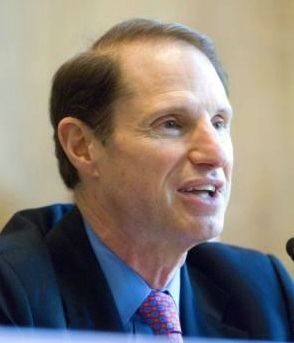
U.S. Senator Ron Wyden (pictured) proposal (here, below) gives "consumers the tools they need to manage their own data usage, institute industry-wide data measurement accuracy standards for ISPs, and impose disciplines to ensure that ISP data caps are truly designed to manage network congestion .. The Data Cap Integrity Act requires the Federal Communications Commission (FCC) to establish standards by how ISPs will measure data and empowers it to ensure that data caps are designed to manage network congestion rather than monetize data in ways that undermine online innovation. Furthermore, it ensures that consumers are provided tools to manage their data consumption and that ISPs cannot, for purposes of measuring data, discriminate against any content".


See "Wyden Data Cap Legislation Will Protect Consumers and Promote Innovation" - here.

Wednesday, November 14, 2012

[Sharma]: US Wireless Signaling Traffic Increased 3X


Some highlights from Chetan Sharma's report on the US wireless for Q3, 2012 [see below]:
  • The US mobile data market grew 3% Q/Q and 17% Y/Y to reach $19.9B in Q3 2012
     
  • Most western markets have seen the net revenue in the messaging segment decline. The US market has resisted the decline thus far. In Q3 2012, for the first time, there was a decline in both the total number of messages as well as the total messaging revenue in the market.
     
  • New types of plans [shared data] also evolved the decades-old operator metric of ARPU to ARPA (Average Revenue Per Account) given that we are seeing a strong influx of multiple devices per individual/household
     
  • The overall data consumption in the US market in 2012 is expected to exceed 2000 Petabytes or 2 Exabytes. The smartphone data consumption at some operators is averaging close to 900 MB/mo. Some devices are averaging close to 2 GB/mo. As we move into 1GB range along with the family data plans kicking in, you can expect the data tiers to get bigger both in GBs and dollar amount.
     
  • Mobile data traffic growth is likely to slow down to roughly 80% after doubling for the last five years. Voice traffic will dip below 10% of the overall traffic in 2012.
     
  • The Signaling traffic has increased 3x.


See "Us wireless market_q3_2012_update_nov_2012_chetan_sharma_consulting" - here


Saturday, October 27, 2012

Obama Vs. Romney On Network Neutrality

 
Wikipedia's "Comparison of United States presidential candidates, 2012" (here) quotes their views on Network Neutrality: 
  • Romney is against "Net Neutrality" - "...Specifically, the FCC’s “Net Neutrality” regulation represents an Obama campaign promise fulfilled on behalf of certain special interests, but ultimately a “solution” in search of a problem..." (here)
     
  • President Obama (pictured) is "'a strong supporter of Net neutrality,' saying that regulations are required to prevent the telecom companies from changing "the internet as we know it." Promoting net neutrality would be a priority in his first continued year as president" (here).

    This is not new - see my post from March 2010 - "Network Neutrality – A Presidential Introduction" - here.