Showing posts with label Telstra. Show all posts

Thursday, April 30, 2015

SVA Published Open Cache Guiding Principles

    
The Streaming Video Alliance (SVA) published "..guiding principles and system attributes from its Open Caching Working Group. The SVA was established to create an open architecture, standards and best practices to support the future of online video"

SVA member list includes vendors such as Alcatel-Lucent, Cisco and Qwilt [see "Qwilt: "Open Transparent Caching" vs. Content Providers' "Black Boxes""- hereas well as CSP such as Comcast, KT, Telecom Italia and Telstra. However,major OTT VIdeo providers such as Netflix are not there.
"..  the Streaming Video Alliance has commissioned the Open Caching Working Group to develop proposed standards, best practices and policy to support a new layer of content caching within the ISP network, close to consumers. 

The Open Caching Working Group, commissioned earlier this year, has already developed a guiding principles document which will serve as the basis for a proposed Open Caching specification. This new Open Caching layer will perform a network function, optimizing network capacity utilization and quality of experience. Moreover, the Open Caching Layer will be open and universal, able to optimize any HTTP, HTTPS or other delivery protocols from any provider.

The attributes of Open Caching system include:
  • Open - Components of the system can be implemented by anyone
  • Universal - The system can serve any content provider stream, including HTTP, HTTPS or other delivery protocols
  • Shared Resource - The system optimizes the use of storage and compute resources for many content providers
  • Fairness - Content is treated objectively and in real time
  • Network Function - The system creates alternate network capacity and reduces congestion within the ISP network as well as reduces server capacity requirements for the content provider
  • Software-based - Components of the system can run as a software solution
  • Quality of Experience (QoE) - The QoE for end users being served by the Open Cache will meet or exceed the current QoE without the Open Cache in place.
See "Streaming Video Alliance Publishes Open Caching Guiding Principles and Attributes" - here.

Monday, March 2, 2015

Ericsson: 4 Video Channels O/LTE Use 10% Capacity; Deployed by Telstra


Ericsson announced that "Ericsson and Telstra continue to lead mobile operators in the adoption of LTE Broadcast .. Following a series of successful trials in 2014, Telstra will deploy Ericsson's LTE Broadcast end-to-end solution on their Australian 4GX network. 

[Related post - "GSA: 16 MNOs Deploying or Trialing LTE Broadcast" - here]

The LTE Broadcast trials 
(here and here) run by Telstra and Ericsson in Australia have shown that three or four channels of video can be efficiently streamed along with complementary data channels. This traffic used as little as 10% of the 20 MHz carrier to cover all users. 

The adoption of High-Efficiency Video Coding (HEVC) compression further improves network efficiency and potential picture quality (see "ITU New Approved Video Codec will Save 50% Bitrate" - here).


Source: Ericsson - LTE Broadcast a revenue enabler in the mobile media era (here)
In late February 2015, Ericsson and Telstra demonstrated LTE Broadcast transmission using HEVC encoders. HEVC encoding reduces the bandwidth required to deliver high quality video by around 30-40%, compared with existing MPEG-4 AVC coding, enabling operators to either deliver higher quality video or more channels in the same spectrum.


LTE Broadcast has a number of potential key use cases including new customer content experiences at sporting events, such as tennis, cricket, horse racing, car racing and other special events. Using the technology, event goers will be able to access multiple high quality video streams and event related data. 


Without LTE Broadcast technology, delivery of the video and data streams would have been via unicast, consuming significantly more spectrum and network resources. Delivery via LTE Broadcast will deliver an enhanced quality of experience to a higher number of subscribers than when served via unicast delivery"
.

See "Telstra deploys Ericsson LTE broadcast to enable video-centric applications" - here.

Thursday, January 22, 2015

Telstra Deployed MATRIXX for Bill Shock Prevention


MATRIXX Software announces that "Telstra,  has deployed MATRIXX and its Convergent Charging solution to deliver real-time mobile data usage alerts to millions of Telstra customers. MATRIXX Convergent Charging enables service providers to deploy a single real-time platform for rating, balance management and charging across all access networks, services, devices and payment methods.

Scott McGibbony, Director of Mass Market Mobility, Telstra said the MATRIXX capabilities ensure Telstra can better protect customers from surprise data charges as Australians adopt high-speed 4G services: “Bill shock can be a real frustration for our customers. Mobile data usage alerts dispatched by mobile operators in Australia are typically delayed by up to 48 hours, meaning mobile users can receive an alert after they have exceeded their allowance ..  We have worked with MATRIXX to take the worry out of using mobile data by offering our customers market-leading data usage SMS alerts that arrive in real time when they have used 50 percent, 85 percent and 100 percent of their monthly data allowance”.

"The MATRIXX solution has also enabled Telstra to improve the timeliness of data usage information available on its Telstra 24×7 app (iOS and Android) Telstra One app, My Plan Manager and My Account tools"

See "Telstra implements MATRIXX Software" - here.

Friday, November 8, 2013

DSC Deployments [271]: Telstra Selects Ericsson


Ericsson announced that "Telstra has selected the Ericsson Diameter Signaling Controller to expand its wireless network and meet the rapid growth in mobile broadband usage .. Ericsson Diameter Signaling Controller is implemented on Ericsson Blade System, a scalable, high-capacity platform that is involved in some 40 percent of the world's total voice and data traffic. It can be deployed as a stand-alone node, or co-located with Ericsson products such as IP-Signaling Transfer Point, Session Border Gateway and Service-Aware Policy Controller. Furthermore it is complemented with a selection of Ericsson services delivered by certified consultants who have extensive experience with systems integration".

At the end of June 2013, Telstra had 15.1M mobile subscribers in Australia. Telstra Global, the sister company for international operations, is using Diameter signaling technology from Tekelec (see "Telstra Global Uses Tekelec to Manage LTE Roaming") - here.

David Robertson [pictured], Director Transport and Routing Engineering, Telstra says: "Networks are evolving from narrowband signaling to diameter signaling, and we are leading the adoption of this new signaling architecture. DSC provides a more resilient mobile broadband network. We are deploying this technology to ensure we are ahead of the curve with growth in traffic complexity while delivering superior network performance to our customers".

See "Telstra selects Ericsson Diameter Signaling Controller to meet smartphone growth" - here.

Wednesday, February 6, 2013

Telstra to Test DPI for P2P Shaping

   
While large (usually incumbent) carriers/ISPs are moving away from using DPI for limiting the use of (somewhat historical) bandwidth hungry applications (BT, Bell Canada), Telstra seems to be going on the opposite direction.

John Chambers (pictured), director, Consumer Wireline, says in a a post to Telstra Exchange that "Telstra will shortly be undertaking a limited trial of a range of technical solutions for better managing network performance .. The trial will be limited to a small number of ADSL customers .. Network management practices of this kind are common internationally and are already in use by a number of Australian ISPs (particularly on wireless networks - see "Telstra CTO: "We do not currently implement traffic management"" - here)

 .. One of the variety of options being examined under this trial is the shaping of specific services (including some peer to peer (P2P) services) in certain circumstances, to determine what impact this has on total overall customer experience of time critical experiences for real time entertainment. 

.. As part of this project, Telstra is trialling network enhancements that allow the identification of specific types of traffic on our network. The technology being used looks at characteristics of the data packet to identify the type of the traffic present. Any inspection that takes place is used only to identify the signature of the traffic; it does not identify the content (eg whether this is a movie, the title or any other details).

See "Maximising the Customer Experience – Trialling New Ways of Managing Our Network" - here. See also "Telstra's Application assured Networking Uses ALU" - here.

Thursday, September 27, 2012

Telstra CTO: "We do not currently implement traffic management"


Hugh S Bradlow (pictured), Telstra's CTO, was interviewed to the Broadband World Forum and provided some insights into the carrier's challenges and actions.

Some quotes:

  • Bandwidth Caps - "Usage caps have been part of the Australian internet scene since the beginning .. access to the internet in the early days was constrained by the cost of the overseas links, hence the introduction of usage caps. When users exceed their usage cap on fixed broadband, we may throttle their lines down to dial up speeds. This helps to avoid bill shock and is good usage management practice. We do not currently implement traffic management".

    [See "What Happened when TelstraClear Removed Data Caps?" - here

  • OTT - Threat? - "We see OTT services as part of a suite of functionality that delivers value to our customers. As such, we try and ensure that our customers can get access to the services that they desire and require and facilitate this where possible".

    [see "Telstra Deploys PCC and DPI to Monetize OTT" - here]  

  • Net Neutrality - "My stance is that rigid rules dictating how technically complex systems such as networks, particularly mobile ones, operate would stifle innovation and reduce competition. As long as ISPs are clear and transparent about the way their networks operate, consumers should be allowed to choose the service that best suits their individual needs".
      
See "Telstra CTO: “The biggest challenge is supporting the massive growth in data cost effectively”" - here.

Wednesday, September 19, 2012

DSR Deployments [177]: Telstra Global Uses Tekelec to Manage LTE Roaming


Tekelec announced that "Telstra Global is offering LTE roaming services across the Asia-Pacific (APAC) region using Tekelec’s Diameter Signaling Router (DSR). Tekelec’s market-leading DSR is providing the diameter signaling hub for Telstra Global’s IPX service announced last month. It enables the secure exchange of authorization, authentication, billing, charging and network policies that use the diameter protocol to maintain subscribers’ LTE services while visiting international markets"

Possibly related post - "Telstra Deploys PCC and DPI to Monetize OTT" - here.


See "Telstra Global taps Tekelec for new LTE services" - here.

Wednesday, July 18, 2012

Australia - Bill Shock Prevention Self-Regulation is Coming

   
The Australian regulator, ACMA, announced that it ".. agreed to register the new Telecommunications Consumer Protection Code, giving long-suffering telco customers materially greater protection on the big telco issues such as bill shock, confusing mobile plans and poor complaints-handling .. The 2011 Reconnecting the Customer report addressed all of the various customer lifecycle touch points: better advertising practices, more effective information for consumers, tools to avoid bill shock, streamlined complaints-handling, a customer care reporting framework and changes to the Telecommunications Industry Ombudsman (TIO) scheme".

See also "24 Operator Groups (4B Subscribers) to Adopt Bill Shock Prevention Measures This Year" (here).

According to ACMA's Reconnecting the Customer report: 

"Bill shock can also be costly for industry. One estimate suggested that wireless broadband-related bill shock had cost one provider, Telstra, as much as $90 million in the 2010 financial year, through waiving fees or writing-off debts owed by consumers who cannot pay their bills".

"As required by the self-regulatory policy underpinning the Telecommunications Act, the ACMA proposes to invite the industry to develop a code that requires service providers to offer measures that allow customers to monitor the accumulation of charges during a billing period. For plans not subject to a hard cap or shaping, this should include: 
  • an equivalent platform-based notification (SMS for phone, email for internet) that alerts consumers at either consumer-nominated or provider-specified (for example, 80 per cent) expenditure/usage points 
  • a consumer-nominated expenditure/usage point that cannot be exceeded without a consumer’s express consent and includes notification at a particular expenditure/usage point 
  • Details about the expenditure/usage point reached, the consequences of any limitations and unavoidable exclusions".
See "A better deal for Australian telco customers" - here.

Friday, July 6, 2012

Telstra Deploys PCC and DPI to Monetize OTT


While many large carriers (KT, Telenor, DT, TeliaSonera) talk bluntly about charging OTT players or users for delivering the voice/video/messaging or other services, or competing with OTTs (SK Telecom), Telstra is taking a more peaceful approach of non-competing, but asks for the very same thing - pay us!

Dr Hugh Bradlow (pictured), CTO at Telstra said in an interview to Mobile World L!ive that he "believes mobile operators should stop attempting to compete with nimble Over-The-Top (OTT) players and instead focus on working with them to the benefit of all"
  
" .. I think there are two ways in which we deal with Over-The-Top players .. One, we look at ways in which we can help them deliver their services better; obviously we expect them to pay for the additional value we deliver. And the other way is we help our consumer customers to actually utilise that service and have someone to call when things go wrong and to turn it on for them when they need to use it .. the likes of Skype, Google and Facebook will also see the benefits of working with the operator community"

"we have to put in place various mechanisms - policy control, on line charging systems, Quality of Service, Deep Packet inspection - whole lot of infrastructure components which are new and challenging, because they are scalability issues around them and integration issues - then it is expensive and difficult to do .. we are working on it as we speak"
    
 ".. Some operators have tried to block it and of course that’s led to a whole series of net neutrality debates. But a lot of operators now have taken a view that we are, which is looking at ways to add value to both the consumer customer and to the Over-The-Top player as a way of getting improved outcomes for all of us"

See "Telstra CTO: Operators must embrace OTT opportunity" - here and video interview hereSee also "Telstra CTO: "One of the key issues going forward is the notion of Quality of Service" - here.

Tuesday, June 19, 2012

OVUM: Shared Data Plans are "here to stay"; Require Management Tools

 
Nicole McCormick (pictured), Senior Analyst - Telco Strategy, Ovum covers the recent adaption of shared data plans by major MNOs.

"After a significant amount of discussion and hype, “bucket plans” are beginning to gain traction around the world. Bucket plans are a tariff structure where a monthly data allowance is shared between all of a user’s connected devices"

"Telefonica, Canadian operator Rogers Wireless, Hong Kong operator CSL [here], and Norway’s Telenor are just some of the growing number of operators that offer data bucket plans. These plans are typically aimed at the “connected person” who owns a smartphone, laptop, and tablet".

Related posts:
  • Verizon Wireless Adds Shared Data Plans (1-10GB) - here
  • [Gartner]: "CSPs should adopt these multidevice plans- here 
See also "Shared Mobile Data Plans Savings Opportunities at A Cost" (here) for more examples: Bell Mobility[Canada], Orange Mobistar and Proximus [Belgium], Vodafone and Telstra [Australia],Orange Austria and Vodafone Ireland.
 
Source: CSL/one2free 
Back to Ovum - "Bucket plans provide operators with significant cost savings as they do not have to acquire and manage two separate subscriptions for a single customer. A combined account also makes it far easier for operators to find out what a customer is using their device for and when. This information makes upsell opportunities clearer and easier to implement, and enables the possibility of providing the data to third-party applications and advertisers .. Unified plans increase customer stickiness, which results in lower churn".
 
"Operators will also have to ensure that bucket plan users are provided with adequate data monitoring tools to prevent excess usage charges if big-screen devices unknowingly consume a high proportion of the bucket. These should also provide a mechanism that enables customers to upgrade to a larger plan if required" (see also "Infonetics: Shared Data Plans - an Opportunity with OSS Needs" - here).
  
See "Data buckets arrive to cater for the “connected person” - here.

Friday, May 25, 2012

Telstra's Application assured Networking Uses ALU


Alcatel-Lucent announced that Telstra's Application Assured Networking (see "QoS Deployments [147]: Telstra Offers Application Aware Control to Enterprises" - here) was deployed using ALU's products and technology.

"Telstra’s new Application Assured Networking™ service, which is built on Internet protocol (IP) routing technology from Alcatel-Lucent, will bring a new level of intelligence to network management, giving enterprises invaluable information they can use to improve efficiency and operational integrity, while identifying technical issues that could impair operations and drive up expense .. The solution from Alcatel-Lucent eliminates the need for enterprises to buy additional performance monitoring hardware, which can be costly to purchase and manage. Instead, that capability can be offered by service providers".

"Alcatel-Lucent’s Application Assurance solution is offered on top of the industry-leading Alcatel-Lucent 7750 Service Router (SR) and 7450 Ethernet Service Switch (ESS). The solution is based on the Multiservice Integrated Service Adapter (MS-ISA) - which extends the intelligence of the 7750 SR (see "Alcatel Lucent 7750 DPI Technology"-  hereand 7450 ESS - in combination with the 5670 Reporting and Analysis Manager (RAM), which provides extensive tools and capabilities to analyze and process detailed, application-level statistics per-subscriber".


See "Alcatel-Lucent supports Telstra in the launch of a new ‘smart’ service helping Australian businesses manage their data network resources" - here.

Thursday, May 10, 2012

QoS Deployments [147]: Telstra Offers Application Aware Control to Enterprises


Telstra announced the " Telstra Application Assured Networking™ service will provide organisations with a clear view and more control over the increasing number of financial, relationship management, IP telephony, video conferencing and other business applications on their network. The new service will initially allow an organisation to produce reports on how networks are being used by applications which can be viewed via an easy-to-use secure online portal on the Telstra Business and Enterprise website. Coupled with this is a consultancy service desk to provide expert advice with regards to application and network performance". (see also "Telstra to Differentiate on Traffic on the Wireline and Wireless Edge" - here). 

Telstra also shows what's next:
  • Manual Policy Control (coming soon)

    The online portal helps you to ensure critical applications perform at peak. Simply use the preconfigured templates to apply bandwidth priority, Quality of Service and service levels to the selected applications. You can also enable blocking policies to restrict unwanted applications on a site-by-site basis.
     
  • Automated Policy Control (coming soon)

    With this enhancement, Telstra’s network will identify applications and apply your specified policies to them. Real-time, application-specific bandwidth bursting and shaping switches the application load as needed. Network resources will be available to help ensure a consistent service and user experience while changes are occurring.

See "Telstra launches network intelligence giving business the complete picture" - here.


Sunday, December 25, 2011

2012 - Usage Based Billing Starts for US DSL Services

 
End of year is the time for either predictions (which I disregard as they usually made by vendors and say that the products they sell will be the hottest trend next year; extreme example - here) or summarizing the year

For the latter,  a story by   to FierceTelecom provides the current status of Usage based Billing in North America DSL services.

Unless we will see last minute changes, AT&T, Frontier and CenturyLink will introduced UBB for "2% of their customers using a disproportionate amount of bandwidth .. will get a 150 GB allowance, while U-verse subscribers have a 250 GB cap on services .. Any subscriber that exceeds the new usage cap three times over the life of their account will be charged $10 for every 50GB over the 150 GB or 250GB limit. (AT&T case). Verizon and  Sonic.net are not going to charge overage fees.  

During the year I followed the case of Bell Canada (see "Canada: Final(?) Decision - No UBB for Bell Canada Wholesale Service" - here) in which, during the year long saga, led Netflix to offer optimized streaming video flow that will reduce volume by 66% (here).

To understand the effect of UBB we can learn from an experiment in New Zealand, in which TelstraClear removed data caps for one weekend. The result - "Customers used two and a half times more data overall than the previous weekend" (here and chart).

On the other hand we also saw a research claiming that "Data caps are a very Unfair Tool when Targeting Disruptive Users" - here.
 
See "Year in review 2011: Usage Based Billing (UBB) will punish all broadband users" - here.

Wednesday, December 7, 2011

What Happened when TelstraClear Removed Data Caps?

During the recent weekend, TelstraClear [New Zealand] let its broadband customers to enjoy unlimited service ("unmetered").

This was announced on November 28 (here) saying that "TelstraClear is letting kiwis surf the web, watch video and email to their heart’s content all the first weekend in December. From 6pm on Friday 2 December until midnight on Sunday 4 December, data used by TelstraClear residential broadband customers will be free." 

Well, the weekend is over, and Truenet, a "company dedicated to the accurate measurement and reporting of broadband measurement" shared with the public the results:

"TrueNet analysed the impact on our TelstraClear probes, both Cable & ADSL. The impact was clearly evident, but of little concern, even though TelstraClear National speeds reduced by almost 40% for ADSL customers and 64% for Cable customers .. The charts shows that TelstraClear Cable speeds reduced to almost exactly the same as TelstraClear ADSL speeds. This is what we would expect, ie the speed has reduced to the available capacity, with both technologies having equal access to capacity and thus having equal speeds".

".. TrueNet's interpretation is that TelstraClear's experiment with unlimited broadband was a success with average speeds ranging from 3.3Mb/s to 7Mb/s with a limited number of outages".

TelstraClear was very happy to adopt the above statement. In a press release (here) the ISP said that "Customers used two and a half times more data overall than the previous weekend. Total usage was 359 terabytes (TB), 216 more than the weekend before, and enough to completely fill 216 large computer hard drives".

Steve Jackson (pictured), TelstraClear head of consumer markets, said that "We expected customers to take advantage of this opportunity and were upfront from the start .. We made substantial increases in our national and international capacity before the weekend, and put further capacity in place when the demand exceeded this .. We acknowledge that some customers were unhappy with their internet experience, just as we note that many have reported they didn’t mind slower speeds because they were able to use far more data than they otherwise would"


Thursday, August 4, 2011

Telstra CTO: "One of the key issues going forward is the notion of Quality of Service"

 
Hugh Bradlow (pictured), CTO of Telstra, provided recently deep insights into the ways MNOs should examine in order to turn the huge infrastructure investments into revenues and profit.

According to him, MNOs should be everything but a dumb pipe provider ... (see also "PCRF Deployments (36): Telstra Uses NSN PCS-5000" - here and "Telstra Prevents Bill Shock by Cutting Off Subscribers" - here).

In an interview to Benny Har-Even from the Broadband World Forum, Mr. Bradlow said that: 
  • One of the primary issues is that, for an increasing number of people, the cellular connection is now the primary means of accessing the internet, meaning that the telco, rather than the traditional ISP
     
  • When you’ve got media-centric broadband traffic, it’s not bursty in the same way that web traffic is, so you can’t statistically multiplex as much traffic onto low bandwidth links as you can with web-centric traffic
     
  • Either you end up with a very expensive solution, or you have to restrict the type of video bandwidth that users can avail themselves of
     
  • There has to be some rebalancing of how payments are being done in the internet world. How that’s going to be is still not clear. All the debates around net neutrality kind of miss the central points around the need for investment to sustain the ongoing growth of the system
      
  • “I think that one of the key issues going forward is the notion of Quality of Service and the notion that people are prepared pay for better quality of the delivery of their services
 See more - "Talking Telstra" - here.

Tuesday, May 24, 2011

Telstra to Differentiate on Traffic on the Wireline and Wireless Edge

 
Carol Wilson, Chief Editor, Events, report to Light Reading from TMForum Management World 2011, held this week in Dublin, on Telstra's plans for new services and traffic management.

Michael Lowery (picture), Executive Director, Architecture, Online and Media, Telstra Operations said that Telstra will introduce "A cloud-based service offering that is device and network agnostic would be delivered to consumers on the device of their choice, and they could also choose the level of broadband service to deliver content, services and programs .. Telstra would eliminate the multiple B-RAS devices that support broadband wireline services today and move new broadband network gateways as close to its wireline customers and to its wireless customers as well, moving it into the radio access network, if possible to the Node B level .. That will allow us to differentiate on traffic, and to be able to manage differentiated services as close to actual customer as possible .. Peer-to-peer traffic still counts for 40% of Internet bandwidth, and much of that is used to share pirated movies .. Traffic management also would enable Telstra to manage a potential deal with Netflix".

See "Mgmt World: Telstra Sees ASP Future" - here.

Carol assumes that Telstra "..would be using DPI or similar technology within these broadband network gateways, both to offer tiered services starting with best effort and moving up, and to ensure proper treatment of traffic types. Telstra already uses a tiered offering with bandwidth caps, something it has taken heat from in the past, but will make this next transition smoother" (see "Telstra Uses NSN PCS-5000" - here).

Wednesday, November 3, 2010

PCRF Deployments (36): Telstra Uses NSN PCS-5000

 
Nokia Siemens Networks announced that "Telstra has added a policy control capability to its Next G™ network and created a foundation to develop new and exciting services demanded by customers in the growing mobile internet world. The capabilities are part of an implementation by Nokia Siemens Networks of its policy control and subscriber data management platforms .. Nokia Siemens Networks’ innovative solution is based on its highly scalable PCS5000 (Policy Control) and One-NDS (Subscriber Data Management) platforms".

See "Nokia Siemens Networks gives Telstra options to create new and innovative customer services" - here. More on the PCS-5000 - here

“The enhancement of the Next G™ network with policy control and subscriber data management is key to the ongoing evolution of Telstra’s world-class mobile network. It will also deliver efficiencies in the use of its wireless network infrastructure,” said Mike Wright, executive director, Networks & Access Technologies, Telstra. “The Policy Control server provides crucial functionality by enabling Telstra to optimize traffic based on a set of business rules, while the Subscriber Data Management System allows us to manage our customer profiles in real time.”

Related post - "Telstra Prevents Bill Shock by Cutting Off Subscribers" - here.

Friday, August 13, 2010

Telstra Prevents Bill Shock by Cutting Off Subscribers

   
"TELSTRA'S 1.6 million iPhone and BlackBerry customers will have their internet access switched off if they overspend, because the telco has had enough of customers refusing to pay" so reported by couriermai.com.au.

See "Telstra to cut off mobile phone users who go over their internet limits" - here

"It stops the charge but it also stops the service," Telstra's chief financial officer John Stanhope said yesterday .. While Telstra "didn't want to intrude" into users' lives, it had been forced to act because it was losing tens of millions of dollars when customers failed to cough up .. Telstra was partly to blame because it wasn't doing a good enough job of explaining plans and costs to its new smartphone customers .. app cap would benefit many customers by protecting them from big bills."

During Telstra's 2010 full year results conference, CEO David Thodey said (transcript - here):

"One area of disappointment in our cost base has been our bad debts expense. Bad debts increased 44 percent to $364 million. Admittedly, much of the increase was self inflicted with what we call bad volumes. Bad volumes include misalignment between a customer’s choice of plan and the plan they are initially billed for. The difficult economic conditions this year also contributed to larger write offs. So we had two elements, confusion by customers of plans and charges on their bills, et cetera, but we also did experience some bad debts due to the economic conditions. Pleasingly, we now have a detailed remediation plan in place to make sure we have lower bad debts moving forward. "

See other ways to cope with Bill Shock:
  • FCC Follows Europe With Bill Shock Prevention - Vendor Offering Review - here
  • EU Helps Preventing Mobile Bill Shock - here


Monday, July 12, 2010

Australia: Telstra, Optus and Primus Agree to Voluntarily Block Illegal Web Traffic

     
The Australian government is trying, for some time now, to set regulations that will require ISPs to block access to web site showing illegal content ("Blacklist").

Illegal content is a flexible definition - while it is usually associated with child pornography (such as the list updated by the IWF - Internet Watch Foundation) it may include other content as well, certainly when the list comes from the government (see "Google, Yahoo, Microsoft fire back at Australian Web censorship plan" - here).

Last Friday, the Australian Communication minister, Stephen Conroy, announced that the government is going to make some modifications to its original plan which will delay the execution by a year. See "Outcome of consultations on Transparency and Accountability for ISP Filtering of RC content" - here.

3 major ISPs (Australia has over 200) - Telstra (45% broadband market share), Optus and Primus announced that they will voluntary block child abuse sites, probably hoping that what they will do will become the regulation itself, with no additional requirements.

There are a number of ways to implement a URL Blacklist service. It may be done based on filtering of IP addresses, with possible false-positive mistakes, or by DPI solutions that will examine the URL in each HTTP request. It’s a trade-off between cost and service quality. In both cases, continues update of the blackist is required.
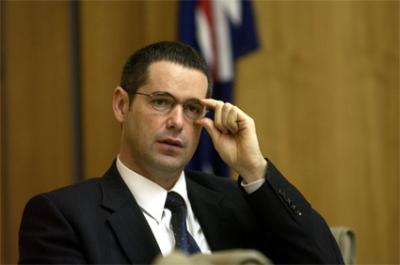
Telstra's Group Managing Director, Public Policy and Communications, David Quilty said in a press release - ("Telstra supportive of interim internet child protection measures" - here): ".. it is important for people to understand that there is no magic solution which will make the internet 100 per cent safe. As a result, we will continue to work closely with the Australian Federal Police, ACMA and other authorities to combat the abuse and exploitation of children.