Showing posts with label Broadhop. Show all posts

Friday, March 1, 2013

[ABI] DPI, Policy and Optimization - $20B/5 Years; Leader are ...


Joe Hoffman (pictured), principal analyst, ABI Research, finds that "Next Generation Optimization, DPI, and Policy are essential for operators to maximize the profitability of their 4G investments and represent a $20B market opportunity for vendors in the next 5 years. The overall leaders considering both Innovation and Implementation are Bytemobile [Citrix] (Web and Video Optimization), Sandvine (DPI), and Broadhop/Cisco (Policy)" 

Note that by 2012 revenues, Allot Communications was the market leader in DPI (here), and most analyst reports list Openet, Huawaei, Tekelec and Amdocs as the leaders of the Policy management market (see - InfoneticsExact Ventures) 

More from ABI:
  • Bytemobile Unison and T3100 platforms provide the right granularity of processing power to distribute web and video optimization into the 4G network, can scale with operators from less than 1M to over 100M subscribers, and pack extra functions, such as DPI, into the package
     
  • Sandvine Policy Traffic Switch provides the high performance needed for inline DPI, scales to operator needs with different models, and supports a hierarchical and distributed PCRF PCEF/DPI
     
  • Broadhop/Cisco Quantum Suite wins by a nose in the fiercely competitive Policy (PCRF) market with many advanced features for operators to differentiate and monetize their 4G brands 
See "Bytemobile, Sandvine, Broadhop Come Out On Top in the $20B Web and Video Optimization, DPI, and Policy Market Competitive Assessment" - here.

Saturday, February 23, 2013

Cisco: PCRF Performance Improved


 Murali Nemani (pictured), Sr. Director, Service Provider Mobility Marketing, Cisco updates in a blog post about a recent performance test for its (ex. BroadHopQuantum policy manager.

The test, performed by EANTC (see "How did EANTC Test Comverse PCRF?" - here), shows the system has a "linear scale-out to 250K transactions-per-second with 75M concurrent sessions" (see report below).

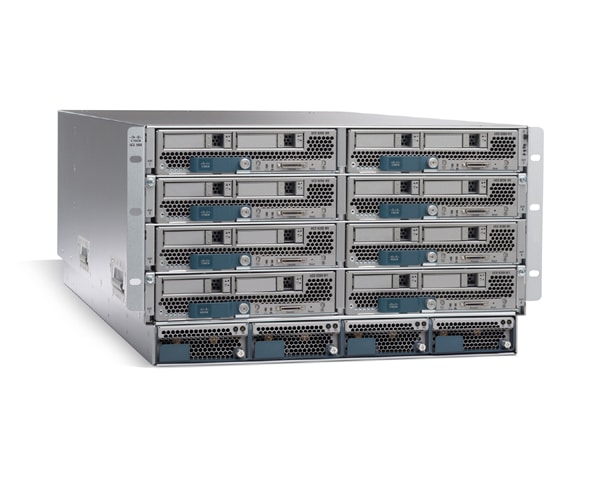
Cisco UCS 5108
A "system" in this case was up to 6 UCS 5108 chassis, each taking 6RU with 8 UCS B200 blades, with fabric interconnect. For the table below I took the numbers for a single chassis with 6 blades ("initial load") in order to try to compare with the other vendors. Previous test results by BroadHop (here) "Demonstrated support for 28,000 TPS with 16 blades in a single 10U chassis"

See below a short comparison of all tests published so far. Test scenarios, hardware configuration, size and cost are not the same in all tests. Probably even the definitions of TPS (or PDP contexts setups by some vendors) are not equal as well. Please refer to vendor's documentation for more specific information.

Vendor
Date
Published
Tester
System Performance (TPS/Chassis)
Subscribers/
System
Blade Performance
Blog Post
Cisco
Feb 22, 2013
EANTC
34,000
10.2M


Openet
Jan 9, 2013
Internal
200,000

25,000
Comverse
Jan 9, 2013
EANTC
200,000
31.5M
15,000
Tango Telecom
Feb 6, 2012
Internal
192,000

12,000
Amdocs (Bridgewater)
Sep  15, 2010
EANTC


See "A Quantum Leap Forward for Policy" - here.

Thursday, February 21, 2013

PCC Deployments [227]: Vodafone[Netherlands] Uses Cisco/BroadHop for Enterprise Tiered Services


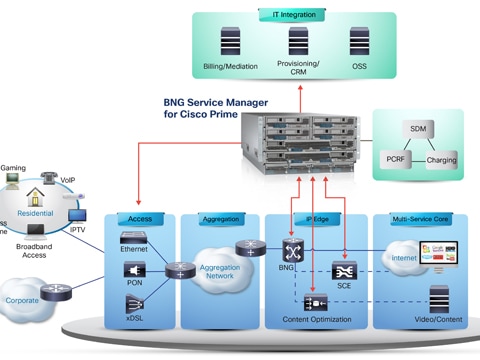
Cisco announced that "Vodafone Netherlands has deployed the BNG (Broadband Network Gateway) Service Manager [and] ... uses the Cisco [BroadHop] Quantum software suite to offer tiered broadband access services with flexible quota and application-level usage controls to its enterprise customers.

Openet also lists Vodafone Netherlands as a customers (here) - "Vodafone Netherlands has deployed Openet Policy Manager to control bandwidth and implement network policies for its more than 4 million subscribers. Vodafone Netherlands also selected Openet’s complementary solutions, Fair Usage and Tiered Service Controls, which enable the carrier to offer more flexible service plan options and improve control of subscriber traffic". 

Indeed a mystery.


BNG Service Manager combines the robust network control and service differentiation capabilities of the Cisco Intelligent Services Gateway and Cisco Quantum. The carrier-grade policy, charging and customer data management and analytics solution enables Vodafone Netherlands to deploy network- and application-aware policies in line with its enterprise broadband business model
".
  
Jack Smits (pictured), general manager, enterprise customer solutions, Vodafone Netherlands said: “We selected BNG Service Manager, enabled by Cisco Quantum, to better control, monetize and personalize our enterprise broadband offerings. With increased visibility into our enterprise customer broadband usage we can deploy resource admission control, validate available bandwidth and dynamically manage broadband performance. We now have the ability to quickly and easily roll out new mobile Internet services and promotions. Cisco delivered the best solution with a highly coordinated professional services delivery effort”.

See "Vodafone Netherlands Deploys Cisco Quantum Software-Based Networking Solutions to Control and Manage Enterprise Broadband Services" - here.

Thursday, January 3, 2013

PCC/DPI Deployments [218]:Bakrie Telecom [Indonesia] Uses Cisco, Huawei and BroadHop

     
One more from BroadHop .. this time BroadHop claims it displaced a current vendor, and the PCEF comes from "multiple vendors" - Cisco ASR5000 and Huawei SIG are shown (see "Huawei's SIG: Policy Enforcement and URL Filtering" - here). The figure also shows RedKnee as part of the BSS/OSS array.

At the end of Q3, 2012 Bakrie Telecom had 11.98M subscribers, a 17% decrease compared to Q3, 2011. Earlier this year, Bakrie's GM of Network Optimization said that "Traffic management is extremely important in the current broadband network and it has to run on a daily basis. Throttling is one of the mechanisms used for managing the data hoggers in the network. However they have to be “politically” managed as well. These hoggers are very active on all the technology blogs and would be able to ruin your reputation. A better policy control function would help you to prioritise and identify the users to be throttled in the network. See more - here


Wednesday, January 2, 2013

PCC/DPI Deployments [217]: Optus [Australia] Uses Cisco and BroadHop


One more Cisco/SCE and BroadHop PCRF joint deployment. A nice variety of use-cases, including 0-rate applications - see a current offer for 3GB plan with free Facebook/Twitter/LinkedIn on the right.

At the end of September 2012, Optus (part of the Singtel Group), had 9.5M mobile subscribers - 4.1M prepaid and 5.4M postpaid. ARPU was $AUS23 and $AUS59, respectively. Data was 51% of service revenue, compared to 40% two year earlier.


Tuesday, January 1, 2013

PCC/DPI Deployments [216]: Maxis [Malaysia] Uses Cisco, Huawei and BroadHop


In a recent webinar, BroadHop presented several Policy and Charging Control deployments. The one presented here, at Maxis Malaysia, shows an integrated PCRF-PCEF solution with Cisco SCE (and Huawei's GGSN). Few days after the webinar, Cisco announced it is going to acquire BroadHop.

At the end of Q3, 2012, Maxis had 12.8M revenue generating subscribers (see chart below). Mobile and broadband data contributed 25.9% of total mobile revenues.


Monday, December 31, 2012

PCC Deployments [215]: Tigo [Africa] Uses BroadHop for Quota and Self Top-Up


In a recent webinar, before its acquisition by CiscoBroadHop presented several Policy and Charging Control deployments.

The slide below shows the one for Tigo (part of the Millicom Group) in Africa, done with an unnamed  DPI PCEF. Allot Communications has recently announced DPI deployment in Tigo's affiliates in Latin America (see "Millicom (9 affiliates) Deployed Allot" - here).


[Survey] "16% not Using any Policy Management Solution"


It seems that the policy management market still has a lot to cover, or is still looking for appealing use-cases. According to a recent survey, only 23% of respondents said they are using policy management for the "new-age" use-cases, and the majority is mainly using it for traffic management. 

The survey, conducted by Heavy Reading (commissioned by BroadHop - now Cisco), covered the "current policy use, policy challenges and the benefits SDN (Software Defined Networking) is expected to bring to policy management" among "170 telecom industry experts and executives".

Results:

  •  Policy use cases:
    • 62% still using policy primarily for bandwidth management or data caps, tiered services, and throttling
    • 23% said they were using policy for new service delivery, including data plan creation, user self-care and promotions.
    • 16% not using any policy management solution
       
  • Policy Deployment Satisfaction 


  • Policy control deployments challenge: 
    • 37% interoperability with other IT and network equipment
    • 24% making a business case based on service differentiation
    • 20% scaling up to high transaction loads. 
    • 8.6% Adding new policy use cases was flagged by  of respondents and 
    • 10% regulatory issues such as net neutrality and privacy
       
  • Benefit of running policy management in a software-defined network (SDN) environment: 
    • 33% of respondents felt it was too early to tell 
    • 28% said that SDN would make it easier to launch new policy-supported services. 
    • The rest were split evenly between the opinions that SDN would make it easier to handle peak loads, that it would reduce the cost of policy deployments, and that it would enable policy to be bought and sold as a service in the cloud
       
See "BroadHop Survey: Policy Challenges for 2013 include Scalability, Interoperability and Making a Case for Service Differentiation" - here.

Tuesday, December 18, 2012

Policy Management Consolidation: Cisco to Buy BroadHop


2.5 years ago I had a post  about - "Bridgewater and BroadHop are Getting Closer to Cisco" (here).

Bridgewater is no longer an acquisition option, and while Cisco launched its own PCRF product since then (IPCF - here and here), it appears acquisition is still relevant.

Cisco announced (in a blog) it "plans to add a critical piece of network management technology to its portfolio today by announcing its intent to acquire Denver, Colorado-based BroadHop, a provider of next-generation policy control and service management technology for carrier networks worldwide. BroadHop’s widely deployed policy control solutions for mobile and fixed networks will be integrated into Cisco’s Service Provider Mobility Group to provide service providers the flexibility to control, monetize and personalize the types of service they choose, on any network".

See "Cisco Announces Intent to Acquire BroadHop" - here.

Tuesday, May 8, 2012

PCRF Deployments [146]: TSTT [Trinidad and Tobago] Manages Mobile, DSL and Wi-Fi W/BroadHop

 
BroadHop announced that Telecommunications Services of Trinidad and Tobago (TSTT) has "selected Quantum Network Suite .. to support its converged subscriber services .. BroadHop is providing converged AAA, subscriber data management (SDM) and policy management for all TSTT networks"

"TSTT uses cases enabled by Quantum Network Suite include:
  • Policy enabled Wi-Fi access for subscribers with qualifying service plan
  • Wi-Fi access for subscribers across multiple system including mobile, DSL and Wi-Max systems
  • Wi-Fi access for ad hoc, drop-in, pay per use users who self-register, and pay for services on the fly.
  • Multi access subscriber authentication and authorization on multi-networks".
George Hill (pictured), Chief Technology Officer at TSTT  said: “TSTT was looking for a single solution that would enable us to quickly and easily offer our subscribers the kind of services they need across all our networks”.
  
See "TSTT Selects BroadHop Next-Gen Policy Management Platform to Support Multi-Network Services" - here.

Tuesday, February 21, 2012

[Update 51: Procera Integrates with Aptilo and Tibco; Joint Customer Tests with BroadHop ] PCRF - DPI Compatibility Matrix


Procera Networks announced "the availability of its 3GPP Interoperability Laboratory in Malmo, Sweden. The lab provides an environment for Procera’s Professional Services Team to aid its customers to rapidly test new personalized services using the 3GPP PCC Ecosystem, focusing on interaction between PCEF, PCRF and OCS systems".

The release presents two new PCC eco-system partners - Aptilo and Tibco (former Kabira product - here), as well as an existing one - BroadHop (here). My interoperability matrix (here) was updated to reflect the new relations.

Ian Campbell (pictured), CTO of BroadHop said: "BroadHop and Procera have successfully completed several joint customer IOTs of our flagship PacketLogic and Quantum Network Suite solutions"

See "Procera Networks Unveils Personalized Services Interoperability Lab for Network Operators" - here.

Saturday, February 11, 2012

Survey: Operators Implementing Application-Aware Systems for OTT Video Monetization

    
A survey by Yankee Group, sponsored by CONNEXUS founding members Avvasi and BroadHop among 70 global telecom professionals on their plans for implementing monetization strategies for OTT video found that "17% indicated that they have already deployed application aware service plans such as YouTube streaming plans, and another 30% said they were planning to deploy application service aware plans in the next 12 months. 13% said they were either deploying or planning to deploy CDN technology in the coming year. 40% said they were currently engaging or plan to partner with content providers to enhance their subscribers’ OTT experience".


Simple Monetization Framework for Video Services;
Source: Yankee Group, 2012
 
Brian Partridge (pictured), vice president of network research at Yankee Group said : “The poll results indicate a growing interest in monetizing OTT video traffic .. Service providers are recognizing that they must first build media delivery capabilities into their networks if they ever hope to monetize their OTT video traffic – either through subscribers or via media companies and advertisements

See the press release "CONNEXUS Poll Indicates 2012 a Pivotal Year as Service Provider Interest in Monetizing OTT Video Grows" - here. The report is available here (registration required);

In a survey conducted among the readers of this blog about monetization of OTT traffic, 83% said the opportunity is in offering subscribers premium services, based on higher QoE for OTT services, 44% think that subscribers will upgrade their service plan (multiple choices were allowed, N=81). Learn more here.

Source: The 2012 Broadband Traffic Management Survey 


Thursday, February 9, 2012

Tango Claims the Lead in Policy Server Performance

  
Tango Telecom joins the policy server vendors publishing their performance numbers (see BroadHop and Bridgewater/Amdocs). I am not sure if one can compare product performance based on these statements, but transparency and visibility, as we know, are important qualities.

Tango announced ".. the completion of a record breaking Policy performance benchmark on the latest generation of COTS blade servers using Xeon 6 core CPUs .. The Tango iAX™ Data Policy Server achieved sustained performance of over 12,000 PDP contexts established per second per blade, at 70% CPU utilisation. The platform also demonstrated unprecedented scalability, to over 192K contexts/second from a single blade server chassis".

Kieran Kelly, CTO of Tango Telecom, commented: “.. The next wave of policy solutions, as well as offering sophisticated features such as load aware policy and dynamic pricing, must be able to scale way beyond what is currently possible. To put this exceptional benchmark in context, just a single fully equipped blade server, with the Tango iAX™ Data Policy Server, could establish data sessions for over 11M data subscribers in a single minute”.

See "Tango shrinks the world" - here.

Wednesday, February 1, 2012

What a Wonderful Year was 2011: Everybody [says it] is Growing!

 
A wave of momentum press releases from private companies in our space has been published lately - each trying to show how good was 2011 for them (as non-public companies, they do not have to show all aspects of their business .. see at the end an example of a public company announcement). 

But be aware - according to Ovum principal analyst Matt Walker (pictured) "Slow growth ahead for telecom service provider revenues and capex" (here):

"service provider (SP) capex and revenues grew an estimated 12 per cent and seven per cent respectively in 2011, with capex reaching US$314bn and revenues US$1,962bn. However, the report forecasts that SP revenues will advance at a CAGR of 2.9 per cent over the 2010-2017 period, which is markedly down from the historic CAGR of 6.3 per cent achieved in 2004-2010. There is a similar slowdown with capex: capex expanded at a CAGR of 6.5 per cent in 2004-2010, but this will likely slow to 3.1 per cent in 2010-2017"

Back to the happy vendor announcements: 

  • DigitalRoute - "DigitalRoute added more than 40 service providers to its list of more than 240 MediationZone customers during 2011. These include Tier-1 service providers in the USA and Europe that went into live operation with MediationZone within 6 months after project start. As a result of the recent success DigitalRoute has accelerated its revenue growth in 2011, achieving 59% year-over-year growth while also increasing profitability".

    See "DigitalRoute Increases Growth 59% with Tier 1 Customer Wins" - here
     
  • BroadHop - ".. reported it has secured 23 Quantum Network Suite customer wins in 2011, doubling the number of customers from the previous year. Innovative Communication Service Providers (CSPs) in four continents have selected BroadHop’s next-gen policy platform as scalability and service velocity become increasingly critical for Tier 1 operators looking to compete in hypercompetitive markets and in the post “all you can eat” bandwidth world. Demand for Quantum Network Suite grew significantly in Europe, Middle East, Africa (EMEA) and Asia Pacific (AP) markets where the Company secured 15 customers in competitive wins. Further expanding its geographic footprint, BroadHop secured 7 competitive wins in North America".

    See "BroadHop Announces 23 Quantum Network Suite Customer Wins in 2011" - here.

    I asked BroadHop if they can name at least one customer, but the response was they can’t because of - "Competitive advantage…" (?).
      
  • BTI systems - " With a global customer base of close to 400, packet optical expanded to more than 60% of BTI deployments in 2011, bolstered by customer demand for the Company's market-leading mobile backhaul, Ethernet business and Internet services solutions".

    See "BTI Systems Momentum Fueled by Content and Service Provider Demand for High-Bandwidth, Application-Aware Metro Network Solutions" - here.
     
  • Orga Systems - "Orga Systems continued its revenue growth driven by investments in its products, services and sales coverage. The 2011 annual turnover has grown 30% higher over the past 2 years. The volume of year-end backlog for 2012 has almost tripled as compared to that for 2010. This excellent result is due to 18 months of extensive business transformation with more than 80m subscribers added on its systems".
     
    See "Orga Systems continues growth curve" - here.
On the other hand, Tellabs announced, due to challenging Q4 results, that "We will reduce expense and stop new development work on the Tellabs SmartCore 9100 LTE product, while continuing to support Tellabs SmartCore 9100 WiMax customers" (here). The 9100 is Tellabs' DPI enabled core router - see also "DPI Announcements: Tellabs New LTE SGW/PGW" - here.

Tuesday, November 15, 2011

NI Announcements: CommProve Adds Cell, Location and Mobility Intelligence to Policy Management

   
CommProve announced ".. the launch of its BCN RAN Insight, [application that] collects and processes in real-time measurements from different interfaces of the radio access network (RAN) .. Depending on the network deployment and the desired accuracy different interfaces can be probed: typically Iub/Iups are monitored. DPI measurements provide information concerning application and network level delays, re-transmissions, peak and average throughput, application type breakdown, both at the user-level and at the cell-level .. user mobility is tracked and the actual cells serving the user are saved in a call detail record (CDR), along with all relevant signaling information"

".. This way BCN RAN effectively closes the Policy Control loop in as much as it brings into the picture real-time QoE and location information (including information about which other subscribers are sharing the same network resources) and consequently enables Policy Control solutions to manage QoS and QoE in real-time, per subscriber, perform real-time and service differentiated charging, offer location based services as well as to effectively increase available network resources, again in real-time, through subscriber differentiated control mechanisms"

"BCN RAN Insight is deployed together with partner PCRF and DPI solutions" - see "BroadHop and CommProve Offer Integrated RAN Congestion Management Solution" - here and "CommProve and Qosmos Offer Layer 7 Visibility into Mobile Traffic"- here.

See "CommProve Launches BCN RAN Insight for Real-Time RAN Congestion Management" - here.

Tuesday, October 18, 2011

Modeling Policy Server Scale and ROI

     
A month ago I covered the deployment of policy management by Bharti-Airtel (the largest MNO in India with over 170M subscribers). Bharti's IT director said (here) then that "..The challenge that we have is that our scale is huge".

While most networks are significantly smaller, policy management scaling is an issue vendors and operators need to handle. In addition to the growth in data consumption we also see new use-cases and M2M applications (here, here) that will add load to policy servers.

Scaling was addressed by policy server vendors as a competitive advantage for some time now (BroadHop, Bridgewater). Diameter routing/load balancing technology and products (here) were added in recent months to help policy management to scale.

However, something was missing - what are the expected performance requirements?

A new white paper by Graham Finnie (pictured), Chief Analyst, Heavy Reading. (commissioned by BroadHop) builds a model to help set performance goals: "In the past two years, policy management caught fire as network operators sought better ways to manage the way bandwidth is allocated and congestion is handled. Now, many are looking to move on from these early deployments, and seeking to put policy at the heart of their traffic management and service development strategies. But as policy deployments scale up, it raises major new issues for operators. Can policy servers cope as new use cases are added? What will it cost? And can the new business case really stack up?"

Conclusions:
  • A 3GPP network of 10 million mobile subscribers will scale, based on our assumptions, from handling about 2,200 TPS in the Base Case to almost 23,000 TPS in the Mature Case, which is assumed to be after three years.
     
  • We modeled the TPS impact of beginning the transition to an all-LTE network. This also assumes a network with 10 million subscribers, in which the customers are gradually transitioning to LTE, and that during this transition, wireline customers are also transferred to the same policy environment. In this case, policy scales from nearly 25,000 TPS at the end of Year 1 to more than 75,000 TPS at the end of Year 3.
     
  • the cost of policy is only a small proportion (around 2 percent) of the overall cost of a new LTE build over a five-year build period in the next-generation policy case – and given the high strategic value of policy, this suggests to us that the return on investment (ROI) is likely to be positive in the short to medium term
See press release "BroadHop and Heavy Reading Study Finds Policy Servers Must Scale Up Massively as Mobile Operators Move into the LTE Era" - here ; White paper - here.

Wednesday, October 12, 2011

Vendors Form Connexus - OTT Video Monetization Architecture for ISPs

 
My colleague, Dean Bubley, tweeted last night (here) on the subject of OTT video monetization by MNOs:  "Increasingly convinced that idea of MNOs "monetising OTT apps" is a complete chimaera. Wishful thinking. More likely money-flow is other way". Dean also linked a 3GPP work program that "deprioritised the key standard & put it "on hold" (here).
 
Obviously vendors in this space think differently. 4 of them - Avvasi, BroadHop, Commprove (see "BroadHop and CommProve Offer Integrated RAN Congestion Management Solution" - here) and Spirent (here) have just formed Connexus.

"Service providers who want to monetize OTT video have an opportunity to create enormous value and therefore lucrative new revenue streams, however market fragmentation and lack of collaboration in the OTT value chain is preventing a pragmatic path to this opportunity. CONNEXUS is a disruptive architecture that enables a unique way of collaboration between vendors, service providers, content providers and advertisers to accomplish the shared goal of maximizing subscriber quality of experience, and delivering new video services and therefore new revenue streams for the entire ecosystem".
 
Connexus Architecture
Connexus is an "architecture seeks to address this issue holistically by bringing together vendors committed to an open ecosystem for OTT and multi-screen video service delivery, to enable service providers to build QoE-differentiated  video subscription services which sets the stage for content monetization and ad revenue".


The CONNEXUS architecture will focus on three primary goals:
  1. Promoting the notion that service providers need to monetize OTT video and deliver a high quality of experience in order to fund the infrastructure capacity that will meet subscriber demand
     
  2. Leveraging existing standards and associations to define how OTT video is delivered and monetized, and facilitate interoperability within the ecosystem
     
  3. Accelerating the availability of integrated best of breed solutions across the OTT video ecosystem

See the press release - "CONNEXUS Ecosystem Unveils Architecture that Highlights New Possibilities for Monetizing OTT Video Traffic" - here.


Thursday, September 15, 2011

[Update 45: Broadhop-Sandvine; Torres-Procera] PCRF - DPI Compatibility Matrix

Latest update to the PCRF-DPI Compatibility matrix reflects reports of 2 new interoperability tests:  

  • Kishen Mangat (picture), VP Solutions, BroadHop, Inc. informed me that BroadHop has ".. completed Gx/Gy and SOAP/Web Services IOT with Sandvine PTS" (BroadHop is now the 2nd PCRF vendor in my matrix to achieve interoperability will all covered DPI vendors - first was Tekelec/Camiant).
     
     
  • Sivaramakrishnan (Siva) from Torres Networks updates that "Torres has completed interoperability with Procera on the Gx interface"

Tuesday, August 2, 2011

[Update 45: Cisco to Resell Openet; 20 Joint Accounts] PCRF - DPI Compatibility Matrix

 
Although Cisco has recently launched its own PCC/PCRF product (IPCF - here), it seems that it continues to tighten its relations with the leading pure-players vendors.

This may confirm the conclusion of a recent review made by Joe McGarvey (pictured), Principal Analyst IP Services Infrastructure, Current Analysis: "While Cisco’s recently introduced policy control is strong on paper in several areas, the company will not be able to validate any of its performance or functionality claims until it rings up a few customer wins" (here).

Openet announced that "Cisco Systems has signed a global reseller agreement for Openet’s complete product suite including Policy Manager, Convergent Charging .. all running on Cisco Unified Computing System (UCS) .. Openet integrates with the following Cisco products: ASR 5000, CSG, CSG2, SCE and eGGSN".

"Joint deployments at Turkcell and Meteor Ireland in 2010, along with deployments with operators in Japan, Austria and the Netherlands, have driven Openet and Cisco Systems to agree to a comprehensive set of reseller terms covering commercial and technical services, as well as support models .. This agreement builds upon seven years of co-selling with Cisco on more than 20 accounts, including Orange and other service providers".

Possibly, the recent leaked documents - "AT&T Tests Openet & Cisco for LTE: Session based Pricing, Speed Tiers" - here - also explain the upgraded relations.

See "Continued Joint Deployments Drive Global Reseller Agreement with Cisco Systems" - here.

See also: "Volubill - Cisco Joint Projects" - here and "Bridgewater and Broadhop are Getting Closer to Cisco" - here.

Wednesday, May 4, 2011

BroadHop Participates in Malaysia’s "Smart Networks" Project

 
The Malaysian government unveiled ".. the Economic Transformation Programme (ETP) to transform Malaysia into a high income economy, hence identified 12 National Key Economic Areas (NKEA) including the Communications Content and Infrastructure (CCI) which is sponsored by the Ministry of Information, communications and Culture".

The initiative includes the EPP9 program "The EPP9 on Smart Network is aimed to address affordability and quality of services offered by service providers through the implementation of smart network features by network facility and service providers in providing differentiated pricing based on service prioritization, usage cap, and application specific packages to users"

See "SEMINAR ON SMART NETWORK #1/2011 Understanding and Challenges" - here,

Broadhop announced "its support for the Entry Point Project on Smart Networks (EPP9) .. Muhammad Ismail Ahmad, Director of BroadHop, APAC Malaysia, presented real world Policy 2.0 use cases including the ability to offer services based on nights and weekends, usage metering, Pay per Use, shared quota, Parental Controls, Tiered Services, Facebook and Streaming Application Plans, Video Optimization and Steering, RAN Congestion Management, 3rd Party Sponsored Services and Machine-To-Machine services"

See "BroadHop Announces Support for Malaysian Entry Point Project on Smart Networks" - here.