Showing posts with label Wi-Fi. Show all posts

Wednesday, December 23, 2015

Analysys Mason: The Wi-Fi Calling Services Opportunity


A new report by Stephen Sale, Practice Head, Consumer services, Analysys Mason finds that "Wi-Fi calling lowers the barriers to entry to mobile services, but it also provides more-established operators with a much-needed stimulus to evolve their service offerings.

Wi-Fi calling, particularly in its native implementations (that is, adding the capability to native diallers on handsets), brings the following three player types into direct competition, each with the objective of full voice service substitution. 


See "Wi-Fi calling services: assessing the market opportunity" - here.

Thursday, December 17, 2015

Bhutan Telecom to Use Alepo's Wi-Fi Offload and Hotspot Monetization Solution


Alepo announced a "..new partnership with Bhutan Telecom, the largest mobile operator in Bhutan, to launch an expansive Wi-Fi Offload and Hotspot Monetization Solution for the Bhutanese market.

With Alepo’s Wi-Fi monetization solution Bhutan Telecom will be able to fully monetize its Wi-Fi hotspot networks by offering attractive Wi-Fi plans and promotions to its subscribers. Bhutan Telecom’s customers will be able to use a single mobile voucher to purchase mobile and Wi-Fi hotspot services, making it a simple and convenient experience. 
  • As part of its Wi-Fi monetization platform, Alepo provides an end-to-end solution for the entire purchase, activation, real-time charging, and customer care of Wi-Fi hotspot services, as well as integration with the charging system in the mobile core. 
  • With Alepo’s Carrier Wi-Fi offload solution, Bhutan Telecom will be able to leverage its planned network of Wi-Fi hotspots across Bhutan in order to increase its capacity for mobile data services as well as to enhance the customer experience of those data services.
Bhutan Telecom subscribers will enjoy a seamless 3G/4G LTE to Wi-Fi offload experience, thanks to Alepo’s full integration with the HLR and HSS in the mobile core network. 

The agreement with Bhutan Telecom signifies major milestone for Alepo. The “all things data experts” technology provider has announced several Wi-Fi monetization and offload contracts with many tier one mobile operators like Sri Lanka Telecom, Afghan Wireless, ETB Colombia [here] and others"

See "Bhutan’s Largest Telecom Operator, Bhutan Telecom, Taps Alepo for Wi-Fi Monetization and Offload" - here.

Sunday, September 6, 2015

[Strategy Analytics]: "Wi-Fi traffic is growing at more than double the rate of Cellular traffic"


Data from Strategy AnalyticsTelemetry Intelligence Platform shows that "consumer appetite for data (Cellular and Wi-Fi combined) has exploded over threefold between H2 2013 and H1 2015. During the first half of 2015, on average, US Smartphone users consumed 9.7 GB / Month, of which only 1.6 GB / Month or 17% of the total data was generated on Cellular networks .. Wi-Fi traffic is growing at more than double the rate of Cellular traffic across all ethnicities".

Related post - "[ABI]: Wi-Fi Offload Traffic Volume will Exceed All Cellular Traffic" - here


The analysis is based on over one million individual application sessions from 3000+ panel members in the US. The results are powered by Strategy Analytics’ state-of- the-art Telemetry Intelligence Platform by leveraging three core components – a best-in-class telemetry application, an opt-in panel, and big data analytics framework to support rich analysis". 


See "Smartphone Data Traffic Explodes in US, Witness over 300% Growth in 2 Years" - here.

Thursday, September 3, 2015

Offload Deployments [363]: ETB [Colombia] Expands LTE Coverage w/Alepo

     
Alepo announced that "La Empresa de Telecomunicaciones de Bogota (ETB), has successfully launched Alepo’s Wi-Fi Offload solution in Bogota, Colombia .. With Alepo’s Wi-Fi Offload solution, ETB is able to broaden its next-generation data footprint with a combination of high-speed LTE and Wi-Fi Hotspot services. In doing so, ETB can deliver complete data coverage for its subscribers. Whether connected to ETB’s recently launched LTE network or – in absence of LTE coverage – offloaded to the operator’s expansive Wi-Fi hotspot network, ETB subscribers enjoy a consistent and convenient data experience".

Related post - "ETB [Colombia] Uses Alepo's PCRF-Lite" - here.

"In order to enable LTE to Wi-Fi offload at ETB, Alepo integrated its carrier-class Wi-Fi Offload platform with ETB’s LTE Home Subscriber Server (HSS). Armed with subscriber profile information, the Alepo solution is able to authenticate ETB subscribers to the Wi-Fi hotspot without requiring them to manually log on to the Wi-Fi hotspot network at each use. The scalable solution employs open, standards-based interfaces, making ready to deploy in best-of-breeds network environments of any size". 

See "Alepo Makes Wi-Fi Offload a Reality for ETB in Colombia" - here.

Thursday, August 27, 2015

AT&T Uses RaGaPa for Wi-Fi Ad Insertion


Last October I shared a post by Jonathan Mayer [pictured], a computer scientist and lawyer at Stanford, who discovered that " Verizon Injects HTTP Header for Advertising" (here). His discovery made Verizon  to announce that "Customers May Opt-out from Header Insertion" (here).

Now it is AT&T turn.

Jonathan reports that "While traveling through Dulles Airport last week, I noticed an Internet oddity. The nearby AT&T hotspot was fairly fast—that was a pleasant surprise. But the web had sprouted ads. Lots of them, in places they didn’t belong .. I started poking through web source. It took little time to spot the culprit: AT&T’s wifi hotspot was tampering with HTTP traffic.

The ad injection platform appears to be a service from RaGaPa 
[HotSpot Monetization], a small startup. Their video pitch [see below] features “MONETIZE YOUR NETWORK” over cascading dollar signs. (Seriously.)


Ad Inserted into a federal government site. Source: Web Policy

When an HTML page loads over HTTP, the hotspot makes three edits ... " 


See "AT&T Hotspots: Now with Advertising Injection" - here.

Monday, August 10, 2015

Vodafone India Launches a Seamless Wi-Fi Offload App


ETTelecom.com reports that "Vodafone India, the country's second largest telecom operator, has rolled out its wi-fi offload application, which will shift data traffic away from the cellular network and help decongest it. The move comes amid rising subscriber complaints about inconsistent data speeds over the cellular network, with 3G dropping to 2G speed frequently as mobile internet usage surges in India.

Vodafone Wi-Fi Connect is available on Android and iOS platforms and requires a one-time sign-in. It will come into effect anytime the user enters Vodafone's wi-fi zones in Delhi and Mumbai. It has about 100 such zones in total.

The seamless authentication of customers with the mobile network profile was a key integration challenge, experts said. Vodafone India didn't respond to ET's queries.

Rivals such as Bharti Airtel, Idea Cellular and Aircel are also looking at wi-fi as an alternative that can be deployed in parallel with the existing macro base-station network, making more spectrum available for data usage.

The company added 1,100 3G sites and 1,000 2G sites in the quarter as part of its Project Spring initiative. 3G coverage in targeted urban areas increased marginally to 91% from the previous quarter's 90%". 

  
See "Vodafone India aims to decongest 3G data networks via Wi-Fi offloading app" - here.

Monday, July 20, 2015

[ABI]: 400M Wi-Fi Access Points in 2019


A new report by Ahmed Ali, [pictured] Research Analyst, ABI Research finds that "Service providers and enterprises continue to find new revenue opportunities in Wi-Fi as the number of installed access points ramps up to nearly 400 million commercial and enterprise units by 2019. Emerging technologies like Hotspot 2.0, VoWi-Fi, and 802.11ac in the Wi-Fi space support further development of the current business models and encourage business model innovation"

See also:
  • [ABI]: Wi-Fi Offload Traffic Volume will Exceed All Cellular Traffic" - here 
  • [Infonetics Survey]: CSPs Expect to "significantly increase"  Wi-Fi Access Point Deployment - here
".. Service providers and enterprises have direct relationships with end-user customers and therefore play an important role in aggregating valuable data and controlling the delivery channels for products like mobile ads and apps. The potential B2C segment is extensive and ranges from small local shops to large international brands ..  Bringing together the supply from hotspot owners with the demand from various businesses creates an expanding B2B ecosystem of innovative solution providers”.

See "Hotspot 2.0, 802.11ac, and VoWi-Fi: Nearly 400 Million Strong Ecosystem to Monetize Wi-Fi" - here.

Tuesday, June 2, 2015

[ABI]: Wi-Fi Offload Traffic Volume will Exceed All Cellular Traffic


Just after Opera Software added features to handle Wi-Fi congestion (here) ABI Research finds that Wi-Fi offloading is growing at a "double-digit rate".

A new report by Nick Marshall [pictured], Research Director, ABI  Research forecasts that "..rapidly increasing offload of cellular traffic to Wi-Fi will reach over 17 exabytes per month by 2018 – greater than all of 2G, 3G, and 4G cellular traffic combined.

..In-building wireless data traffic will grow at a double-digit rate to reach more than 50 exabytes per month worldwide in 2020 .. Video remains the dominant traffic type with traffic volume outstripping all other traffic types, while in the enterprise and commercial segment sports venues, transportation and healthcare continue to be the verticals which transport the most traffic with shopping malls and hospitality coming in a close second place.

..DAS (distributed antenna systems) and Mobile Equipment vendors are poised to benefit from this explosion in traffic. Leading companies include Alcatel-Lucent, Axell Wireless, Cisco, CommScope, Corning, Dali Wireless, Ericsson, Goodman Networks, JMA Wireless, Nokia Networks, TE Connectivity, Wireless Telecom Group and Zinwave. These companies and others will benefit from increased DAS spending as Mobile Broadband Operators densify networks to meet this explosion in mobile traffic".

See "Global In-Building Off-load to Exceed 17 EB per Month—Critical Leverage for Mobile Broadband Operators" - here.

Monday, June 1, 2015

Opera Fights Wi-Fi Congestion


Opera Software announced that its "New Opera Max version includes a Wi-Fi data-savings option. The data-compression app will allow users to control their mobile data and Wi-Fi data independently. With 80% of all data usage on Wi-Fi networks, Wi-Fi savings has been the number-one requested feature by Opera Max users.
  • Users experiencing Wi-Fi network congestion will enjoy a faster connection experience with this new compression feature, as they can see how apps are using their data and track how their apps behave on Wi-Fi.
     
  • With the new App Blocking feature, users can prevent apps from tracking them or using data without their permission, as well as being able to stop apps from running in the background to conserve precious battery life. The “Blocked Apps” section gives users complete control over mobile data access and Wi-Fi data access.


See "Faster Wi-Fi experience with new Opera Max compression technology" - here.

Thursday, May 28, 2015

[Infonetics Survey]: CSPs Expect to "significantly increase" Wi-Fi Access Point Deployment


A recent survey by Richard Webb [pictured], research director for mobile backhaul and small cells, Infonetics Research, finds that "service providers across the globe that operate carrier WiFi networks or will do so soon .. expect to significantly increase their access point deployments by the end of 2016 .. a quarter of the respondents expect that by 2016, 26 percent of their access points will be Hotspot 2.0-compliant to enable seamless roaming among WiFi networks and between WiFi and cellular networks"

Related post - "Ruckus/Global Reach Enables Hotspot 2.0 Service in San-Francisco Area"  - here

Revenue generation has become a key driver of carrier WiFi deployments. Not only does Hotspot 2.0 support integration of WiFi with mobile and fixed networks, but it supports the creation of new revenue models for WiFi services”. Says Richard. 


  • Survey respondents’ top drivers for deploying carrier WiFi are preventing churn, bundling service with mobile broadband, improving coverage and generating new WiFi access revenue
     
  • Carriers surveyed are adopting a growing variety of monetization models, with tiered hotspots and WiFi roaming growing the fastest through 2016
     
  • For the third straight year, Ruckus Wireless and Cisco lead respondent perception of top carrier WiFi vendors
See "Hotspot 2.0 and Virtualization Key to New Revenue for WiFi Carriers" - here.

Sunday, May 24, 2015

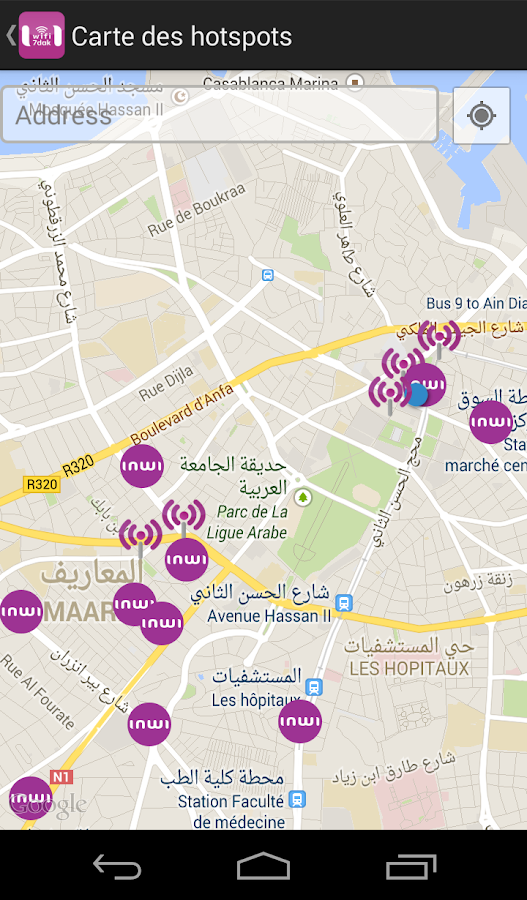
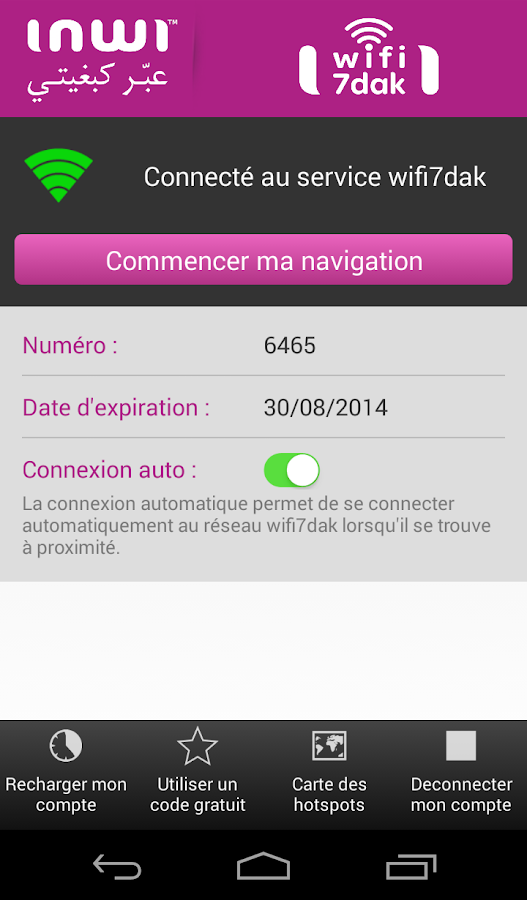
Wi-Fi Deployments [356]: INWI [Morocco] Selected Aptilo and Smartcom

  
Aptilo Networks announced that "INWI, the third largest telecommunications operator in Morocco, has selected Aptilo Networks and Smartcom for a major upgrade to “Wifi7dak,” INWI’s public Wi-Fi service. The upgrade will increase bandwidth, support network expansion and add new payment functionalities.

INWI has deployed the Aptilo Service Management Platform™ (SMP) .. Mobile users can logon to the service using an app developed by Smartcom and available in the INWI online marketplace. The app offers the same functionality as a branded web portal (also available) while also providing INWI with valuable analytics and more granular control over the Wi-Fi service.


Alepo's Service Management Platform 

INWI is part of Zain Group, a leading mobile and data services operator with a commercial footprint in the Middle East and Africa"


INWI is also using Openet's PCRF (see "INWI [Morocco] Uses Openet for Monetization" - here)

See "INWI Taps Aptilo Networks and Smartcom for Carrier Wi-Fi" - here.

Saturday, May 16, 2015

KDDI: Wi-Fi Offload to Reach 65%; LTE Capex Dropped by 50%


Joseph Waring reports to Mobile World Live that "Japanese operator KDDI’s push over the past year to boost WiFi offload has resulted in a sharp increase in the amount of data moved off macro sites as well as huge savings in wireless capex".

KDDI started with its offloading project more than 4 years ago, announcing its plan to deploy Ruckus' 120,000 Wi-Fi access points (here). They now have 3,000,000 access points. At the end of March 2015, KDDI had 43,478,000 mobile subscriptions. 

Fumio Watanabe [pictured], chairman of KDDI’s R&D Laboratories, spoke at BROADBAND ASIA, SINGAPORE and said that "WiFi offload was stuck at about 30 per cent three to four years ago when users faced frequent connection issues with WiFi and because flat-rate plans didn’t give them much incentive to use WiFi. 

It was only after the company distributed three million free WiFi access points that the percentage jumped from 30 per cent to 57 per cent .. We hit the 57 per cent target last fiscal year, which ended 31 March, and aim to expand the offload to 65 per cent this fiscal year, which will further reduce our LTE capex”.

Source: KDDI 2014 annual report 

Watanabe told Mobile World Live that "with more than half of its macro traffic offloaded to WiFi, its LTE capex has dropped by a similar percentage".

Source: KDDI 2014 annual report 

See "KDDI aims to offload 65% of mobile data to WiFi this year" - here.

Tuesday, May 5, 2015

Arris, Aptilo, Ruckus and Benu Introduce a SP Wi-Fi Solution


Arris announced a new new "Service Provider Wi-Fi solution", build with components from Aptilo Networks, Benu [see "Benu Promises to Increase QoE, Optimize RAN and Reduce Costs for MNOs" - here], and Ruckus Wireless.

The solution extends "residential Wi-Fi services outside the home and addressing paying verticals including SMB, MDU and campus type environments. The carrier-class solution will allow operators to offer centrally managed, coordinated service offerings to their customers and greatly improve their ROI on wireless infrastructure.

ARRIS’s Service Provider Wi-Fi Systems Design and Integration combines key service components— Authentication Authorization and Accounting (AAA), policy enforcement, web portals, wireless access gateways, radio resource management, access point controllers, and access points—for delivering a single, unified customer experience regardless of device, location or transport technology.


The platform’s turnkey, carrier-class capabilities integrate seamlessly into operators’ delivery network and back-office systems as a result of ARRIS’s integration with Aptilo Networks, Benu Networks and Ruckus Wireless ..  The combined platform leverages Aptilo’s service management platform, Benu’s wireless access gateway, and Ruckus carrier-class, Smart Wi-Fi access points and control systems to provide a scalable, global platform for new Wi-Fi service delivery"


See "ARRIS Introduces Carrier-Class Platform for Wi-Fi Deployments" - here.

Wednesday, April 15, 2015

[Analysys Mason]: Smartphone Traffic Uses Wi-Fi (81%) and Generated at Homes (90%)


A new report by Martin Scott [pictured], Practice Head, and Aris Xylouris, Research Analyst, Analysys Mason analyses the smartphone usage of consumers in France, Germany, the UK and the USA.

The finds that "19% of all smartphone traffic observed in the panel was carried over the cellular network. LTE will make cellular networks more attractive relative to Wi-Fi, but we still expect the proportion of total smartphone traffic carried over the cellular network to decline to 16% by 2019. The volume of data will grow significantly on both types of network

.. 90% of panellists’ Wi-Fi traffic that we were able to categorise and identify came from home Wi-Fi connections and 89% of panellists connected to such networks. This is not necessarily a single residential connection – for example, many people connected to multiple home Wi-Fi networks, presumably those of friends and family.

Also:
  • Beyond the home, the narrative is more fragmented – 60% of consumers connected to operator-branded hotspots (for example, AT&T, BT or O2 hotspots that were not also branded as community Wi-Fi), but this accounted for only 2.1% of all Wi-Fi traffic generated. The greatest value of such hotspots, it seems, is not generally in easing the congestion of particular macrocells, but in reinforcing brand presence and improving QoE in areas with poor cellular data performance. 
  • The role of tethering is a complex part of an operator’s strategy and can, in some situations, help (with the generation of further monetisable traffic) and sometimes hinder (when the tethering is used instead of higher-priced dedicated tariffs).[The chart above] indicates tethering where the smartphone was not the cellular bearer – the cellular connection was shared from either a Mi-Fi device, a tablet or another smartphone.
See "Consumer smartphone usage 2014: mobile data usage" - here.

Friday, January 16, 2015

Ruckus Adds App-Aware Traffic Management Technology to Improve Performance


Ruckus Wireless announced  that "..several Ruckus ZoneFlex™ access points (APs) ..  have all been qualified under the Microsoft Lync Server Wi-Fi qualification program.

.. Unlike competitive alternatives, Ruckus Smart Wi-Fi access points integrate patented SmartCast™ technology. SmartCast combines sophisticated scheduling and queuing mechanisms with advanced heuristic algorithms that automatically identify and characterize traffic based on its unique behavior to help ensure peak performance.


With a Ruckus Smart Wi-Fi system, all traffic is queued/de-queued by specialized schedulers, optimized for the corresponding traffic type, the delay/jitter tolerance and bandwidth requirements of the traffic, and the changing characteristics of each station on the wireless LAN. This automatic Type Of Service (TOS) tagging also eliminates complex Quality of Service (QoS) configurations, with automatic management of lower-speed 802.11 devices to assure bandwidth availability for prioritized video and voice over Wi-Fi applications. When combined with Ruckus BeamFlex™ adaptive antenna array technology that directs each packet over the fastest signal path that yields the highest data rates, multimedia Wi-Fi performance is effectively perfected".

See "Ruckus Makes Multimedia Streaming and Wi-Fi Calling Crystal Clear, Flicker Free, Picture Perfect" - here.

Tuesday, January 6, 2015

Secured Video Streaming is Bad for Your In-flight Internet


Gogo, the in-flight internet services provider, released a statement about its traffic shaping and blocking practice, made by Anand Chari [pictured], EVP and CTO:

Gogo takes our customer’s privacy very seriously and we are committed to bringing the best internet experience to the sky. Right now, Gogo is working on many ways to bring more bandwidth to an aircraft. Until then, we have stated that we don’t support various streaming video sites and utilize several techniques to limit/block video streaming. 

One of the recent off-the-shelf solutions that we use proxies secure video traffic to block it. Whatever technique we use to shape bandwidth, It impacts only some secure video streaming sites and does not affect general secure internet traffic. These techniques are used to assure that everyone who wants to access the Internet on a Gogo equipped plane will have a consistent browsing experience.

We can assure customers that no user information is being collected when any of these techniques are being used. They are simply ways of making sure all passengers who want to access the Internet in flight have a good experience.


This comes as a response to the following tweet:


See "STATEMENT FROM GOGO REGARDING OUR STREAMING VIDEO POLICY" - here.

Friday, December 12, 2014

Devicescape: Integrated Wi-Fi/Cellular Service Increases Consumption


Devicescape shared ",, new data demonstrating that consumer consumption of cellular data grows significantly for the majority of users following the introduction of an integrated Wi-Fi and cellular service. Figures from commercial deployments of Devicescape’s ABC (Always Best Connected) solution revealed a 17% increase in billable monthly cellular data use from 64% of end users.

Devicescape’s policy-based ABC solution intelligently manages the movement of users between cellular networks, the Devicescape Curated Virtual Network of 20 million amenity Wi-Fi locations worldwide, and private hotspots in the home and office.


Given automated access to the best available networks, end users ‘supersized’ their overall data consumption. Within three months, the average user’s combined cellular and Wi-Fi data consumption grew by 48%.

While a 17% increase in cellular data represents an excellent operator revenue opportunity, end users themselves were able to exploit Wi-Fi for a dramatic increase in overall data consumed against a small incremental investment in cellular". 


See "Commercial deployments show increased Wi-Fi consumption drives appetite for cellular data" - here.

Sunday, October 5, 2014

The FCC Fines Marriott for Disabling Guests' Private Wi-Fi Networks


Marriott Gaylord Opryland Resort
& Convention Center
Marriott hotels tend to get in trouble with its traffic management practices. Back in 2012, they used their Wi-Fi service to insert ads into guests sessions (see "Marriott Uses DPI to Insert Ads to its Guests" - here and "Marriott (on DPI Ad Insertion): ".. we didn't know .. everybody does it.. it is disabled now"" - here).

Now, according to the FCC, they jammed the use of personal hot-spots so customers will have to use Marriott's (expensive) service instead. This time they will pay.

The FCC announced that "Marriott International, Inc. and its subsidiary, Marriott Hotel Services, Inc., will pay $600,000 to resolve a Federal Communications Commission investigation into whether Marriott intentionally interfered with and disabled Wi-Fi networks established by consumers in the conference facilities of the Gaylord Opryland Hotel and Convention Center in Nashville, Tennessee, in violation of Section 333 of the Communications Act.

The FCC Enforcement Bureau’s investigation revealed that Marriott employees had used containment features of a Wi-Fi monitoring system at the Gaylord Opryland to prevent individuals from connecting to the Internet via their own personal Wi-Fi networks, while at the same time charging consumers, small businesses, and exhibitors as much as $1,000 per device to access Marriott’s Wi-Fi network".

"Consumers who purchase cellular data plans should be able to use them without fear that their personal Internet connection will be blocked by their hotel or conference center,” said Enforcement Bureau Chief Travis LeBlanc. “It is unacceptable for any hotel to intentionally disable personal hotspots while also charging consumers and small businesses high fees to use the hotel’s own Wi-Fi network. This practice puts consumers in the untenable position of either paying twice for the same service or forgoing Internet access altogether,” he added".

See "Marriott to Pay $600K to Resolve WiFi-Blocking Investigation" - here.

Friday, October 3, 2014

Alcatel-Lucent Partners with Accenture to Improve and Monetize Broadband


Pierre Nanterme CEO, Accenture & 
Michel Combes CEO, Alcatel_Lucent
Accenture and Alcatel-Lucent announced that they have "formed a strategic alliance to help communications service providers (CSPs) and large enterprises implement integrated ultra-broadband solutions to address the challenges of rising costs and increased data consumption caused by high demand from digital customers and applications.

The agreement calls for the two companies to form the Accenture Alcatel-Lucent Business Group. 


 Its initial offerings will include solutions where the companies team to design, build and run scalable, cost effective customer care operations for all-IP networks that will to

The companies will dedicate sales and delivery resources to jointly provide solutions and services for customer care for mobile devices based on Alcatel-Lucent’s Motive line of products and explore small cell wireless network solutions with a focus on integrating cellular technology and WiFi between service providers and large enterprises". 


See "Accenture and Alcatel-Lucent collaborate to help clients monetize ultra-broadband opportunities" - here.

Wednesday, August 6, 2014

Israel: Wi-Fi Offload Allowed!


A year ago the Israeli Ministry of Communications decided that MNOs will not be allowed to offer Wi-Fi offloading in public areas (see "Israel: MNOs won’t Offload to Wi-Fi" - here).

This has changed today, and the Ministry announced (here, Hebrew) that any organization may offer such services, in any location (private or public). Some municipalities, such as Tel Aviv, are offering free Wi-Fi services for sometime now.

MNOs will not be able to charge extra from their customers for the Wi-Fi access, and will not be able to count the usage towards their monthly quota.