Showing posts with label Traffic Direct. Show all posts

Monday, February 23, 2015

Allot Launches Monetization Through Engagement Solution


Allot Communications announced the ".. launch of Allot SmartEngage, a solution designed to help mobile service providers to enhance and better monetize their engagement with their subscribers. 

The first moment a subscriber gets a new smartphone or tablet up and running and browses the Internet is a critical moment for service providers to offer new services and secure registrations. The ability to engage users and secure service opt-ins during this stage of the user lifecycle can result in a significant revenue opportunity for mobile operators looking to deliver and monetize value-added services such as personal security, music streaming, cloud services, content bundles and others" 


The flow of information between Allot Service Gateway and other elements in your network starts with the provisioning of a new SIM, as follows:
  1. New SIM is provisioned by PCRF with Onboarding set to ON in customer service plan
     
  2. PCRF updates Allot Service Gateway
     
  3. Allot Service Gateway detects first-browse activity and redirects to Welcome Page
      
  4. Per user’s response, PCRF updates service plan and notifies Allot Service Gateway that first-engagement is over
      
  5. Onboarding is turned OFF.

"Allot SmartEngage elevates customer experience management by using advanced traffic awareness capabilities delivered via the Allot Service Gateway to detect specific browsing activity and present the subscriber with offerings that are relevant to their profile, device model, operating system, and browser. 

The solution conducts granular, accurate, and scalable traffic analysis to identify and redirect only the relevant customer traffic stream, while leaving all other applications uninterrupted. Allot SmartEngage enables operators to leverage online engagement with zero impact to customer experience at any time".

See "Allot Launches SmartEngage Enabling Mobile Operators to Increase Subscriber Service Uptake" - here.

Wednesday, February 11, 2015

[Cisco, Brocade]: Overview of Service Functions Deployment Issues


An IETF document by Paul Quinn, Cisco Systems and Thomas Nadeau [pictured], Brocade "provides an overview of the issues associated with the deployment of service functions (such as firewalls, load balancers, etc.) in large-scale environments"

Introduction 


The delivery of end-to-end services often require various service functions including traditional network service functions (for example firewalls and server load balancers), as well as application- specific features such as http header manipulation. Service functions may be delivered within the context of an isolated user (e.g. a tenant), or shared amongst many users/user groups. 


Current service function deployment models are often tightly coupled to network topology and physical resources resulting in relatively rigid and static deployments. The static nature of such deployments greatly reduces, and in many cases, limits the ability of an operator to introduce new or modify existing services and/or service functions. Furthermore there is a cascading effect: changing one (or more) elements of a service function chain often effects other elements in the chain and/or the network elements used to construct the chain. 

This issue is particular acute in elastic service environments that require relatively rapid creation, destruction or movement of physical or virtual service functions or network elements. Additionally, the transition to virtual platforms requires an agile service insertion model that supports elastic and very granular service delivery, and post-facto modification; supports the movement of service functions and application workloads in the existing network, all the while retaining the network and service policies and the ability to easily bind service policy to granular information such as per-subscriber state. 

This document outlines the problems encountered with existing service deployment models for Service Function Chaining (SFC) (often referred to simply as service chaining; in this document the terms will be used interchangeably), as well as the problems of service chain creation, deletion, modification/update, policy integration with service chains, and policy enforcement within the network infrastructure. The document highlights three key areas of WG focus for addressing the issues highlighted in this draft that will form the basis the possible WG solutions that address the current problems.

See "Service Function Chaining Problem Statement draft-ietf-sfc-problem-statement-11.txt" - here.

Sunday, October 13, 2013

Radware Launches an SDN-based Ultra Scalable Traffic Steering Solution


Radware expands its SDN products (see "Radware: Use SDN to Provide DDoS Protection" - here) with the availability of ".. ElasticScale, a new SDN-based network service scalability solution that enables carriers and service providers to dynamically scale-out and scale-in network services throughout their networks .. ElasticScale is the only solution in the industry to address all three aspects of network service scalability: virtual appliance provisioning, traffic distribution across virtual appliances, and acceleration of virtual appliance I/O.
Features and benefits of Radware’s ElasticScale solution includes:
  • Ultra scalable traffic steering solution (100’s of Gbps)
  • Ultra scalable load balancing solution
  • Based on industry leading, carrier grade Alteon load balancing product line
  • Support for leading hypervisors (oXen/KVM/Hyper-V/ESXi)
  • Compatible with leading SDN controllers such as  OpenDaylight [see "SDN Gets Standards and Open Source" - here], Cisco XNC and NEC ProgrammableFlow
  • Seamless integration with OpenStack and vCloud Director
  • Runs over any physical SDN network equipment"
See "Radware Announces ElasticScale SDN-Based Network Service Scalability Solution" - here.

Tuesday, June 18, 2013

Largest SDN Network Deployed by US Tier1 MNO w/ConteXtream (T-Mobile?)

 
ConteXtream (see "ConteXtream Launches Software-Defined Network Virtualization Solution for Carriers" - here and "ConteXtream Secured $14M - Investors Include Comcast and Verizon" - here), announced recently that its "ConteXtream Service Provider Software-Defined Networking (SDN) solution has been deployed by a Tier I U.S. wireless operator to virtualize a network of nearly 40 million wireless users. ConteXtream’s Service Provider-SDN technology was selected by the wireless operator to create a virtualized service abstraction layer, constructing the largest SDN implemented on production traffic to date"

A US operator with "nearly 40 million wireless users" (if this statement refers to the whole network) is T-Mobile (here).
".. ConteXtream’s Service Provider-SDN solution identifies and steers traffic to the specific subset of network functions needed to support each subscriber flow, enabling far greater network efficiency, and providing improved network management and subscriber visibility. Existing network functions, as well as the ones being newly introduced, benefit from this deployment. They include content filtering, spam filtering, customized billing, distributed caching, video optimization, TCP optimization, ad insertion, and network and subscriber analytics"
See "ConteXtream at the Core of the Largest Commercial SDN Deployment to Date by Tier 1 U.S. Wireless Service Provider" - here.

Thursday, April 18, 2013

Sandvine and Openwave Offer Joint VAS Steering Solution


Openwave Mobility announced a joint solution with Sandvine to
"enable mobile operators, to deliver advanced monetization capabilities by empowering them to rapidly introduce new Layer 7 services including targeted video optimization, innovative pricing models, and subscriber self-care"

This follows a previous announcement by Sandvine of similar solutions with other partners: "Sandvine: 40 Joint Deployments with PeerApp, Mobixell and Netsweeper" - here.

"Sandvine’s Policy Traffic Switch .. combined with Openwave Mobility’s Integra4 .. offers operators a solution whereby data traffic can be classified at line-rate and appropriate Layer 7 application traffic can be steered to Integra4 to apply services. These services can include video optimization, parental controls or even dynamic content insertion for engaging users with inline promotions. These promotions typically include new Application-based Price Plans which are easy for subscribers to adopt and are known to lead to significant incremental ARPU increase .. the Sandvine-Openwave Mobility solution has been successfully trialed with live traffic by a North American operator".

See "Openwave Mobility and Sandvine Collaborate to Empower Operators to Pursue Large-Scale Monetization Opportunities" - here.

Friday, April 5, 2013

$6.5M Traffic Steering [to undisclosed service] Deal for Allot

   
Last November Allot Communications announced a $6M deal based on its application and subscriber aware traffic redirection technology (see "$6M Parental Control Win for Allot in EMEA (with Partner)" -here). Now it announces a similar deal - however, without specifying the specific service enabled for this customer - or even state if it is made by Allot, a partner or maybe a new, yet to be announced, service.

This further positions Allot's Service Gateway as a multi-service enabling platform using an intelligent steering function that can steer relevant traffic to different services, based on policy definitions and applications, allows operators to deploy new VAS quickly and efficiently. Allot offers steering as a product (software license) that comes on top of the Service Gateway basic funcionality.
  
According to the new announcement, Allot has ".. secured a $6.5 million order from a Tier-1 mobile operator in EMEA for Intelligent Steering and Value-Added Service (VAS) Licenses. The order is a licensing expansion of an existing Allot Service Gateway deployment. The expansion order will allow the operator to build on the functionalities of its previously-deployed Allot Service Gateways by adding further Intelligent Steering and VAS capabilities. The ability of the Allot Service Gateway to accurately identify and redirect specific application and subscriber traffic enables the inline platform to act as a nexus point within the operator’s network, allowing fast and efficient VAS creation and delivery. The platform connects to both policy and charging servers over standard interfaces (Gx,Gy), enabling an integrated and comprehensive approach to new service deployment"

Source: Allot

See "Allot Secures $6.5 Million Steering and VAS Licenses Expansion Order from Tier-1 EMEA Mobile Operator" - here.

Tuesday, March 26, 2013

Sandvine: 40 Joint Deployments with PeerApp, Mobixell and Netsweeper


It is no longer "traditional DPI" - detecting bandwidth hungry applications, and shaping traffic or managing congestion on mobile networks. It is about an "eco-system" of services operators wish to see implemented by a single vendor, device or solution.

Allot acquired several companies for video optimization and caching  (see "Allot's Revenues from 2012 Acquisitions" - here), Procera launched HTTP content technology (see "Procera: HTTP Needs Deeper DPI" - here and "Procera Adds High Performance Web Content Categorization & Filtering" - here) although it is focused more on the traditional solutions.

Sandvine builds an eco-system of partners, and it has "deployed over 40 plug-and-play video optimization, parental control and content caching solutions with leading vendors Mobixell, Netsweeper and PeerApp. Sandvine’s patented redirection technology enables: Content Caching, provided by the PeerApp UltraBand transparent caching platform .. Content/Parental Controls: provided by Netsweeper, enables operators to deliver web filtering as a value-added service across fixed and mobile networks and Video Optimization  provided by Mobixell Seamless Access platform, ".

Don Bowman (pictured), CTO, Sandvine said: “Our redirection technology provides clear efficiencies when partnered with third party experts. For example, the Sandvine -Mobixell and Sandvine-Netsweeper partnerships reduce the number of servers CSPs need to deliver video and filter content; and Sandvine solves the network inconsistency of triangle routing or asymmetry, which helps PeerApp deliver video and other content more efficiently”.

See "Sandvine Ecosystem Enables 40 Successful Deployments" - here.

Monday, February 11, 2013

[Light Reading]: Will F5's DPI have DPI? PCRF?

 
Craig Matsumoto, Managing Editor, Light Reading, reports that F5 is going to announce the long awaited DPI tomorrow (Tuesday).

See my previous posts:

  • [Jan '13]:  F5 CEO Reports on DPI Products; Availability not Provided - here
  • [Oct '12]: F5 - Moving Ahead with DPI (already in Beta) - here 
  • [Nov '11]: F5 Service Provider/Mobile Road Map: Focus on DPI - here - see charts below

Craig reports that "The BIG-IP Policy Enforcement Manager (PEM), due to be announced Tuesday, is applicable to any network, but F5 is emphasizing its utility in mobile networks, partly because the company thinks it can tap mobile operators' rising interest in value-added services and in network functions virtualization (NFV) .. F5 wants to offer more complex policy enforcement as a product, making it an option in the intelligent services framework .. F5 says it can offer PEM to its installed base as a software add-on, rather than adding another box to the network".
   
"PEM monitors traffic and applies policy accordingly -- making sure a gold-package user gets the promised level of access, for instance. Asked via email whether deep packet inspection (DPI) is involved (a PCEF can involve DPI but doesn't have to), F5 answered indirectly, saying PEM can "identify applications and protocols that are being used in the network," as Product Marketing Manager Misbah Mahmoodi [pictured] describes it .. A PCEF has to work with a Policy and Charging Rules Function (PCRF), and Mahmoodi points out F5 has completed interoperability testing with other vendors' PCRFs".
The following charts were presented by F5, back in November 2011, about their DPI plans (see more here)


Source: F5 - November 2011

   
"Asked whether F5 might offer its own PCRF eventually, Mahmoodi replies that F5 "will continue to leverage its strong partnerships with PCRF vendors in service provider deployments"

See "F5 Gets Into Policy Enforcement" - here.

Tuesday, January 29, 2013

Procera and Sandvine Win Middle-East DPI Deals


Both Procera Networks and Sandvine announced DPI wins in the Middle-East region:
  • Procera said it has "secured a multi-million dollar initial order from a Tier 1 Middle Eastern converged Fixed line and Mobile network operator.. to replace competitor’s products .. The operator is experiencing significant traffic growth across both fixed and mobile networks, and selected Procera to provide growth capability in the network core".

    "The operator selected Procera’s PacketLogic PL10000 platform for the network deployment throughout its footprint. Procera expects to recognize the revenue from this initial order in the first half of 2013 .. This operator will also be utilizing Procera’s ContentLogic
    [hereproduct to perform content analytics and offer value-added services to their subscribers while offering Intelligent Charging services based on 3GPP standards .. The operator is also utilizing the Advanced Traffic Steering capabilities of the PL10000, steering specific subscriber and application traffic to value added service solutions".

    See "Procera Networks Deployed by Tier 1 Middle Eastern Converged Fixed/Mobile Operator" - here
  • Sandvine announced it has "..received Network Policy Control orders from two mobile operators and one DSL service provider in .. Bahrain, Kuwait [sounds like Zain] and Oman .. All three customers are a part of multinational fixed and mobile operators; two are subsidiaries and one is a parent".

    See "Sandvine Strengthens Footprint In Middle East" - here.


Friday, November 16, 2012

Stoke: New Application-aware, PCEF Capable, Offload Gateway

  
Stoke announced the immediate availability of its ".. wireless offload gateway, the Wi-Fi eXchange .. the solution opens the door for operators to offset the escalating costs of capacity increases through revenues from advertising and other premium services. The Wi-Fi eXchange also reduces traffic carrying costs by giving operators granular control over subscriber sessions, enabling them to balance traffic costs with traffic value".

"The product support Up to 12 Gbps (Full Duplex) data plane capacity and up to 180,000
simultaneously attached users per system. It integrates a Policy Control Enforcement Function (PCEF) which can be used to apply policies on a per subscriber basis. Various QoS management, session gating and application reporting functions can be exercised in order to streamline and improve the quality of experience of Wi-Fi access".


"Intelligent traffic handling capabilities provided by Stoke's Wi-Fi eXchange provide the traffic insight and steering capabilities required to make Wi-Fi offload commercially viable for operators. For example, Wi-Fi eXchange allows mobile broadband operators to apply policy to route some sessions to the mobile core, while Internet bound sessions bypass core network elements. This granular, dynamic traffic control gives operators a comprehensive view of Wi-Fi-connected user activity, and also guards against mobile core cost escalation while keeping a door open for mobile services over Wi-Fi"

See "Stoke Announces Boost to Operators' Ability to Connect and Monetize Wi-Fi Attached Subscribers with Immediate Availability of New Solution" - here.

Tuesday, August 14, 2012

2 Major US MNOs to Use Radware for Traffic Steering


Radware announced ".. agreements with two leading mobile operators in North America for purchases of its Alteon® 10000 [see "Radware's Alteon 10000 - Mobile Service Edge Switch for Security and Optimization" - here] application delivery controllers (ADC). The contracts, which will be implemented in stages as the carriers' infrastructure build-out progresses, have an initial combined value in the multimillion-dollar range"

See also "TM Wins: US Tier1 Uses Radware to Manage DNS Traffic ($2M Deal)" - here.

".. the Alteon 10000 provides the carriers with the ability to intelligently steer traffic to multiple value added services based on user, application, location and other Layer-7 attributes, thus supporting dynamic and complex mobile data policies. This results in a reduction in the number of traversals inside the mobile core network without changing the network infrastructure, and optimizing the mobile services for better quality of experience".

See "Radware's Alteon 10000 Delivers Highly-Performing, Resilient and Scalable Mobile Data Services to Two Major North American Mobile Carriers" - here.

Saturday, June 9, 2012

Procera Explains the New NAT and Steering Features


Procera Networks published a white paper - "Intelligent Policy Enforcement and Application Delivery Networking - Advanced Traffic Steering and Carrier Grade NAT Technology Deployments" (here), explaining the features it has released earlier this week for network and cloud service provider (see "Procera Adds Application and Subscriber-Aware Solutions to Cloud Service Providers" - here).

  • Advanced Traffic Steering - "PacketLogic Advanced Traffic Steering combines the subscriber and service awareness of the PacketLogic Subscriber Manager with the Application Awareness of the PacketLogic Real-Time Enforcement. The PSM provisions the PRE with the Traffic Steering policies, which can be based on subscriber ID, subscriber service plan (for example subscriber is under 18), location, and device attributes, and combined with the specific traffic or application types that will receive traffic steering treatment"


  • Carrier Grade NAT - "PacketLogic Carrier Grade NAT is the first IPE-based large scale NAT solution for network operators. Network operators are finding it increasingly difficult to manage their subscriber growth with their existing address space. Most operators do not have the ability to request more address space from the Internet Assigned Numbers Authority (IANA), as there is very little address space available (none in some regions). As a result, operators are attempting to launch IPv6 services to ease address congestion, but this rollout has been hindered by many different engineering and product challenges. As a result, operators are attempting to deploy Carrier Grade NAT (also known as Large Scale NAT) to ease their address shortages. The challenge with implementing with current CGN products is that they lack subscriber and service plan awareness, and most are not designed to scale with transparent stateful processing of application traffic".


Tuesday, June 5, 2012

Procera Adds Application and Subscriber-Aware Solutions to Cloud Service Providers

  
Earlier this year Procera Networks announced it has "..received and deployed an initial order from a Tier-1 Asian Fixed/Mobile operator for a Cloud Services deployment" (here) and now the DPI vendor announces new product category targeting the same market with the "..  introduction of new PacketLogic™ products designed to simplify large-scale subscriber deployments for network and cloud service providers. The new product offerings for this market are Carrier-Grade Network Address Translation (CGN) and Advanced Traffic Steering, which both leverage the subscriber, service, and application awareness of Procera’s PacketLogic solutions"

"In order to meet the service and quality expectations of consumers, cloud providers will require solutions that can dynamically adapt to the changes in Internet applications by leveraging Deep Packet Inspection technology. Current solutions for CGN and traffic steering cannot meet these requirements at the scale required to support tens of millions of subscribers and billions of consumer devices"

"Application and Subscriber-Aware Traffic Steering is becoming a strategic technology for cloud operators and service providers to better manage and scale value-added services. Unlike traditional load-balancing systems, intelligent policy enforcement-based traffic steering solutions can make policy decisions based on subscriber service plans and applications without complicated configurations or integrations".

See "Procera Enters Application Delivery Market – Delivers Innovative Subscriber-Aware Carrier-Grade NAT and Advanced Traffic Steering Products for Network and Cloud Service Providers" - here.

Thursday, May 10, 2012

Sandvine: The Ups and Downs of Video Optimization

 
Few days after Sandvine's CTO warned that "buyers beware! Not all video optimization techniques are able to achieve the network savings that operators are seeking and the quality of experience that subscribers are demanding" (here), the company went further in pointing out the difference between its solution and the recently announced acquisition of Ortiva Wireless by its major competitor, Allot - although it does not have its own video optimization technology.

Sandvine announced that "..it has successfully deployed video optimization at nTelos Wireless with partner Mobixell. Sandvine’s patented divert technology has been successfully integrated with leading video optimization vendors and has been selected for six deployments worldwide in the last year alone. nTelos Wireless is one of the video optimization customers to date".
  
The Mobixell marketing team updated me that "nTelos is also a Mobixell customer in addition to the implementation with Sandvine .. the Mobixell Seamless Access Multiservice Platform at nTelos that delivers the optimization also serves a Web browsing gateway. It’s all part of a larger solution to provide services for a wide array of mobile subscriber needs".

The release does not mention optimization of Netflix traffic. According to Sandvine "Netflix and YouTube are the top two contributors of video traffic volume in mobile and fixed networks .. Netflix encrypts its video traffic using Digital Rights Management (DRM) techniques, so that data stream cannot be modified"


Source: Sandvine, Fall 2011 Global Internet Phenomena Report


So what is the differentiator, according to Sandvine? - " .. Accurately identifying traffic is a critical first step in optimizing video. Unlike certain competitive solutions, Sandvine’s granular identification and patented divert technologies create efficiencies in the optimization process and reduces traffic latency by diverting only relevant video traffic into third-party optimizers ..   Sandvine’s products extend beyond optimization and take into consideration video quality metrics [see "Sandvine Measures Youtube and Netflix QoE" - here]. Sandvine is the only Network Policy Control vendor that can provide quality metrics on streaming video such as duration, display characteristics and transport quality". 
 
See "Sandvine Optimizes Video at nTelos" - here.

Wednesday, April 18, 2012

TM Announcements: Bytemobile Adds Traffic Director and Content Caching Elements


Bytemobile continues to integrate traffic management and optimization elements into its multi-function products [see "Bytemobile Launches Integrated DPI, Caching, Optimization and NI Solution" - here], by adding a traffic director and content caching elements.

The vendor announced "..the availability of two new products to expand its T-Series Adaptive Traffic Management System for 3G and 4G networks. Integrated with Bytemobile’s two platforms – the Unison™ Platform and the T3100 Adaptive Traffic Manager – the T1100 Traffic Director and the T2100 Content Accelerator provide operators with a seamless single-vendor solution for processing video and web traffic to deliver increased network efficiency and the best possible user experience under all network conditions"

The new T1100 productizes Byte's previous announcement with Citrix [here]: "The T1100 Traffic Director is designed to deliver the intelligence and performance required to scale next-generation networks and applications .. The T1100 is a highly flexible application delivery controller – powered by Citrix NetScaler and custom-built for deployment with Bytemobile’s Smart Capacity platforms. As such, it provides a seamless exchange of information to intelligently distribute traffic load at all times, resulting in higher availability, greater throughput and simplified operational management".


"The T2100 Content Accelerator is an intelligent caching appliance architected to provide the highest level of bandwidth management for today’s mobile broadband networks, while delivering the best possible multimedia experience to subscribers. Because of its seamless integration with Bytemobile’s two Smart Capacity platforms, operators can add the T2100 to existing traffic management deployments and immediately begin accelerating the multimedia experience by bringing streaming video and audio closer to the subscriber".

Bytemobile spokesperson explained that "As for the T2100 Content Accelerator, the product is based on Bytemobile’s internally developed caching technology".


Chris Koopmans (pictured), COO of Bytemobile said: “Instead of multiple network elements for caching, load balancing, deep packet inspection (DPI), video and web optimization, analytics, and policy control – pieced together from multiple vendors – Bytemobile has brought to market new infrastructure that provides carriers with a more efficient and manageable architecture for Smart Capacity – and the scalability to capitalize on exploding subscriber demand for rich mobile data services”.

See "Bytemobile Builds Out the T-Series Adaptive Traffic Management System" - here.

Sunday, April 8, 2012

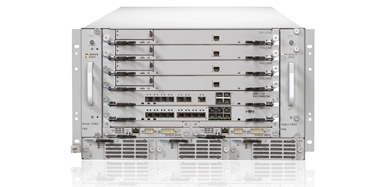
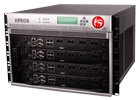
TM Announcements: F5 new VIPRION Supports 160 Gbps L7 Throughput

 
F5 announced the ".. new VIPRION® solutions, including the 4480 chassis and 4300 performance blade. Extending F5’s portfolio of physical and virtual solutions, these new hardware offerings are specifically designed to help service providers and enterprises address rapidly increasing traffic levels and the growing demand for enhanced services .. Industry leading metrics and product highlights include .. the market’s first 40 Gbps Ethernet support for an application and services delivery platform and 160 Gbps of L7 throughput, 2x competitors’ offerings".
 
"Many vendors offer separate products throughout the infrastructure, but this segmented approach provides limited protection and can be difficult to scale. By contrast, F5 offers an ICSA-certified firewall that integrates L3–L7 security services to protect against massive, multilayered, and blended attacks. From a capacity standpoint, F5’s carrier-grade hardware delivers 144 million concurrent connections (3x the closest competitor) and 5.6 million L4 connections per second (nearly 12x the competition) at a similar price point to other vendors’ offerings".

See also "F5 Service Provider/Mobile Road Map: Focus on DPI" - here and "F5 Platform Road Map - 100GE Ports Planed for 2013/14" - here

See "F5’s VIPRION Solutions Help Service Providers and Enterprises Optimize Infrastructures and Reduce Costs" - here.

Friday, October 28, 2011

Juniper Integrates Radware's Traffic Management Software

 
Radware announced that it "worked with Juniper to create a scalable ADC software application, based on Radware's Alteon® ADC technology and using the Junos® SDK to fully integrate the ADC with Juniper Networks Junos operating system. The ADC application is implemented on high-performance service cards for the MX Series, enabling Juniper customers to improve their service delivery capabilities while concurrently avoiding the cost and complexity of deploying and maintaining ADC-specific appliances. The ADC and MX Series also share the same configuration and management tools, and the ADC leverages Junos integration with Operational Support Systems (OSS), which further reduces customer costs and risk"

"Juniper's router-integrated ADC employs sophisticated load balancing algorithms that ensure optimal performance and service quality by intelligently distributing and directing traffic based on real time changes in server load and availability. The advanced solution complements the Juniper Networks MX Series comprehensive set of carrier-grade services, and addresses the resiliency and performance requirements of many types of services and applications, including DNS, WAP gateways, Content Delivery Networks (CDN), SIP-based VoIP, as well as many others".


See "Radware Provides Application Delivery Control for Juniper Networks MX Series 3D Universal Edge Router" - here.


Wednesday, October 5, 2011

DPI/Security Announcements: Allot Integrates with AdaptiveMobile Parental Control & Malware Protection

 
Allot Communications and AdaptiveMobile announced today "a joint solution that is designed to enable operators to deliver Parental Control and Malware protection as a value-added subscriber service. The solution, based on Allot Service Gateway and AdaptiveMobile’s Network Protection Platform has already been selected by a Tier-1 operator in EMEA .. Intelligent policy-based steering ensures that security services are provided only to opted-in users, optimizing the operator's profitability and protection capabilities".

Gareth Maclachlan (pictured), COO, AdaptiveMobile said: “Parents are asking operators to deliver the most complete levels of protection within the network but with the flexibility to decide what is appropriate for their children. Our joint solution means that operators can now offer a differentiated service and monetize it.”

"With the AdaptiveMobile Network Protection Platform (NPP), an operator can support parental choice in providing mobile communications to children and teenagers yet allow the parent to have full control over how and when the services will be available.
  • Personalised Communication Manager: allows the parent to manage all text, voice, IM and other communications to and from their child; limiting who they can contact and the times when contact can be made, whilst ensuring that the parent or selected family members are always accessible
     
  • Content Manager: allows the parent to select the type of content a child can access, whether it is by Web, SMS, call or MMS. Not only are inappropriate websites and premium services blocked, the parent can ensure appropriate filter settings are applied at the top search engines, for example or block messages that contain inappropriate words or URL’s
     
  • Personalised Usage Manager: Analysis with our customers has shown that one of the busiest usage periods for children is between 10 and 11.30 pm where they are texting and browsing while parents believe their children are asleep. A parent can set their own timetables for permitted usage, including the volume of messages and calls that a child may make or receive; parents can even have the option of allowing more access for good behaviour, or implementing sanctions through a single webclick"
See "Allot and AdaptiveMobile Partner to Enable Carriers to Deliver Personalized Cloud Security" - here.

Tuesday, August 16, 2011

F5 Acquires Intellectual Property Assets of Crescendo Networks

      
F5 announced that "it has acquired the intellectual property assets of Crescendo Networks. Founded in 2002, Crescendo developed hardware solutions to help organizations address application delivery challenges ..  F5 acquired certain intellectual property and other technology-related assets from Crescendo through liquidation proceedings in Israel, where Crescendo Networks, Ltd. had been headquartered. In addition, a number of key Crescendo employees are joining F5’s office in Tel Aviv".

See "F5 Acquires Intellectual Property Assets of Crescendo Networks" - here. Crescendo Networks' site is no longer available - it leads to the F5 press release.

Dan Matte (pictured), SVP of Marketing and Business Development at F5 said: “In particular, Crescendo’s intellectual property and technical expertise provide compelling layer 7 FPGA capabilities for hardware and security solutions. With this acquisition, F5 will further strengthen its products’ ability to address both the continuing exponential growth of Internet traffic and the rising number of sophisticated security threats impacting applications.

Monday, July 11, 2011

TM Deployments (79): Telefónica Spain Uses F5 to Steer Mobile Data

  
F5 announced that "Telefónica Spain has implemented F5 solutions as a key part of a project aimed at achieving greater mobile data traffic management flexibility and reduced time-to-market for new service offerings .. The project’s new architecture design uses VIPRION to bypass mobile data traffic, routing it directly to the network when no value can be added via other platforms or services. In this way, savings are realized on licensing costs and the customer experience also improves".

See "F5 Solutions Streamline IT Infrastructure and Reduce Services Time-to-Market at Telefónica Spain"  - here [background - "F5 Creates the "Service Delivery Networking" Market Category" - here].

Telefónica uses Sandvine for DPI (here).

José González Díaz (picture), Director of Services and Systems Integration at Telefónica, said: "F5 has helped us reduce mobile internet data gateway-related costs with a scalable solution that adjusts perfectly to our navigation architecture".