Showing posts with label Youtube. Show all posts

Thursday, December 24, 2015

YouTube vs. T-Mobile: Do Customers Prefer Price over Quality?


John D. McKinnon and Thomas Gryta report to the Wall Street Journal that "YouTube said T-Mobile US Inc. is interfering with its video traffic, raising a new issue as federal regulators examine the wireless carrier’s streaming-video strategy.

T-Mobile recently began offering a program 
[Bingeon] that delivers video at lower quality in exchange for waiving related data fees. YouTube and its allies say T-Mobile also is lowering the quality of video that isn’t part of the program, including YouTube clips.

YouTube, which is owned by Alphabet Inc., said T-Mobile is effectively throttling, or degrading, its traffic. “Reducing data charges can be good for users, but it doesn’t justify throttling all video services, especially without explicit user consent,” a YouTube spokesman said.


T-Mobile declined to address YouTube’s complaints. In a statement, the No. 3 U.S. carrier by subscribers said its customers “love having free streaming video that never hits their data bucket” and like “both the quality of their video experience and the complete control they have.”

According to T-Mobile the video quality in the Binge On service plan "looks great. Binge On™ optimizes video quality for smartphone screens. It provides a great DVD-quality experience (typically 480p or better) which can also minimize buffering and maximize quality while using a fraction of the data. But it is your choice. If you want a higher resolution data experience, you can always choose to turn off Binge On™; however, you will no longer have the ability to stream for free from your favorite streaming services or have video optimized for your smartphone screen resulting in higher usage of your high speed data .. 

..All of our included video streaming services will be optimized when using the app or streaming through browsers

..if you are streaming video from one of our Binge On providers while tethering from a smartphone, tablet, or mobile internet device to a laptop, desktop, tablet, or handset you will enjoy all the great benefits of Binge On

See "YouTube Says T-Mobile Is Throttling Its Video Traffic" - here.

Tuesday, December 8, 2015

Sandvine: Streaming Video is 70% (Netflix 37%) of NA Fixed Traffic; BitTorrent is 4.4%


A new study by Sandvine focusing on Africa, the Middle East, and North America (based on data from a selection of Sandvine’s customers), finds that:


  • "Real-Time Entertainment (streaming video and audio) traffic now accounts for over 70% of North American downstream traffic in the peak evening hours on fixed access networks. Five years ago it accounted for less than 35%
     
  • Netflix (37.1%), YouTube (17.9%), and Amazon Video (3.1%), the top three sources of video traffic on fixed access networks in North America, all saw an increase in traffic share over the levels observed earlier in the year
     
  • With the growth of video, BitTorrent share continues to see a decline in fixed access bandwidth share, and now accounts for only 5% of total traffic in North America. Last year during the same period it accounted for over 7%". 


See "Sandvine: Over 70% Of North American Traffic Is Now Streaming Video And Audio" - here.

Tuesday, October 20, 2015

Openwave Demoed Optimization (40% lower bitrate) for Live Gaming Broadcasts


Openwave Mobility announced that it ".. successfully showcased optimization of live-gaming broadcast traffic via sites including YouTube Gaming and Twitch for a Tier 1 European operator. Openwave Mobility is the first to use quality-aware traffic management for live-gaming broadcasts. The company lowered bitrates by over 40% for YouTube Gaming and Twitch while maintaining an excellent QoE for subscribers.

Indranil Chatterjee [pictured], VP of Product Management, Marketing & Strategy, Openwave Mobility explaineds: “Live-gaming streams are far more data demanding than VoD. And they can consume considerable bandwidth. That’s bad news for operators and a bad experience for the gaming fans. Operators are struggling to deal with the phenomenal growth in video – and now most of that is encrypted too. That’s another headache. For cost conscious subscribers, higher bandwidth means higher data bills. That’s where our innovative technology comes in”.

See "Openwave Mobility First to Use Quality-Aware Optimization for Live Gaming Broadcasts" - here.

Friday, September 18, 2015

Sandvine: Netflix Reaches Almost 10% of Peak Downstream traffic in Austria and France


Sandvine released its ".. latest Global Internet Phenomena Report focusing on Asia-Pacific and Europe. The report is based on data from a selection of Sandvine’s 250-plus communications service provider (CSP) customers .. and contains findings from both fixed and mobile networks: 


  • Netflix is making gains in the new European markets they entered late last year, with the service now accounting for almost 10% of peak downstream traffic in Austria and France
     
  • Apple Music, bolstered by a three month free trial, has surpassed Spotify as the leading music streaming service on mobile networks in Australia and New Zealand
     
  • YouTube is the top mobile application in both Europe and Asia-Pacific, making it the global leader in mobile traffic
     
  • Online gaming continues to drive traffic on fixed networks with Twitch and Steam now top-10 applications for the first time in Europe and Asia-Pacific respectively
     
  • A prediction that Filesharing traffic share has peaked in Asia-Pacific and will begin to see significant declines as more over-the-top (OTT) video services expand to the region
     
  • On a European airline, the three most popular applications by bandwidth are Facebook, general Web Browsing, and Apple’s iMessage
See "Sandvine Report: Netflix And Apple Music Making International Gains" - here.

Sunday, May 3, 2015

Sandvine: Netflix Brings us to the Encrypted Age


Sandvine released a new paper on encrypted Internet traffic. Based on data collected for a live, representative network in North America, the research findings and projections are:
  • Netflix’s recent decision to encrypt their traffic will result in over two-thirds of North American Internet traffic being encrypted in 2016
     
  • YouTube is the largest source of encrypted traffic in North America, and still a significant contributor of unencrypted traffic
     
  • Google Play traffic is encrypted, preventing the ability for third-parties to identify the apps, movies, and music being consumed by subscribers. Apple’s iTunes traffic remains unencrypted.
     
  • The simplicity of the Electronic Frontier Foundation’s “Let’s Encrypt” program, due to launch in mid-2015, will help drive encryption adoption among smaller sites


See "Sandvine: Two-Thirds Of North American Internet Traffic Will Be Encrypted In 2016" - here.

Thursday, February 26, 2015

Ericsson: It's Always Facebook and 4 Other Apps


A new report from Ericsson finds:
  • Two-thirds of app data traffic over mobile networks comes from top five apps in each country studied, with video streaming and social networking dominating .. each nation displays its own unique preferences - for example, in December 2014, the US top three included Netflix and YouTube, while South Korea was notable for peer-to-peer TV app AfreecaTV and home-grown search portal NAVER.

    Facebook
    was the number one app in each country studied.

  • Total mobile video traffic of next six years will be around 17 times that of last six years
     
  • Q4 2014: LTE subscriptions achieved higher net additions, with 110 million, than WCDMA/HSPA for the first time.
      
  • FY 2014: 800 million smartphone subscriptions added worldwide taking the total number to 2.7 billion, up 40% from a total of 1.9 billion subscriptions in 2013


See "Mobile data traffic dominated by top five apps: Ericsson Mobility Report" - here.

Friday, October 17, 2014

Cache Deployments [323]: ViewQwest [Singapore] Use Qwilt to Improve QoE on Fiber


Qwilt announced that "ViewQwest, Singapore’s premium fiber broadband operator, has deployed the Qwilt Video Fabric Solution to deliver improved quality of experience (QoE) to ViewQwest’s customers ..  

When fiber broadband was introduced to consumers and businesses in Singapore, ViewQwest took full advantage by launching Fibernet, a superior service for popular online game streaming applications like Twitch, and online video streaming sites such as Netflix and YouTube".

Vignesa Moorthy [pictured], CEO, ViewQwest said: “Our Fibernet service was designed to eliminate antiquated practices such as severe caps on international bandwidth, traffic shaping, port blocking and throttling of downloads and torrents. We needed an innovative approach to caching that doesn’t sacrifice quality of experience or performance of our service offerings,.. We also saw an immediate improvement in network optimization and are very impressed with the QoE we are now able to offer our customers”.

Alon Maor, CEO, Qwilt said: "We are honored to provide a solution that can reduce the amount of OTT video traffic by up to 80 percent and offer a higher QoE across all major content provider sites.”

See "Qwilt’s Plug-and-Play QB-Series Video Fabric Controller Deployed by ViewQwest" - here.

Saturday, June 14, 2014

How did Cable ONE Get Google's "YouTube HD Verified" Certification?


Cable ONE announced that "Google recently rated Cable ONE High Speed Internet “YouTube HD Verified” - a certification given only to Internet Service Providers (ISPs) who consistently offer a connection stable enough to stream HD (720p) video without interruption or buffering .. Cable ONE offers speeds ranging from 50Mbps to 70Mbps - ideal for streaming multiple movies or videos at the same time, offering more power for online games, and giving customers the ability to share photos in the blink of an eye." (See "Google Rates Cable ONE 'YouTube HD Verified'" - here).

Brian Santo, reporting to CED Magazine, adds: "Brad Ottley. Cable One’s director of internet operations, said that Cable One delivers YouTube video through a peering arrangement with Level 3. In a written exchange, Ottley attributed Cable One’s results with Google/YouTube to “Low latency with Level 3 and Internet speeds of 50MB contribute to our YouTube HD Verified status. Transparent caching is a technique for smoothing out the delivery of web-based content (video and otherwise). Ottley said Cable One used transparent caching only in its system in Fargo".

See"Cable One excels at delivering YouTube, says Google" - here.

Sunday, May 25, 2014

Google - "we invite content providers to hook up their networks directly to ours"


A post to Google's Fiber blog by Jeffrey Burgan, Director of Network Engineering, describes what Google does to eliminate "buffering" without paid Fast Lanes - "We also partner with content providers (like YouTube, Netflix, and Akamai) to make the rest of your video’s journey shorter and faster. (This doesn't involve any deals to prioritize their video ‘packets’ over others or otherwise discriminate among Internet traffic — we don't do that)"

One question remains - what about all other content providers? how would startups compete with the giants?

"So that your video doesn’t get caught up in this possible congestion, we invite content providers to hook up their networks directly to ours. This is called ‘peering,’ and it gives you a more direct connection to the content that you want .. We have also worked with services like Netflix so that they can ‘colocate’ their equipment in our Fiber facilities .. We give companies like Netflix and Akamai free access to space and power in our facilities and they provide their own content servers .. we also don’t charge because it’s really a win-win-win situation. It’s good for content providers because they can deliver really high-quality streaming video to their customers .. most importantly, we do this because it gives Fiber users the fastest, most direct route to their content"

See "Behind the scenes with Google Fiber: Working with content providers to minimize buffering" - here.

Saturday, March 22, 2014

Cache Deployments [299]: On Telecom [Brazil] Optimizes Netflix with Qwilt


Qwilt announced that "On Telecom, a fast growing leading Brazilian 4G TD-LTE broadband provider, has selected the Qwilt Video Fabric Controller to help solve their over-the-top (OTT) video problem. On Telecom currently faces rapidly increasing network usage resulting from the popularity of its high-speed broadband offering that encourages customers to consume more streaming video from sites like Netflix, YouTube and many others. Qwilt’s Video Fabric Controller has been deployed by On Telecom to save network costs and improve quality of experience (QoE) for its subscribers".

See "Qwilt Selected by On Telecom to Solve OTT Video Challenges" - here.

Thursday, January 2, 2014

[Netherlands] T-Mobile Free Wi-Fi on Trains may Block YouTube


Here is how the "reasonable traffic management" exception to Net Neutrality looks like in real life.

While the Netherlands has a Net Neutrality law (see "Netherlands: Net Neutrality/DPI Restrictions Law Approved" - here), its railway service is allowed to block certain traffic on its free Wi-Fi service (operated by T-Mobile). I assume that if you still wish to watch YouTube you'll need to use paid mobile service.

24 Oranges reports that "The Dutch Authority for Consumers & Markets has approved Dutch railways’ move to block YouTube and Spotify which use a lot of bandwidth in order to provide better quality Wi-Fi in some of their trains. Even though the Wi-Fi is free, the net neutrality law force ISPs and telecom operators to ensure access to all types of content, services or applications available on the network".

ACM explains (here, in Dutch) that "traffic that congest the netwrok is an exception to the Net Neutrality law"

See "Dutch railways leans on net neutrality law to block sites" - here.

Tuesday, December 17, 2013

Cache Deployments [278]: Toyama [Japan] Selected Qwilt - "achieving nearly 50% efficiency"


Qwilt's CEO expectations for "Full-Scale Deployments in Japan and Korea During 2013" [here] are coming through.

The transparent caching solution vendor [see "[Vendor Review] Qwilt: 'We can Save US Operators Hundreds of $Millions in Few Years'" - here] announced that "..Cable Television Toyama, a cable network operator in Japan, has selected and deployed its Qwilt Video Fabric Controller, achieving nearly 50-percent transparent caching efficiency for over the top (OTT) video, with a 2x improvement in quality of experience (QoE) for its subscribers. Systems integrator IT Frontier (ITF), a subsidiary of Mitsubishi Corporation, managed the implementation. 

Cable Television Toyama's subscribers consume various types of OTT broadband traffic. From popular online video content sites such as YouTube and Dailymotion to software updates like the recent iOS7 update from Apple, their network was experiencing strain due to increasing traffic and demand".

See "Cable Television Toyama Improves Quality of Online Video Delivery with Qwilt Video Fabric Deployment" - here.

Saturday, November 23, 2013

Qwilt: Our Customers See 50% Cache Hit, 80% QoE Improvement


Qwilt reported ".. new Worldwide Online Video Quality of Experience (QoE) data, compiled from analytic network performance insights from its global customer deployments. In its first annual report, the company measured the average bitrate of customer networks across North America [customers include Mediacom and Comway], South America, Europe and Asia, to determine actual viewer QoE during peak viewing times, from popular content providers, like Netflix and YouTube. 

.. average bitrates were measured from video streams delivered by Qwilt and those delivered by upstream content providers. The comparison of the two average bit rates shows the real QoE impact of Qwilt’s solution in operator networks. The report data conclusively shows that Qwilt’s transparent caching solution, the QB-Series Video Fabric Controller [see "Qwilt Unveils Transparent-video Delivery Solution" - here], consistently delivered more than 50-percent of the video traffic while producing greater than 80-percent improvement in video streaming QoE during peak times".


See "New Worldwide Online Video QoE Report Shows Qwilt Delivers Over 80% Improvement in Consumer Quality of Experience During Prime Time" - here.

Tuesday, November 12, 2013

[Sandvine] NA Fixed Traffic: Netflix+Youtube >50%, P2P < 10%


Sandvine's recent Internet traffic trends report, (based on data from a selection of Sandvine’s 250-plus service provider customers) finds that “For the first time ever, peer-to-peer filesharing has fallen below 10% of total traffic in North America, which is a stark difference from the 60% share it consumed 11 years ago ..Netflix (31.6%) holds its ground as the leading downstream application in North America and together with YouTube (18.6%) accounts for over 50% of downstream traffic on fixed networks.


See "Sandvine Report: Netflix And YouTube Account For 50% Of All North American Fixed Network Data" - here.

Tuesday, October 22, 2013

Flash Networks Optimizes MPEG-DASH with 30%-50% Data Reduction


Flash Networks announced the  ".. availability of MPEG-DASH video optimization that reduces network congestion and improves the quality of experience for subscribers without manipulating video content. Flash Networks’ MPEG-DASH optimization solution is part of the company’s advanced video optimization solution that provides 30%-50% data reduction with no perceptible impact on video quality. 


Source: DASH Industry Forum 

Today a significant amount of YouTube traffic is delivered using the MPEG-DASH format. YouTube has implemented a unique flavor of MPEG-DASH that requires more sophisticated methods of optimization than standard MPEG-DASH. Optimization solutions that do not support MPEG–DASH are unable to positively influence the delivery of video with this format and therefore are less efficient overall. 

Flash Networks, by using proprietary methods, provides an advanced MPEG-DASH optimization solution, enabling mobile operators to provide a more consistent, higher quality of experience to its subscribers".

See "Flash Networks the First to Boost MPEG-DASH Video Streaming" - here.

Sunday, October 20, 2013

Google: "Almost 40% of YouTube’s traffic now comes from mobile"


Some quotes from Google's Q3 2013 earning call, made by Larry Page, CEO:
  • "..  We’ve also making great progress across devices with Youtube. Almost 40% of Youtube’s traffic now comes from mobile, up from 6% two years ago. And in August we updated our Youtube apps for android and iOS. You can now leave a video playing at the bottom of your screen while you explore other content.
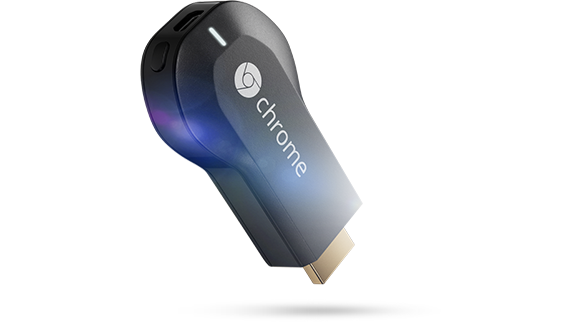
  • .. That’s why I love Chromecast which we launched in July and immediately became a best seller. On your phone, tablet or laptop and start playing some music from Youtube or a show from Google play or Netflix. One click the content is there on the bigger screen in your home, your TV, all for just $35"
     
  • YouTube has grown over 75% over the past two years
See "Google's CEO Discusses Q3 2013 Results - Earnings Call Transcript", by SeekingAlpha - here

Saturday, August 17, 2013

Google Outage Caused ???% Drop in Internet Traffic


Last month I had a post showing statistics collected by DeepField according to which "Google now accounts for nearly 25% of Internet traffic on average" (here). A short outage in some of Google's services yesterdays provides another insight into on Google's dominance of the internet.

  •  DeepField's Craig Labovitz (see "Googalapse" - here) provides:  "A quick graph of Google’s outage today. The below graph shows traffic to Google data centers across a diverse set of large North American providers .. The graph does not include Google Global Cache traffic which provides a a large share of YouTube requests .. Overall, anonymous data from providers in North America showed a 10-15% drop in overall Internet traffic volumes during the outage


  • GoSquared Engineering (see "Google’s downtime caused a 40% drop in global traffic" - here) concludes that "Google.com was down for a few minutes between 23:52 and 23:57 BST on 16th August 2013. This had a huge effect in the number of pageviews coming into GoSquared’s real-time tracking – around a 40% drop, as this graph of our global pageviews per minute shows.


Thursday, August 1, 2013

4th of July Celebration for Instagram

   
Analysis made by Flash Networks from its installed customer base of mobile operators (serving 30M smartphone users in North America, during the last week of July) found that "Instagram video viewing exceeded YouTube on the fourth of July, America’s independence day, reaching close to 28% percent of total video hits. .. Surprisingly, in comparison with Instagram’s sharp spike, YouTube video hits slightly decreased that day and Vine’s video hits stayed relatively flat .. Google’s YouTube is still clearly the most popular video service, and continues to maintain its superiority in the total volume of mobile video traffic. However, Facebook’s Instagram has demonstrated that it can generate usage rivaling YouTube by being the application of choice for capturing and sharing holiday celebrations".

See also "Avvasi: 'Instagram videos immediately flooded mobile networks'" - here


See "Is Instagram Video Overtaking YouTube?" - here.

Thursday, June 27, 2013

Avvasi: "Instagram videos immediately flooded mobile networks"

 
Avvasi published its analysis on the ".. impact of Facebook’s Instagram video launch on mobile networks .. the impact on mobile networks is significant as the total number of video sessions observed has doubled since service launch, with Instagram now accounting for over 30% of the total OTT video, instantaneously passing Google’s YouTube and Twitter’s Vine. Furthermore, in some networks, the service launch has negatively impacted the overall quality of video delivered, due to the sudden increase in traffic and network congestion".


See "This is your Network on Instagram – Avvasi Highlights the Impact of Facebook’s Instagram videos" - here.

Tuesday, June 25, 2013

Telenor Manages OTT Video Traffic With: ALU, Opera/SkyFire, ConteXtream and Velocix


Alcatel-Lucent and TelenorGroup have "signed a three-year global frame agreement that will give customers fast, buffering-free mobile video and improve overall Internet service quality. The agreement will enable the deployment of mobile Internet optimization for Telenor’s 2G, 3G and 4G networks in Europe and AsiaAlcatel-Lucent will help Telenor address the challenges caused by mobile users accessing ‘over the top’ (OTT) video from sites like YouTube or Netflix"

"Telenor will deploy technology that automatically manages the delivery of Internet traffic over a mobile network, optimizing the experience for customers watching video and accessing web content while ensuring a surge in demand doesn’t affect those using the network for other activities.

The mobile Internet optimization solution includes: Opera’s  SkyfireRocket Controller and Optimizer [see Opera Buys Skyfire for (up to) $155M" - hereConteXtream’s [here, here] Session Control to manage end-to-end sessions across the network, automatically directing video traffic to Skyfire based on rules or policies decided on by the operator, Velocix 7810 Transparent Caching [hereand  9900 Wireless Network Guardian".

 
See "Telenor Group selects Alcatel-Lucent to enhance mobile Internet experience in 11 countries" - here.